


Picture this. You walk into a music shop, spot a gorgeous bodhrán on the wall, carved frame, little painted shamrock, the whole deal. You buy it. You get it home. You sit down and thump it once.
It sounds like a cardboard box.
- How to Choose the Right Bodhrán Drum
- What Bodhran Size Should You Choose?
- Bodhran Drum Size Comparison
- Natural Goatskin vs. Synthetic Bodhrán Heads
- Should You Choose a Tuneable Bodhrán?
- How Does a Bodhrán’s Construction Affect Its Sound?
- What Does a Good Bodhrán Sound Like?
- Choosing a Bodhrán for Your Playing Style
- What Is the Best Bodhrán for a Beginner?
- Common Bodhran Buying Mistakes
- Bodhran Buying Checklist
- Frequently Asked Questions
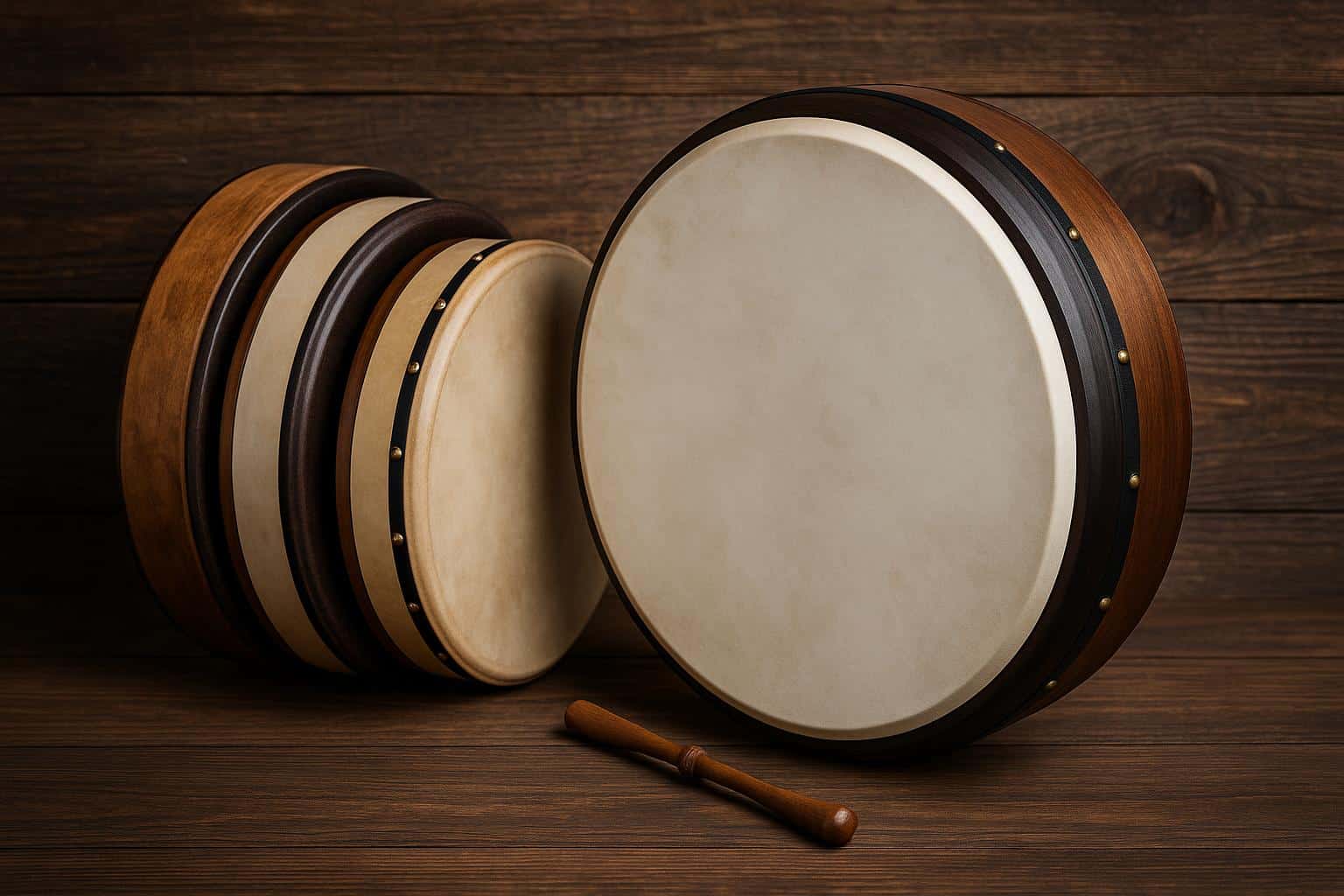
That happens more than you’d guess. Learning how to choose the best bodhrán drum isn’t about grabbing the prettiest one on the wall. It’s about matching size, skin, tuning, and the way the frame is built to how you actually play. Two drums can look almost identical, same wood, same size, and still sound totally different underneath.
This guide breaks it down in plain words: size, skin, tuning, build quality, and sound. Whether you’re a kid picking your first drum for music class or an adult upgrading before a recording session, the right pick depends on you, not on what looks cool under shop lighting.
How to Choose the Right Bodhrán Drum
Direct answer: Pick a bodhrán by matching its size and depth to your body and playing style, choosing a skin suited to your climate, deciding if you need a tuning system, and making sure the frame is solidly built and not just nice to look at.
Start with what you actually need it for. Not the shop’s bestseller shelf. Your goals.
A session player standing for three hours needs comfort a seated studio musician never thinks about. A kid learning their first few beats needs a forgiving head. A performer bending notes on a stage needs range and volume.
- Diameter and depth, which shape tone and comfort
- Skin type, goatskin or synthetic
- Tuning system, tuneable or fixed
- Frame build, wood, bracing, head fitting
- Sound character, bass, attack, sustain
There’s no single perfect drum for everyone. A traditional session player might want a plain fixed goatskin drum because it sounds warm and human. A touring musician might grab a tuneable synthetic head so it doesn’t freak out in a new climate every night.
What Bodhran Size Should You Choose?
Direct answer: most adult beginners do fine with 14 to 16 inch drum sizes. Get more comfortable and an 18 inch gives you deeper bass. The big 22 inch drums are really built for recording or performing, not your average Tuesday session.
14-inch Bodhrán
Small and light. Good for kids, smaller adults, or anyone lugging a drum onto a bus for a gig. Sound is higher and snappier, quick to respond but thin on bass. A kid learning first strokes usually picks it up faster here. The drum just isn’t fighting their arm.
16-inch Bodhrán
This is the one most adults end up buying first. Easy to hold, full sound without booming, works in almost any folk setting. Someone walking into a pub session with a drum tucked under one arm? Probably 16 inches.
18-inch Bodhrán
Favored by players who’ve stuck with it a while. More bass, more sustain, a bit more arm reach and bracing needed. Worth it though, especially playing solo where you need to be heard over a fiddle and a guitar.
22-inch Bodhrán
Rare for regular sessions. This size belongs in recording booths and big stages, where deep bass and long rings matter more than fitting the drum in a backpack. A studio engineer chasing a huge, room-filling bodhrán sound reaches for this one on purpose.
Bodhran Drum Size Comparison
Here’s the quick version, side by side.
| Size | Typical Sound | Portability | Playing Comfort | Ideal Player | Common Use |
|---|---|---|---|---|---|
| 14 inch | Bright, tight, quick attack | Excellent | Easy for small hands and kids | Beginners, kids, travelers | Practice, busking, travel |
| 16 inch | Balanced, rounded midrange | Very good | Comfortable for most adults | Beginner to intermediate | Sessions, folk gigs |
| 18 inch | Fuller bass, longer sustain | Good | Needs stable bracing | Intermediate to advanced | Sessions, performance, recording |
| 22 inch | Deep bass, long resonance | Limited | Needs real experience to control | Advanced, studio players | Recording, big ensembles |
Natural Goatskin vs. Synthetic Bodhrán Heads
A bodhrán head, the skin, is what’s stretched across the frame and makes the sound when you hit it. Goatskin is a real animal hide, tanned and stretched. Synthetic heads are man-made, usually a treated plastic film.
Goatskin is the old-school pick. Players love the warm, organic tone and how the feel under your hand shifts a little with humidity. That’s also the catch. Goatskin tightens up in dry heat and goes floppy in damp weather. Leave it in direct sun or a freezing car trunk and you’ll notice fast.
Synthetic heads don’t care nearly as much about the weather. A touring musician bouncing from a humid gig in one city to a dry winter show in another will probably prefer synthetic just to skip the surprises. The tone differs a touch too, slightly more even, less textured than skin. Neither is better. It comes down to your ear and where you’re playing.
A guy who’s played the same pub session for fifteen years in one town might never think twice about skin sensitivity. A musician flying between three countries in a month? Synthetic saves headaches before showtime.
Should You Choose a Tuneable Bodhrán?
Direct answer: Go tuneable if you play in changing weather, move between venues, or want pitch control for tonal tricks. Stick with fixed-tension if you want something simple that just sounds like itself every single time.
A tuneable bodhrán has a mechanical setup inside, tension rods or an adjustable ring that tightens or loosens the head, which changes pitch and how long the note rings. A fixed-tension drum has the skin glued or tacked down permanently. What you get is what you get, aside from whatever the weather does to it naturally.
Say you’re recording an album and the pitch needs to match across five takes over two days. A tuneable drum saves you there. But if you play the same session every Thursday in your buddy’s basement, fixed-tension means one less thing to fuss over before you even sit down.
How Does a Bodhrán’s Construction Affect Its Sound?
The wood, the depth, the bracing inside, all of it shapes tone just as much as the skin does. A shallow frame gives a tighter, higher sound with fast attack. A deeper frame adds bass and lets the note hang around longer.
Then there’s the crossbar, the wooden brace inside the frame players often grip like a handle. It affects resonance and how the drum feels pressed against your body.
Head fitting matters a ton too. Stretch the skin unevenly and one side of the drum sounds different from the other, no matter how good the skin is. A handmade drum from a real builder usually has more even tensioning and cleaner bracing than a decorative mass-produced one, even at a similar price. A carved frame or a painted Celtic knot looks nice. It tells you nothing about how the drum will actually sound after two hundred sessions.
What Does a Good Bodhrán Sound Like?
Direct answer: a good one gives clear bass from the center, brighter tones near the rim, a controllable middle, and enough sustain that you can shape rhythm with your hand and the tipper. What counts as good still depends on your own ear and what music you’re playing.
Hit the center, you get bass. Move toward the rim, the pitch climbs. On a well-built drum, sliding the tipper (that’s the wooden beater) between those spots gives you an actual tone change, not just a volume change.
Attack is how fast the sound starts after you hit it. Sustain is how long it hangs around before fading out. Fast attack, short sustain, great for driving session rhythms. Longer sustain works better for slow airs or a recorded solo passage where the note needs room to breathe.
Pressing your inside hand against the skin dampens or opens up the sound. This tone control leans heavily on skin type and tension, so the same drum might feel completely different in your hands versus your friend’s.
Choosing a Bodhrán for Your Playing Style
A traditional session usually wants a mid-size drum, 16 to 18 inch, with a goatskin head for that classic warm sound sitting next to fiddles and flutes. A folk band running through a PA might lean toward a tuneable drum instead, just to keep the sound steady night after night.
Live shows reward a drum that holds tuning under hot stage lights. Studio work rewards one you can fine-tune between takes. Home practice? Barely any rules there. Comfort matters most, plus a size that won’t tire your arm after forty minutes of the same roll.
Touring players moving between climates usually go synthetic, or tuneable, just to dodge weird pitch shifts before a gig. A beginner working on basic down-up strokes is fine with a plain 16 inch, no fancy tonal control needed yet. An advanced player bending pitch and shaping tone benefits from a tuneable, well-braced drum that actually responds to hand pressure instead of fighting it.
What Is the Best Bodhrán for a Beginner?
Direct answer: usually a 16 inch drum with a synthetic or well-prepped goatskin head and a basic tuning setup. Comfortable size and steady sound matter way more than fancy carving right now.
New players should care about comfortable size, a head that behaves without constant retuning, and a solid frame. Skip the exotic wood and the big-format drum until real technique shows up.
Once you’ve played consistently for a few months and know what you actually like, that’s the moment to invest in a handmade drum. Buy the fancy one too early and you’ll probably end up buying a second drum later anyway.
Common Bodhran Buying Mistakes
- Buying because of the artwork, not the build
- Grabbing a drum too big before your arm and control catch up
- Ignoring how the frame feels against your body after an hour
- Assuming bigger always sounds better (it doesn’t)
- Skipping whether the tuning system fits where you’ll actually play
- Forgetting how goatskin reacts to your local weather
- Buying blind without picturing where you’ll really use it
Bodhran Buying Checklist
Run through this before you hand over your money.
- Pick the right size for your body and style
- Decide: goatskin or synthetic
- Decide: tuneable or fixed
- Check frame build and head fitting
- Think about comfort during long sessions
- Match the sound to your music
- Think about portability if you travel
- Set a budget based on build, not decoration
- Buy from a handmade Irish instrument maker such as bodhran.ca
Final Recommendation
Beginners: 16 inch, synthetic or prepped goatskin, basic tuning. Traditional session players: 16 to 18 inch, fixed or lightly tuneable goatskin, for that warm acoustic voice. Performers: go tuneable for stage consistency. Advanced players chasing tonal tricks: well-braced, tuneable, responsive to hand pressure.
There’s no single best bodhrán for every person alive. It depends on your body, your climate, where you play, and how your own ear reacts to different heads and frames. Testing a drum in person, or talking to a maker who asks about your specific needs, is still the safest way to land on the right one.
Frequently Asked Questions
How do I choose the right bodhrán drum?
Match size and depth to your body and playing style, pick a skin suited to your climate, decide on tuning, and check frame build before worrying about looks.
What size bodhrán is best for a beginner?
A 16-inch bodhrán suits most adult beginners, easy to hold with a balanced tone, without the bass weight and extra control that bigger drums demand.
Is an 18-inch bodhrán good for adults?
Yes. An 18-inch bodhrán gives adults fuller bass and longer sustain, and works especially well for intermediate or experienced players comfortably bracing a bigger frame.
Is a bigger bodhrán always better?
No. Bigger drums add bass and sustain but demand more control and bracing comfort. A smaller drum usually suits beginners and portable playing better.
Should I buy a tuneable bodhrán?
Buy tuneable if you play across different climates or venues, or want pitch control for tonal techniques. Fixed-tension suits stable, simpler setups just fine.

