


A New Mexico judge has quashed the four-count indictment against actor and director Timothy Busfield, ruling that failures in the grand-jury process compromised the proceeding that had sent the case toward a May 2027 trial.
State District Judge Joseph Montano’s Oct. 16 decision does not decide whether the allegations against Busfield are true or false, and it is not an acquittal. It instead removes the existing indictment because of how it was obtained. The order expressly allows the state to begin new criminal proceedings, leaving the next move with the Bernalillo County District Attorney’s Office.

Judge found grand-jury protections were not followed
Busfield had been indicted in February on four counts of criminal sexual contact of a minor. The allegations concerned two child actors who are brothers and worked on the Albuquerque set of The Cleaning Lady, according to the criminal complaint described by the Los Angeles Times, NBC News and other outlets. Busfield has denied the allegations.
Montano’s ruling focused on the prosecutor’s obligations to a grand jury, not on the underlying factual claims. The judge found that the prosecuting attorney did not act fairly and impartially when jurors sought to hear from additional witnesses. He concluded that instructions about the grand jury’s ability to call witnesses were inadequate and that requested witnesses were effectively withheld.
As reported by CBS News, the order said the failures violated statutes designed to preserve the structural integrity of New Mexico’s grand-jury system. That is a consequential distinction in a criminal case: a grand jury decides whether sufficient grounds exist to charge someone, while a trial jury weighs guilt or innocence. Montano found a defect in the charging process before the case reached a trial jury.
The defense had argued that jurors repeatedly asked to hear from available witnesses and that prosecutors prevented that testimony. Prosecutor Greer Staley countered that Busfield’s side had not used the proper procedure for presenting evidence and had tried to direct jurors toward favorable witnesses and exhibits, according to the NBC and CBS accounts. Montano sided with the defense on the fairness of the grand-jury process.
That ruling is narrower than a finding that the complaint was disproved, but it is more than a routine scheduling delay. The four-count indictment is no longer the operative charging document, and the May 10, 2027, trial date attached to that indictment can no longer proceed on its previous track.
A case shaped by a months-long procedural dispute
The dismissal follows a sequence in which the procedure became as contested as the allegations. Busfield turned himself in after an arrest warrant was issued in January. A Bernalillo County grand jury indicted him the following month. His attorneys moved in June to dismiss or quash the indictment, challenging how the grand jury had been instructed and what evidence it was permitted to hear.
At a September hearing, the defense presented recordings concerning jurors’ requests for additional witnesses, according to national coverage. The October ruling indicates that those requests were central to Montano’s assessment. The judge did not merely identify an abstract technical error; he found that the alleged failures impaired protections written into the state’s grand-jury framework.
The record also separates three claims that have sometimes been compressed in coverage of the dispute. Prosecutors’ allegations in the criminal complaint have not been adjudicated. The defense’s account of blocked witnesses was contested by the prosecution. Montano’s actual finding was about whether the state conducted the grand-jury proceeding fairly and impartially under the applicable rules. Only that third question was resolved by the Oct. 16 order.
Fayerberg, Busfield’s attorney, said the actor was relieved and grateful following the ruling, CBS reported. The Bernalillo County District Attorney’s Office said it was evaluating its options. Its response, reported by the Good Morning America and Los Angeles Times accounts, stopped short of saying whether prosecutors would seek another indictment.
What prosecutors can do next
Montano’s order leaves the state free to institute new criminal proceedings. In practical terms, that means prosecutors may seek a new indictment or otherwise pursue the allegations again through a new proceeding; it does not mean a renewed case is assured. The district attorney’s office has not announced a decision.
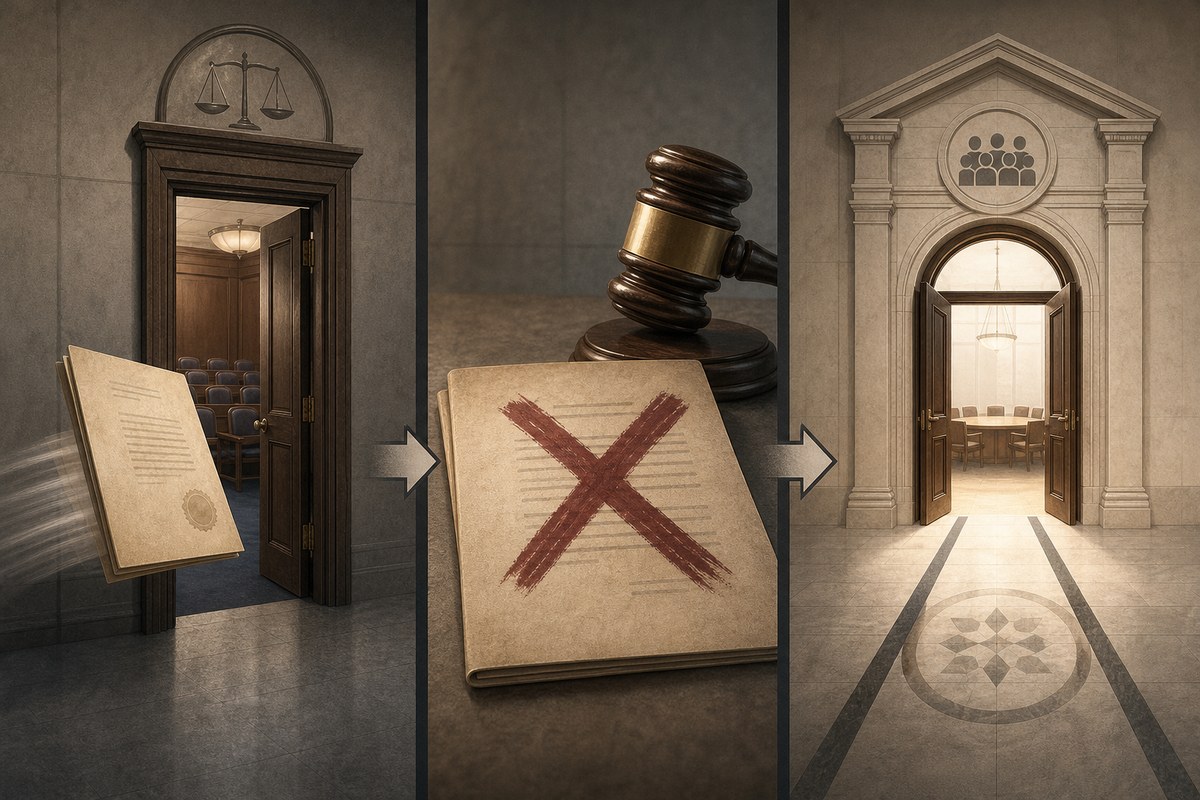
If prosecutors pursue a new indictment, the grand-jury issue identified by Montano would remain the immediate procedural lesson: jurors must receive proper guidance about their authority to request witnesses, and the prosecution’s role must meet the court’s fairness standard. If the office declines to proceed, the dismissal would stand without a trial on the allegations. For now, the legal outcome is unresolved beyond the removal of the February indictment.

