


Physiotherapy has traditionally relied on clinical examination, strength testing and a patient’s description of how an injury feels.
Those things remain important, but movement-tracking technology can now provide another layer of information by measuring how someone actually moves during rehabilitation.
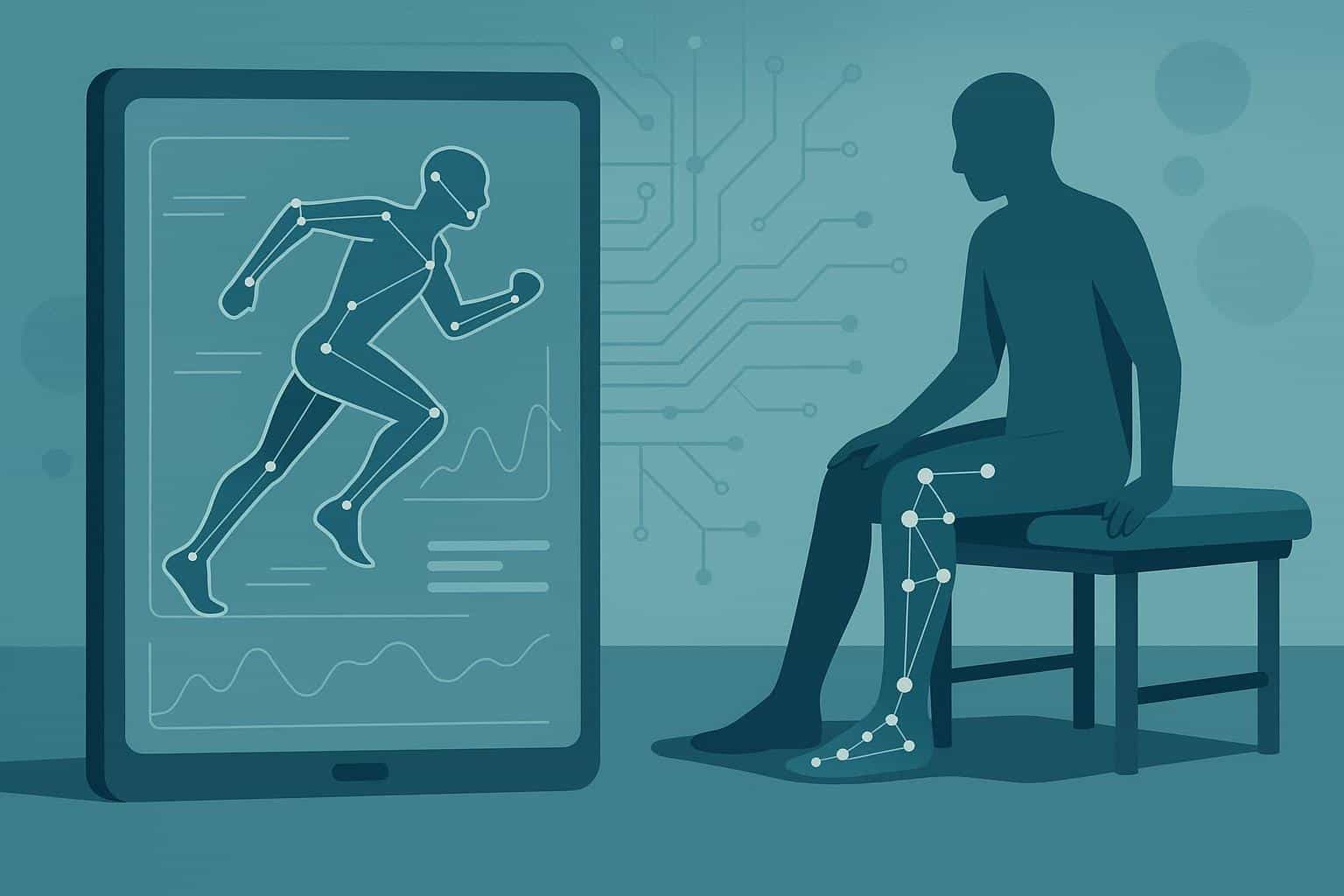
Measuring More Than Activity
Specialist wearable sensors are very different from simply checking how many steps someone has taken.
Inertial measurement units, pressure sensors and other motion-tracking systems can capture measurements such as:
- joint range of motion
- walking or running cadence
- stride characteristics
- left-to-right movement differences
- limb positioning
- movement speed
- ground-contact and loading patterns
A 2026 systematic review found wearable sensor-based gait analysis was being investigated for rehabilitation monitoring, return-to-sport decisions and training-load optimisation in athletes.
Establishing a Baseline
Imagine a runner recovering from a knee injury.
During an assessment, a physiotherapist may find that the injured knee bends less than the unaffected side or that the patient subtly shifts more load onto one leg.
Movement technology can provide numerical measurements alongside that clinical assessment.
After several weeks of rehabilitation, those measurements can be repeated.
Instead of relying solely on:
“It feels better.”
the clinician can potentially compare whether range of motion, gait or movement symmetry has actually changed.
Helping Guide Rehabilitation
The data doesn’t diagnose the injury or decide when someone is ready to return to sport.
That remains the role of the clinician.
A physiotherapist can combine movement information with assessments of pain, strength, mobility, tissue tolerance and functional performance.
For example, improved walking symmetry does not automatically mean someone is ready to sprint, jump or change direction at full speed.
From Recovery to Returning to Sport
Movement tracking may become particularly useful during the later stages of rehabilitation.
A recovering athlete may gradually progress from walking to running, jumping, accelerating and changing direction.
Tracking selected movement and workload measures can give clinicians additional information about how the body is coping as those demands increase. Wearable sports sensors are already capable of monitoring variables including range of motion, symmetry, joint movement, running metrics and workload.

