


We’ve all done it. Don’t even lie. You pull off a ridiculous clutch, the adrenaline is still buzzing in your ears, and what’s the very first thing you do? You hit that inspect key. You let your character model flip that blade around, just to admire it. In those few seconds, CS2 isn’t about the bomb timer or your K/D. It’s about the art. And for as long as anyone can remember, the absolute pinnacle of that art has been a good CS GO Knife. It’s the original status symbol, the ultimate nod of respect in a server full of digital soldiers.
But here’s the million-dollar question—sometimes literally. Why is one knife considered a budget pickup while another has a price tag that could buy a house in some parts of the country? It’s not just about what’s rare. If you look closely, you can see a history of design trends that have completely sculpted what we, the players and collectors, think is cool. It’s a wild story about how we went from gritty, realistic tools to wielding shimmering pieces of the cosmos.
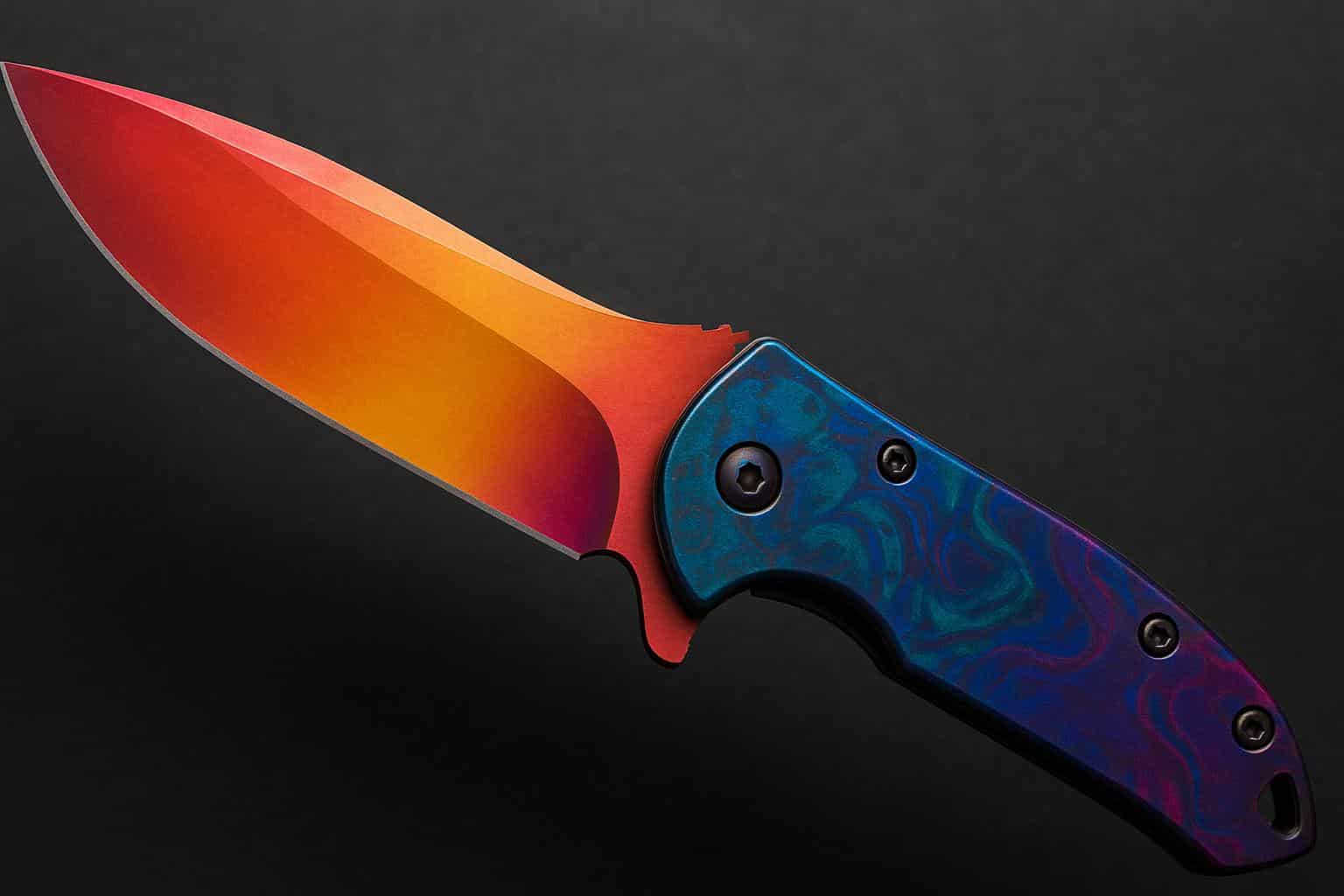
The Old Guard: When a Knife Was a Knife
Let’s go back in time, to the early days of CS GO. The first blades introduced to the game were, for the most part, grounded in reality. The Bayonet and M9 Bayonet looked like they were pulled right out of a military surplus catalog. The Karambit was a mean-looking tactical tool. The Flip Knife had that satisfying, functional snap.
Their coolness came from their shape, their silhouette, and—most importantly—their animations. That slick, rare Karambit pull-out animation was enough to make it a legend. Back then, the skin on the knife almost felt like a bonus. A Boreal Forest M9 Bayonet was still an M9. The star of the show was the blade model itself. This era laid the groundwork for the entire CS GO knife market, building a hierarchy based on animations and the general “feel” of the knife. But the slow trickle of more imaginative CS GO knife skins started a revolution that no one really saw coming.
The Turning Point: We Started Collecting Rainbows
The real earthquake that shook the foundations of the collector world was the arrival of finishes that completely abandoned realism. You know what I’m talking about. The Fades and the Dopplers.
Suddenly, we weren’t looking at camouflage patterns anymore. We were looking at gradients. The Fade finish, with its seamless blend of yellow, pink, and purple, was pure luxury. And it wasn’t enough to just have a Fade. The community immediately started obsessing over the pattern index. Is it a 90% fade? A 95%? A 100% “Full Fade”? This was the moment collectors started acting like diamond appraisers, scrutinizing the tiny details that made one skin better than another.
And then the Dopplers happened. Oh, boy.
This wasn’t just one skin; it was a whole family. Phases 1 through 4 gave us these swirling, galaxy-like patterns of black, red, and blue. But then came the true anomalies: the Ruby, the Sapphire, and the Black Pearl. These weren’t patterns. They were solid, gem-like objects that looked like they were pulled out of a fantasy novel. This is when CS GO knife prices went from “expensive for a game” to “life-changing money.” The most expensive CS GO knife was no longer just about getting a rare blade; it was about getting a rare blade with an impossibly rare, jewel-toned finish. This proved one thing: collectors would pay anything for pure, unadulterated fantasy.
The CS2 Effect: Long Live the Glow
For years, the Doppler gems and high-percentage Fades were the undisputed kings. And then CS2 launched and shuffled the entire deck. The move to the Source 2 engine was so much more than a graphics update. It was a complete re-evaluation of every single cosmetic in the game.
CS2’s new lighting system is, frankly, incredible. The way light bounces off surfaces is just leagues beyond what we had in CS GO. And this had a massive side effect: anything shiny, metallic, or glossy got an insane visual upgrade. It was the great glow-up.
Those Doppler knives? They now look like they’re literally glowing from within. Case Hardened skins, which were always a niche favorite for their random splotches of blue, became superstars. A “blue gem” pattern on a Karambit or AK-47, which already commanded a high price, became the stuff of legend because the blue now looked like a shimmering, metallic pool under the new lights.
This has cemented a new, undeniable trend: how a skin reacts to light is now one of its most important features. Look at the newer knife designs like the Skeleton or Talon knife. Their large, flat surfaces and sharp angles are perfect canvases for these light-reactive finishes. On the flip side, older skins with matte finishes, like the Safari Mesh or Ultraviolet, just don’t get that same “wow” factor in the new engine. The market has noticed, and the shiny stuff is what holds the value.
The Recipe for a Grail: What Makes a Knife So Valuable?
So is it all just about being shiny? Not exactly. It’s more like a complex recipe. The value of a top-tier knife today is a mix of a few key things.
First, you’ve got the raw, brutal scarcity. The odds of opening a CS GO knife case and getting yellow text are abysmal, somewhere around 1 in 400. The odds of that yellow being the knife you want, with the finish you want, and the god-tier pattern you want… you have better odds of getting struck by lightning. This scarcity is what makes the whole economy go ’round.
Second, the “cool factor” is still huge. The animations will always matter. No one is going to say a Butterfly Knife’s flipping animations are lame. It’s part of the knife’s soul.
Third is the finish, which we’ve talked about. A great finish on a mid-tier knife can make it more valuable than a top-tier knife with a boring finish. This is where you see the starkest contrast between the cheapest CS GO knife—probably a Navaja with a scuffed-up paint job—and the grails of the community. People will spend hours on private servers using CS GO knife commands just to preview these god-tier combos, dreaming of one day owning one.
And finally, there’s the story. Pro players have a massive influence. When a legend of the game uses a specific knife to win a Major, that knife gets a piece of that history. It becomes iconic.
It’s More Than Just an Economy, It’s a Culture
When you boil it all down, these trends in blade design tap into the core of why people collect anything. For a growing number of people, it’s a serious investment. The world of Market CSGO skins and Market CSGO items is a very real, very large economy.
But for most of us? It’s about identity. It’s about self-expression. Your knife is the centerpiece of your loadout. It’s your personal flair in a game of uniforms. It tells the server a little something about your style, your luck, or how long you’ve been in this community.
And maybe most of all, it’s about the chase. The thrill of finding that one perfect pattern, of making a great trade, or the heart-stopping rush of seeing gold when you crack open a case. The journey of these designs, from gritty tools to glowing gems, gives us this incredible variety to chase after. So next time you’re in a match and you hit that inspect key, take a second. You’re not just looking at some code. You’re holding a piece of the game’s history, a pixelated status symbol shaped by years of evolving art, new tech, and a community that just thinks they’re really, really cool.
