


Honda has lifted the curtain on the Base Station Prototype, a solar-powered camping trailer designed to keep electric vehicle owners off-grid without sacrificing comfort. It is a compact, lightweight concept aimed squarely at EV drivers who want to camp, cook, shower, and sleep while preserving precious driving range.
A Trailer Built Around Off-Grid Power for Campsites
Developed by Honda’s U.S. R&D teams, the Base Station Prototype pairs integrated solar panels with a lithium battery and inverter, creating a self-contained power hub for campsite living. The idea is simple: let the sun handle lights, climate control accessories, and cooking gear so the tow vehicle stays focused on getting you to the trailhead and back.
- A Trailer Built Around Off-Grid Power for Campsites
- Why EV Drivers Care About Off-Grid Power Trailers
- Inside the Design and User Experience of the Base Station
- How It Stacks Up Against Emerging Rivals
- What We Still Don’t Know About Honda’s Base Station
- The Bigger Picture for EV Camping and Off-Grid Travel
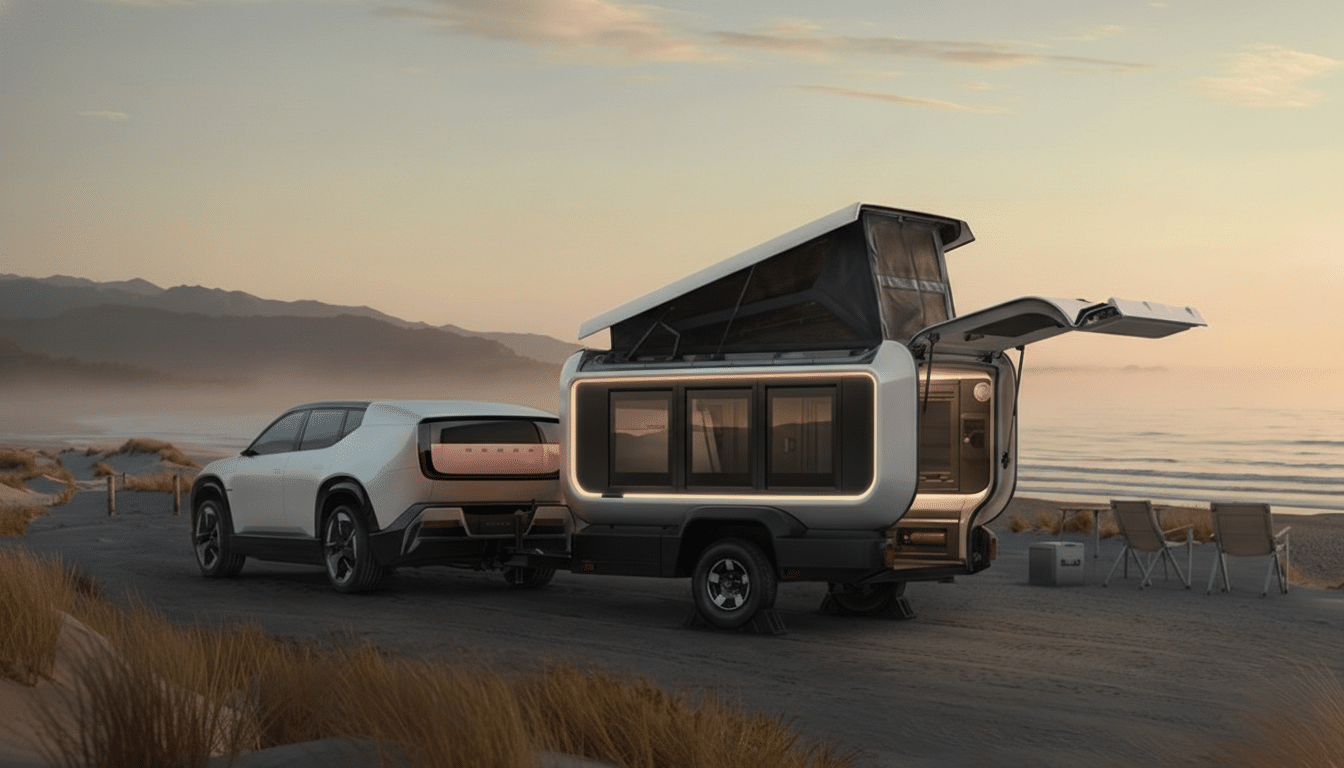
The interior is described as open and airy, with space to sleep a family of four thanks to a foldable couch and an optional bunk for kids. A raisable roof delivers full stand-up room, and modular add-ons—think an external kitchen, shower, or air conditioner—let owners configure for weekend getaways or longer boondocking trips.
Honda has not disclosed battery capacity, solar wattage, or the full scope of its smart features. That omission matters, but the approach is pragmatic: keep the trailer’s energy needs independent of the tow vehicle and reduce reliance on campground hookups or noisy generators.
Why EV Drivers Care About Off-Grid Power Trailers
Pulling a trailer with an EV can be a range killer. Independent tests by outlets such as Edmunds and data shared in SAE engineering papers show towing can shave 25–50% off range depending on speed, terrain, and load. The Base Station’s onboard solar and battery system won’t move the trailer, but it can keep camp running without tapping the EV’s pack.
Real-world solar output depends heavily on weather and latitude, yet benchmarks from the National Renewable Energy Laboratory indicate that roughly 1 kW of rooftop solar can produce several kilowatt-hours per day in good sun—enough to cover LED lighting, device charging, a fridge, fans, and intermittent use of an induction cooktop. That aligns well with the Base Station’s mission to power essentials while keeping complexity low.
Critically, Honda has not said whether the trailer supports vehicle-to-load or bidirectional charging back to the tow car. For now, it looks like a one-way power center for the campsite, which keeps costs and weight down but will leave tech tinkerers curious about future integrations.
Inside the Design and User Experience of the Base Station
Honda emphasizes modularity and simplicity over glitzy automation. That’s smart for EV owners who prioritize weight, efficiency, and quick setup. An external shower reduces interior humidity, an outdoor kitchen keeps heat and smells out of the cabin, and the foldable couch layout allows daytime lounging without dragging extra furniture.
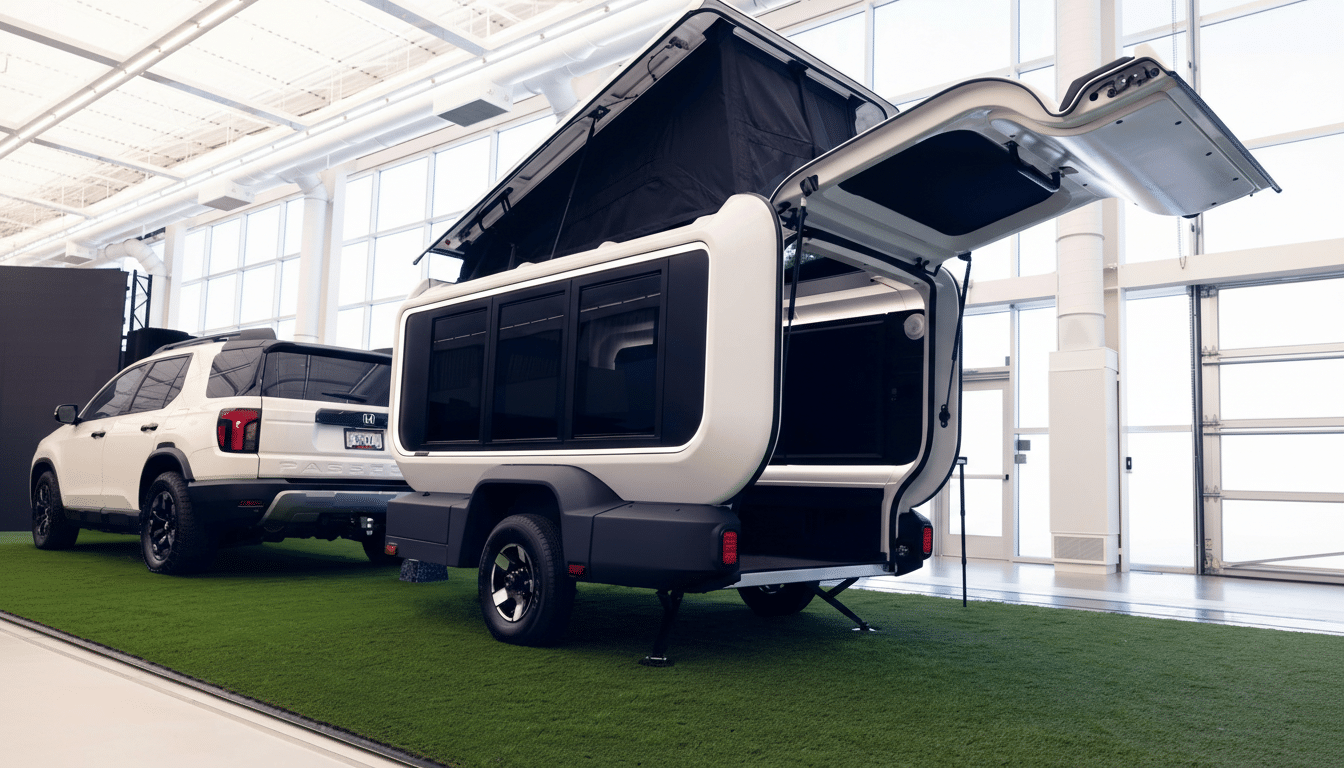
The raised-roof architecture also hints at aerodynamic restraint: low profile on the highway, full comfort at camp. While Honda hasn’t shared a drag coefficient or curb weight, keeping mass and frontal area in check can meaningfully help EV efficiency, especially at freeway speeds where aero dominates energy consumption.
How It Stacks Up Against Emerging Rivals
The Base Station lands in a quickly evolving category. Lightship’s L1 pitches a large battery and high-output solar array, even claiming “range-neutral” towing via an electric drive axle. Pebble’s Flow touts an assisted towing system with a sizable pack and app-centric automation. Colorado Teardrops focuses on compact EV-ready shells with careful weight management.
Honda’s prototype appears more minimalist than those high-spec entries, which could translate to lower costs and easier ownership. The company also describes it as “competitively priced” in the lightweight travel trailer segment, where typical retail prices often range from the low tens of thousands into the mid-forties according to market snapshots from the RV Industry Association.
What We Still Don’t Know About Honda’s Base Station
Key specs remain under wraps: battery size, solar capacity, inverter output, tow weight, and any connectivity with the tow vehicle. Those numbers will determine how many days you can comfortably camp off-grid and which EVs are best suited to tow it.
Honda also hasn’t detailed serviceability or upgrade paths for solar and battery modules. Given how quickly energy tech improves, a design that welcomes future panel or battery swaps would be a major plus for long-term value and sustainability.
The Bigger Picture for EV Camping and Off-Grid Travel
As EV adoption grows, so do use cases beyond commuting. The International Energy Agency notes rapid expansion in public charging, but remote recreation still demands self-reliance. A solar-equipped trailer that covers daily campsite loads can decouple adventure from grid availability and make towing with an EV less stressful.
Pairing the Base Station with Honda’s upcoming electric SUV underscores a broader strategy: build ecosystems, not just vehicles. If Honda nails the fundamentals—reasonable weight, robust solar harvest, honest battery capacity, and smart modular add-ons—the Base Station could become a go-to solution for EV owners who want to roam farther with fewer compromises.
