


Google has started testing a feature that puts live translation at the wireless touch of a button for moments when you find yourself within earshot and too far to read, but just close enough to translate. The beta, currently in the Google Translate app on Android across the U.S., Mexico, and India, supports more than 70 languages at launch (and can be used with all headphones). More people will have access in more languages when we officially launch early next year—on both Android and iOS.
How the headphone translation feature works
Open the Translate app, tap Live Translate, choose your language, and the app gives you a near real-time audio translation in your earbuds without disrupting the original speaker’s cadence and emphasis. That preservation of prosody is crucial: It’s instrumental in following who is speaking and hearing the emotional cues that words lose when, say, reciting dialogue from a badly written book about quantum theory comes out as uninflected robotic speech.
The one-way translator acts like our current experience. It works in any situation where you need to listen and understand—a lecture, a tour, someone giving a presentation, or watching media—without having to look at the screen. And, because it is compatible with standard Bluetooth and wired headphones, there is no specialized hardware lock-in here.
Google has worked for years on speech-to-speech translation in research systems like Translatotron, which added the sound of a speaker’s voice to translated audio. Although today’s feature is not presented as voice cloning, the choice to bring tone and pacing into the translated audio suggests that research underpinnings have at least been honed to something approaching consumer quality.
Where you can use it right now and what it supports
The beta is available now on Android (in the U.S., Mexico, and India), but will expand to additional countries and iOS in 2026.
- Support for 70+ languages including English, Spanish, Hindi, Arabic, Chinese, Japanese, and German
- Dozens of additional dictionaries covering a broad spectrum of global travel categories
And real-world usage will depend on environmental quality and the sensitivity of your mic. Silent classrooms, conference halls, and museum tours ought to be ideal; busy streets and echoey spaces may challenge the resilience of the system. Google has not made public how low the latency can get, or how much processing is done fully on-device vs. in the cloud—information that affects privacy and data costs.
Gemini Upgrades Improve Translation Quality
At the same time, Google is building advanced Gemini features into Translate to make translations more accurate and natural-sounding. The company claims that the model is better equipped to wrestle with context-rich phrases, idioms, and slang—so translations of expressions like “break a leg” or “spill the beans” would map directly to their intended meaning instead of being translated word by word.
Context is particularly important in spoken translation, where disfluencies, accents, and rapid turn-taking threaten accuracy. Google’s own research and industry benchmarks have demonstrated that multimodal models ameliorate these problems, as they can reason over audio and text together, so the company says you should experience less awkward phrasing as this update reaches more platforms.
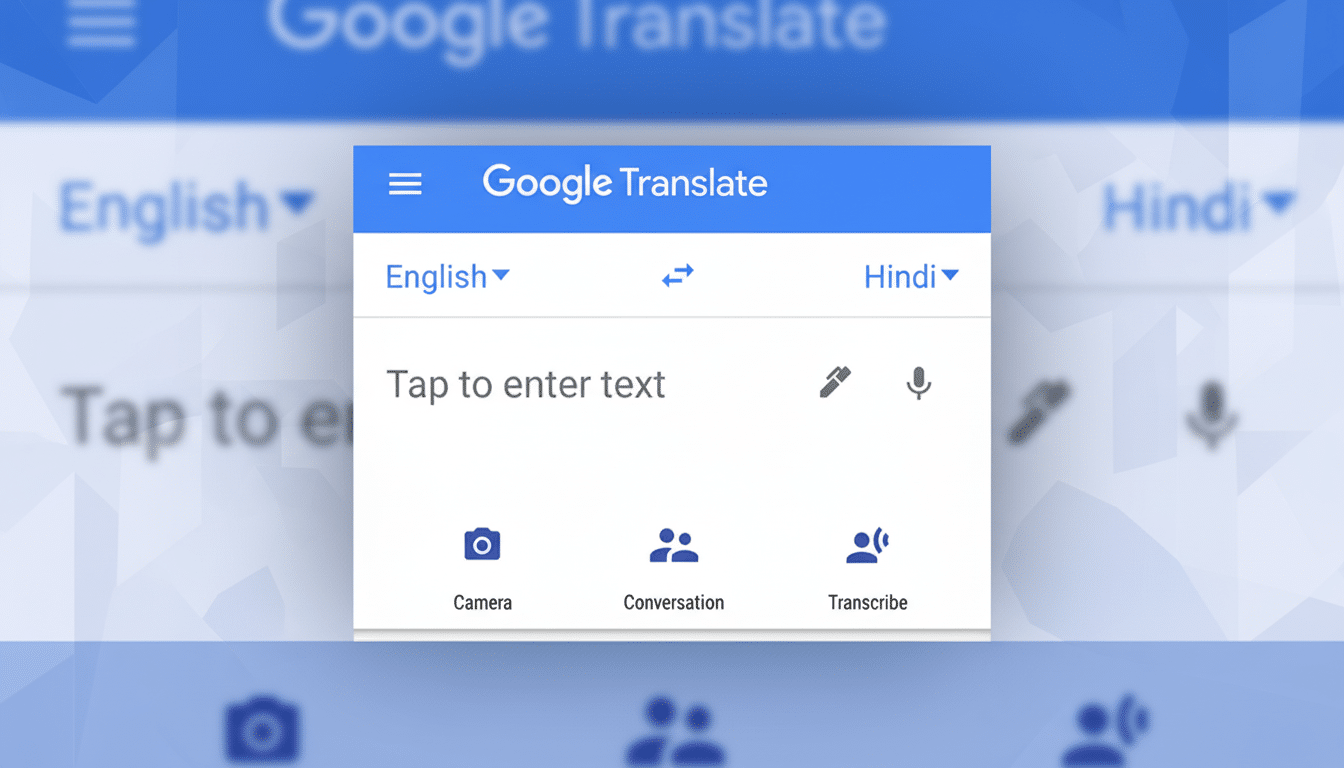
More language learning inside Google Translate
Google is also expanding its built-in learning tools to nearly 20 more countries and offering more language pairs for practice and feedback on pronunciation. A new feature that tracks streaks aims to help people stay consistent, pushing the experience deeper into dedicated learning apps territory without pulling everything out of Translate.
For bilingual households, study-abroad programs, and cross-border teams, a combination of live listening and structured practice in a single app cuts the friction: You can listen to talks with real-time counseling, drill tricky phrases, and get tips through which your pronunciation seeps in.
How it stacks up against other translation options
The deal further heats up a fast-moving race around real-time speech translation. Meta’s SeamlessM4T project has shown end-to-end speech translation across dozens of languages, while device manufacturers have tested translation features during calls and through earbuds. Other dedicated translation outfits like Timekettle have developed niche followings, but Google’s leverage is ubiquity: Hundreds of millions of people already use Translate, and this feature works with the headphones many people already own.
Two caveats to watch: the current one-way nature of the flow (perfect for listening, but far from ideal for interactive discussion), and uncertainty around offline support. If it gets a future two-way mode and some high-quality offline packs, this would be indispensable in travel, fieldwork, and other privacy-sensitive scenarios.
Early takeaways from the live headphone translation beta
For travelers, students in classrooms, and event-goers, live-message headphones can make foreign-language content feel a little less foreign without the crutch of visual stimuli. For businesses, it suggests scalable access to town halls and trainings. The beta label is deserved—accuracy, latency, and battery impact are the metrics to watch—but the direction is obvious: Translation from a phone’s screen going to your ears—it belongs with them in real-world listening.
If Google provides quick expansion, supports two-way conversation, and clear privacy controls, it could be one of Translate’s most significant updates since it added offline packs and camera translation. In the meantime, early adopters in the opening markets get a taste of what hands-free, context-aware translation can achieve on everyday headphones.
