


Google is reimagining Gmail as more than a message bucket. The company is building toward a relationship-aware AI agent that learns who matters to you, what each thread means in context, and how to surface the next action without you spelunking through your inbox. The promise is simple but radical: you at the center, not the messages.
Gmail’s VP of Product Blake Barnes has framed the push as moving from “managing mail” to “managing life.” It’s a trajectory that explains recent AI features in Gmail and a new AI Inbox experience that’s rolling out gradually, even as Google signals caution about timelines and scope.
From inbox to interpreter: email that understands context
Email systems traditionally sort by sender, subject, and date. That logic crumbles when the same domain plays multiple roles in your life. A note from a vendor can be an invoice, a PR pitch, a critical outage alert, or a calendar change. Filters don’t grasp those nuances; relationships do.
Google’s north star is an inbox that interprets messages as events and obligations, not just strings of text. That means clustering by intent, status, and stakeholder—“client approvals due,” “travel next 48 hours,” “family logistics”—and summarizing what changed since you last checked. Behavioral science calls it reducing decision fatigue; your inbox becomes a briefing, not a firehose.
How AI Inbox sets the stage for a proactive Gmail
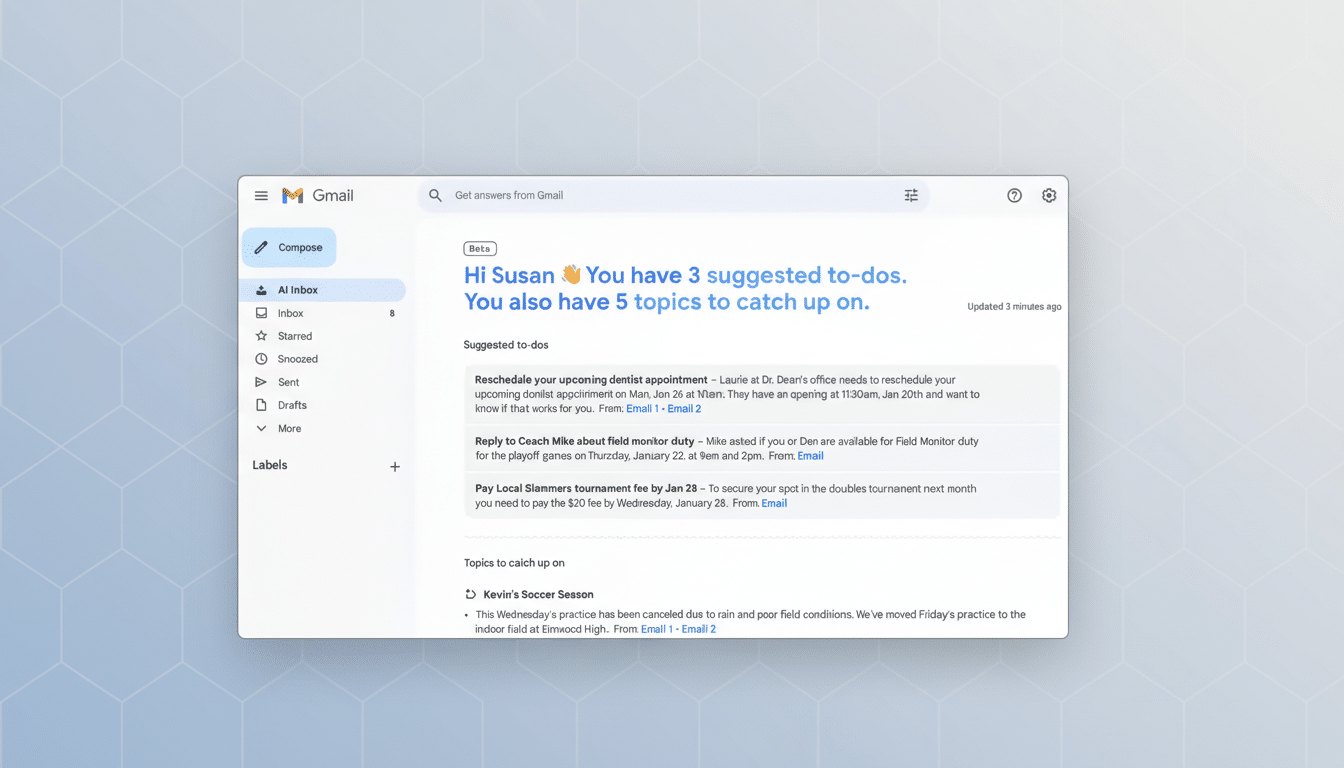
Google’s AI Inbox sits in a separate tab by design. The company says it’s protecting long-honed workflows in the classic inbox while it experiments with proactive ranking, catch-me-up summaries, and richer thread overviews. That separation is a safety valve for billions of routines built on labels, filters, and muscle memory.
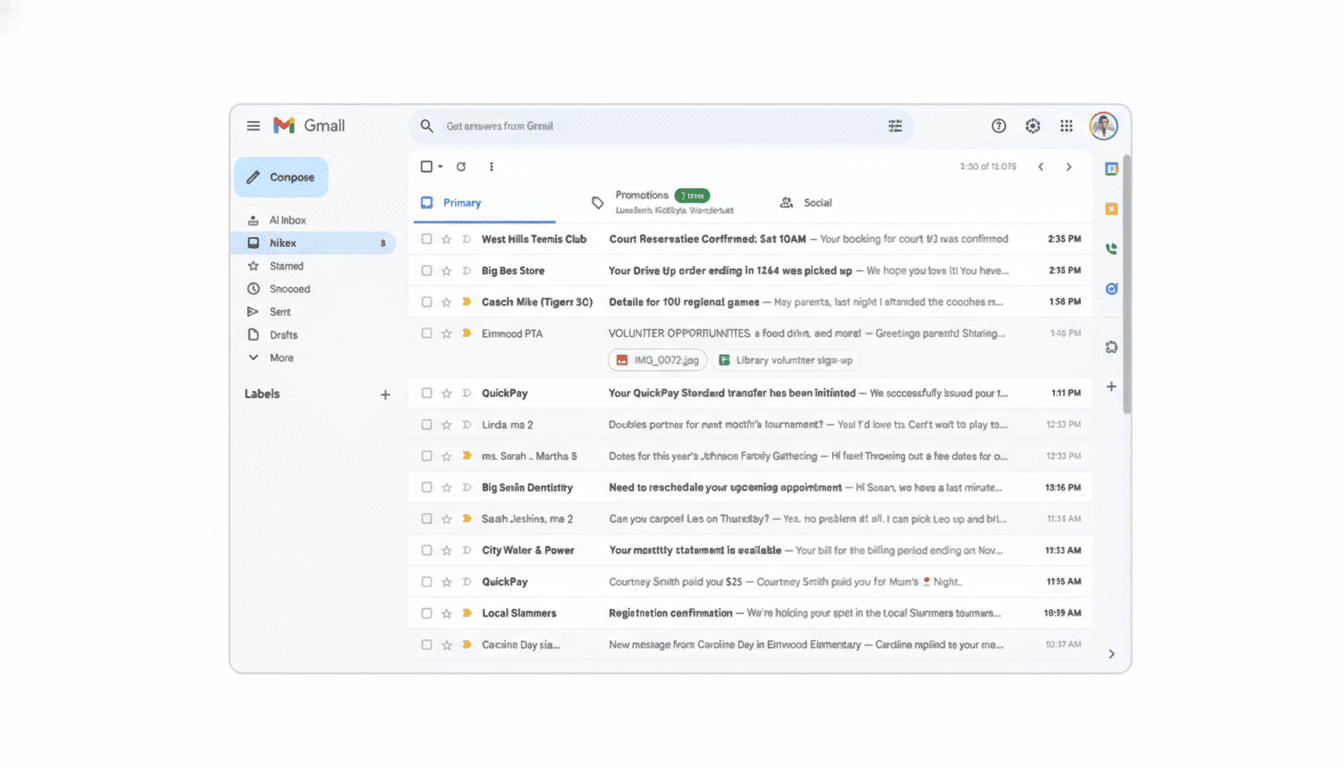
Early testers describe an experience that highlights priority items and compiles what you missed across threads. It’s a far cry from the auto-sort “Primary, Social, Promotions” era. Instead, it’s a testbed for models that can learn your preferences and justify why a message is marked urgent. For a platform used by more than 3 billion people across Google Workspace apps, trust and reversibility matter as much as accuracy.
What relationship-aware really means for your inbox
A relationship-aware agent needs to understand identity and role. The same sender could be a sales rep, a support engineer, or a friend—sometimes all three. Gmail’s roadmap points to models that infer roles from history, cadence, and cross-signal context, then adapt based on your feedback.
Crucially, you’ll steer it in plain language. Imagine saying, “Track anything from our Q1 launch team, flag new contracts from the Acme thread, and update me if my kid’s school emails.” The agent compiles clusters, summarizes deltas, drafts follow-ups, and holds a change log you can edit. Microsoft is pushing similar ideas with Copilot in Outlook, and startups like Superhuman and Spark are experimenting with AI triage, but Google’s advantage is scale and the depth of Gmail history.
Privacy control and trust are make or break
Gmail already relies on machine learning to block 99.9% of spam, phishing, and malware—a decade-long proof point that AI can run quietly at scale. Turning that capability into a personal agent raises tougher questions: what’s on-device versus in the cloud, how models are updated, how explanations are shown, and how to undo actions instantly.
Expect opt-in controls, enterprise admin policies, and transparent activity history to be table stakes. Google routinely underscores compliance with frameworks like GDPR and enterprise-grade data governance in Workspace; those guardrails will have to be visible and simple for consumers, not just IT teams. The value exchange must be clear: you grant context, the agent delivers fewer misses and fewer mistakes.
Why it matters for you and your daily email work
Knowledge workers spend a staggering slice of their week in email. McKinsey has long estimated the burden at about 28% of on-the-job time, and multiple industry studies echo that email remains the most-used business app. Even small improvements in triage and follow-through compound into real hours saved.
Consider travel: receipts, gate changes, hotel holds, and meeting reshuffles arrive across accounts and threads. A relationship-aware Gmail could auto-assemble a live itinerary, highlight the latest change, and pre-draft “running 10 minutes late” messages. Or take sales: it could track multithreaded negotiations across legal, finance, and procurement without you building elaborate filters.
What to watch next as Google rolls out AI Inbox
Read the signals, not the slogans. Watch for natural-language preferences that persist across devices, editable “relationship graphs” you can correct, enterprise controls for data boundaries, and explainable rankings that show their work. Also watch for voice-first interaction on mobile, where quick briefings and nudges could matter most.
Google is clear that this is a multi-year arc, not a single release. The destination is an assistant that knows your goals, understands your relationships, and acts with restraint. If it works, Gmail stops being a place you clean and becomes a place that keeps up with you.
