


Google’s Nest Wi‑Fi Pro (with support for Wi‑Fi 6E) just fell to $99.99, a 50% discount from its $199.99 MSRP, meaning there’s no reason for persistent dead zones and congested networks thinning out anyone’s local wireless network.
If you have been limping along with one old router, or a flaky extender, these are the sorts of deals that meaningfully change your experience of home internet.
- Why this discount matters for most home networks
- Key specs and the Wi‑Fi 6E tech that truly matters
- Real-world coverage and setup in typical homes
- Speed, latency and the 6GHz advantage explained
- Know your limits before you buy a Nest Wi‑Fi Pro
- How it stacks up to competition from Eero and TP-Link
- Who should hop on this deal and upgrade their Wi‑Fi
- Bottom line: why this 50% off Nest Wi‑Fi Pro deal stands out
Why this discount matters for most home networks
Mesh systems take care of the problem single routers don’t: blanketing every inch of your house in Wi‑Fi. A steep discount on a tri‑band 6E system means you can start with one Nest Wi‑Fi Pro to save some money during year zero and build up as time goes on without suffering from sticker shock ahead of time. Now that the Wi‑Fi Alliance says more than half of new devices ship with Wi‑Fi 6 and 6E, and there are billions of Wi‑Fi devices in use worldwide, upgrading your network fabric — not just your phone or laptop — can frequently offer the most real‑world benefit.
Key specs and the Wi‑Fi 6E tech that truly matters
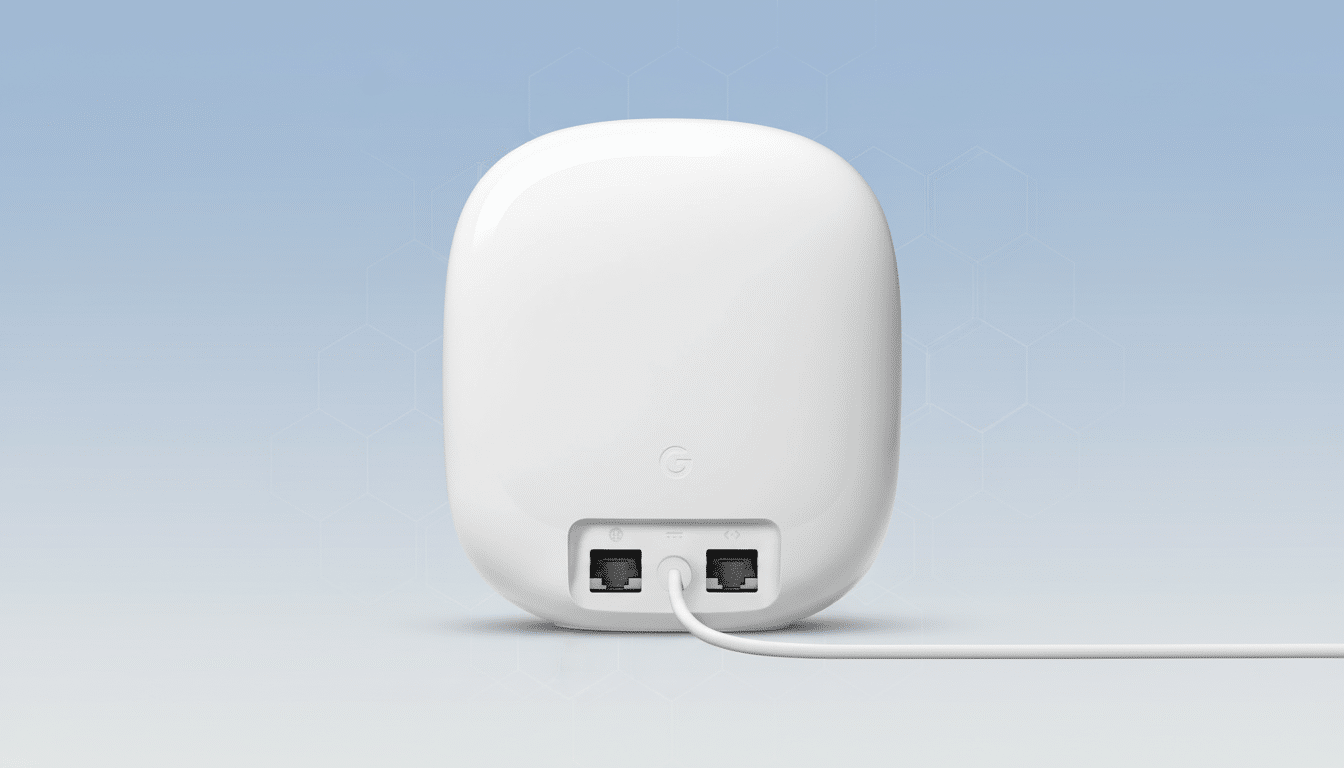
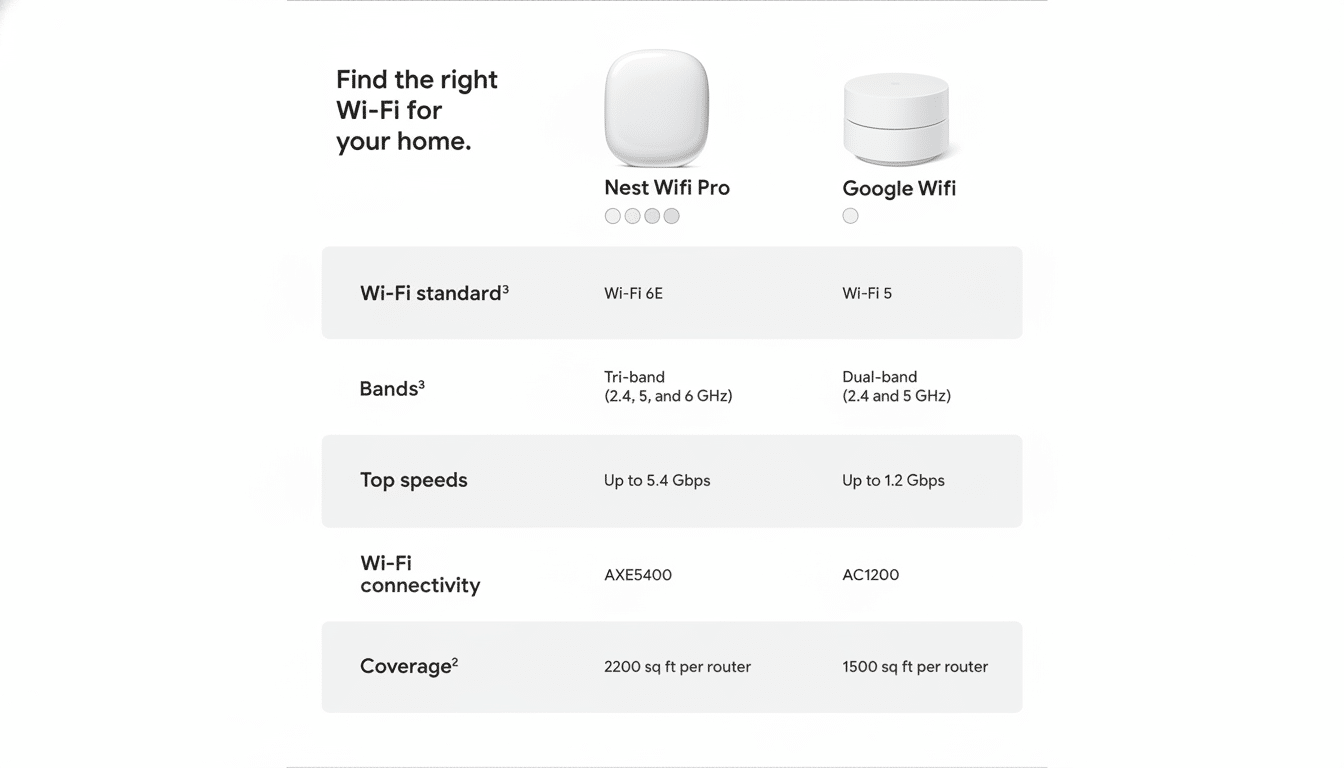
The Nest Wi‑Fi Pro itself is a Wi‑Fi 6E system that promises speeds up to 5.4Gbps (AX5400 class) across the older 2.4GHz and 5GHz frequencies, with Wi‑Fi 6E’s new, less congested, neighbor‑free highway of a band introduced in this model for an even cleaner signal overall. That 6GHz spectrum is the headline: it’s cleaner, wider, and less crowded, which theoretically means lower latency and faster throughput for compatible devices. Each unit can cover approximately 2,200 square feet, and Google’s mesh will automatically shift traffic to maintain wireless stability as you roam through your house.
Security and durability are also a draw. The system uses WPA3 wireless encryption and features automatic firmware updates as well as guest networking, and easy control through the Google Home app. It doubles as a Matter controller (Matter is an edge router standard for the smart home, like Thread) and as a Thread border router, which helps consolidate your smart‑home gadgets that used to need vendor‑dependent hubs.
Real-world coverage and setup in typical homes
In an average two‑story house sized 2,000–2,400 square feet, a single centrally located Nest Wi‑Fi Pro node should be sufficient to conquer most typical dead zones — particularly if what you suffer with is just a straightforward rental gateway that sits in the corner. Homes with denser walls or a finished basement may require more than one unit; the great thing about mesh is you can add nodes later without resetting everything.
Setup is simple: scan a QR code in the Google Home app, name your network, and you’re online in just minutes. The app provides guidance during placement with signal quality testing, so you can position them instead of guessing. Parents will love that dozens of devices — like smart TVs, gaming consoles, laptops, and cameras — can all use the network at the same time without it slowing down during peak hours.
Speed, latency and the 6GHz advantage explained
Speedtest data from Ookla indicates fixed broadband speeds — the sort you get at home — trending higher, but raw speed means little if your Wi‑Fi chokes up on the edge of the house.
The 6GHz band has access to wider channels and less interference from neighbors that can minimize latency — the silent killer of cloud gaming, video calls, and AR/VR streaming. If your phone, laptop, or game console uses Wi‑Fi 6E, you should be more likely to notice the change in response time than the peak throughput numbers.
Know your limits before you buy a Nest Wi‑Fi Pro
There are two caveats. For one thing, the Ethernet ports on the Nest Wi‑Fi Pro are maxed out at 1Gbps. You won’t get full wired speeds here, but if you are paying for a multi‑gig fiber plan, you already know what to expect. Second, even though Wi‑Fi 7 systems are beginning to ship with eye‑watering prices and slightly lower latency, very few homes own much in the way of Wi‑Fi 7 devices yet. Indeed, for most houses, 6E hits the best price‑to‑performance sweet spot right now.
How it stacks up to competition from Eero and TP-Link
Compared with similarly situated mesh kits from Eero and TP‑Link, the Nest Wi‑Fi Pro impresses with an easy setup and reliable roaming, giving you a discount to boot — not to mention the Matter/Thread smarts. Eero frequently triumphs on more advanced network automation and add‑on services, while TP‑Link’s Deco offers you a bit more in hardware specs per dollar. At 50% off, however, Nest’s value play is tough to beat — particularly for Google Home households looking for one app to cover networking and smart‑home control.
Who should hop on this deal and upgrade their Wi‑Fi
- Households juggling 20+ devices. For its customary consumption‑tech research, Deloitte routinely discovers that U.S. households possess this count of devices, and mesh technology helps them all behave.
- People who have a stubborn corner of their house that gets no service. If a bedroom or backyard consistently drops Zoom calls, one node is typically the cure; add another if you have thick stone walls or long floor plans.
- Smart‑home builders. Matter and Thread support help cut the clutter of hubs, so you won’t need to upgrade your system as more devices start using those standards.
Bottom line: why this 50% off Nest Wi‑Fi Pro deal stands out
That makes the 6E‑ready mesh router $99.99. You receive modern Wi‑Fi performance, strong whole‑home coverage, solid security, and a seamless app experience at a price that’s cheaper than most extenders and many entry routers. If you are fed up with buffering and dropouts, this 50% off savings on the Google Nest Wi‑Fi Pro is the upgrade remedy that fixes that issue for years, rather than months.
