


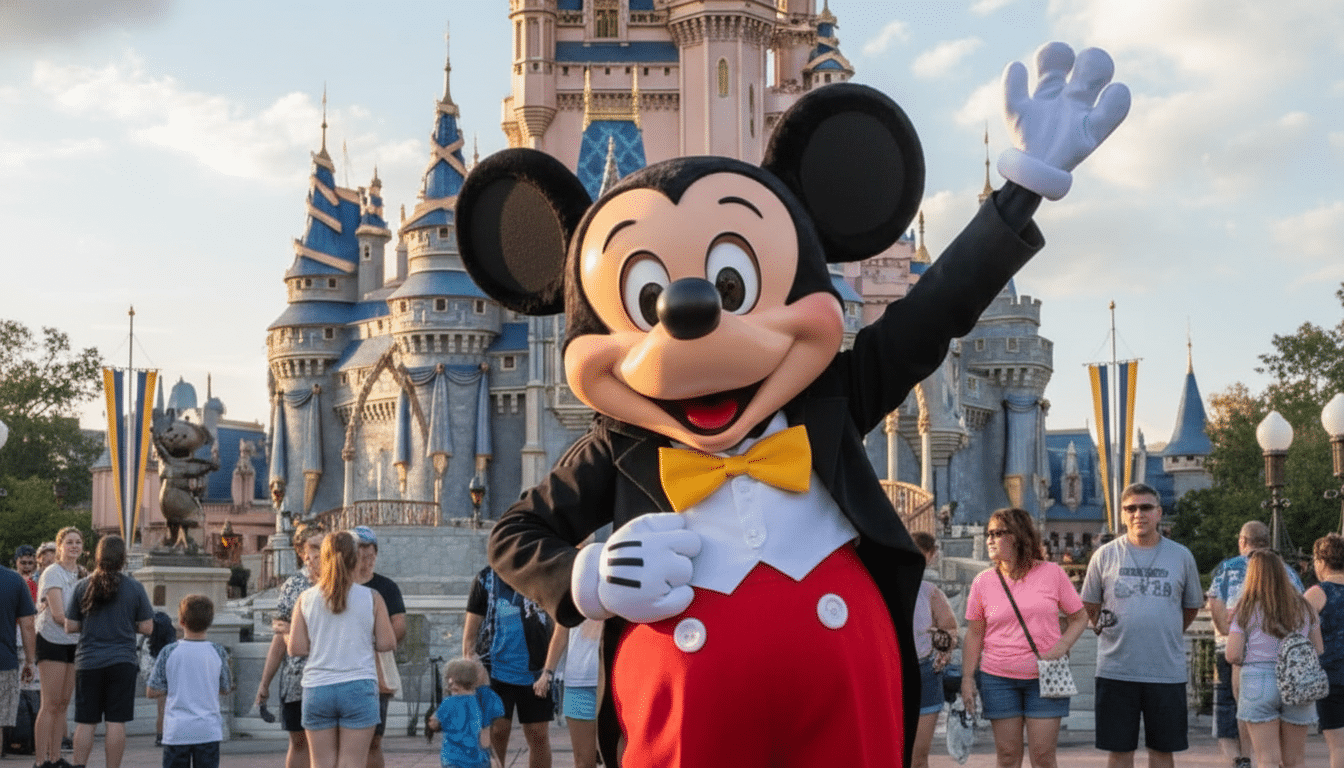
Google’s Gemini will no longer generate images featuring Disney-owned characters, cutting off prompts for everything from Mickey and Marvel to Pixar and Star Wars. The restriction also appears in Nano Banana, a related Google image tool, signaling a broad, policy-level block across the company’s consumer image generation stack.
Users now receive a refusal notice citing concerns tied to third-party content rights. The move follows a cease-and-desist from Disney and the unveiling of an exclusive licensing deal that gives OpenAI’s platforms first-run access to Disney intellectual property for AI image and video generation.
What Changed and Why Google Restricted Disney Images
According to industry reporting, Disney formally challenged Google over the use of its copyrighted characters in AI outputs and, around the same time, announced a multi-year agreement granting OpenAI permission to generate official images and clips using Disney IP. That one-two punch explains Google’s rapid clampdown: a direct legal warning from the rights holder alongside a competitor’s exclusive license.
Google has previously emphasized its reliance on public web data and touted added copyright controls, pointing to initiatives such as Google-Extended and YouTube’s Content ID referenced in comments to outlets like Ars Technica. Even so, training practices are a separate question from what systems are allowed to output. Here, Google is drawing a bright line at the point of generation for Disney assets.
How Gemini Handles Disney Prompts and Workarounds
Testing shows Gemini declines both obvious and roundabout requests involving Disney-owned universes. Direct asks for classic characters get blocked, but so do “wink-and-nod” descriptions that unmistakably evoke those figures. The filter also extends to acquired franchises, including superheroes and space sagas under the Disney umbrella.
Notably, the block is scoped to Disney rights. Prompts involving non-Disney properties can still succeed. For example, characters from DreamWorks, such as Shrek, continue to render because that IP is controlled by a different rights holder. The result is a patchwork users will feel at the prompt level, where brand ownership now materially affects output.
Exclusive Access Through OpenAI for Disney Content
The Disney–OpenAI arrangement grants OpenAI’s tools, including ChatGPT and Sora, the ability to produce officially sanctioned images and videos across a deep catalog—more than 250 characters spanning Disney, Marvel, Pixar, and Star Wars. In practical terms, that makes OpenAI the sole mainstream provider for licensed Disney generations, at least for the term of the deal.
This marks a new phase of IP gating in generative media: instead of blanket bans, we’re seeing selective, contract-backed permissions. Expect differences in quality signals too—such as metadata provenance or watermarking—becoming part of how “authorized” output is distinguished from everything else.
Why It Matters for Users, Creators, and Agencies
For casual users, the change is straightforward: no more Disney generations on Gemini. For professionals—marketers, agencies, and creators—it’s a reminder that brand-safe AI workflows require licensing certainty. An exclusive deal centralizes that certainty in one vendor and reduces legal ambiguity elsewhere.
Disney is known for assertive IP enforcement, and the stakes are high. Generating recognizable characters without a license can create derivative works, which are controlled by the rights holder. While some AI systems have historically taken a permissive stance on pop-culture prompts, the trend line now favors explicit permissions and tighter filters.
The Legal and Business Backdrop for AI IP Controls
Two issues often get conflated: training and output. Companies argue that training on public data can be protected under various legal theories, but producing an image that clearly depicts a copyrighted character is a separate question rooted in derivative work rights. That’s where licensing, opt-out mechanisms, and platform-level blocks come into play.
We’re witnessing the emergence of a rights marketplace around generative AI. Some studios pursue partnerships; others lean on enforcement. Platforms respond with content filters, whitelists, and provenance tech. The net effect is a more fragmented ecosystem in which access to beloved characters depends on who you generate with, not just what you type.
What to Watch Next as AI Licensing Lines Harden
Three threads bear watching.
- First, whether Google negotiates a license that restores Disney generations to Gemini.
- Second, if other rights holders follow Disney’s playbook and cut exclusive deals that reshape where creators go for brand-specific content.
- Third, how standards like C2PA provenance and platform watermarks shape the definition of “authorized” AI media.
For now, the line is clear: Gemini won’t draw Disney. If your workflow needs official characters, OpenAI’s stack is the channel. Everyone else will need to get creative—or stick to IP that’s either licensed, original, or safely in the public domain.
