


Google is rolling out a major upgrade to AI Mode, its conversational search experience, by introducing Personal Intelligence—an opt-in capability that allows the system to draw on your Gmail and Google Photos to craft tailored responses. The feature is launching in English for AI Pro and AI Ultra subscribers in the U.S., positioning Google to leverage the massive trove of data users already keep inside its ecosystem.
What Personal Intelligence Actually Does
Personal Intelligence lets AI Mode pull relevant details from your inbox and photo library when it can improve an answer. Planning a family trip? It can read your flight and hotel confirmations in Gmail, glance at your past travel snapshots in Photos, and suggest an itinerary that matches your group’s style—say, highlighting kid-friendly stops or surfacing an ice-cream shop because your camera roll is full of dessert moments.
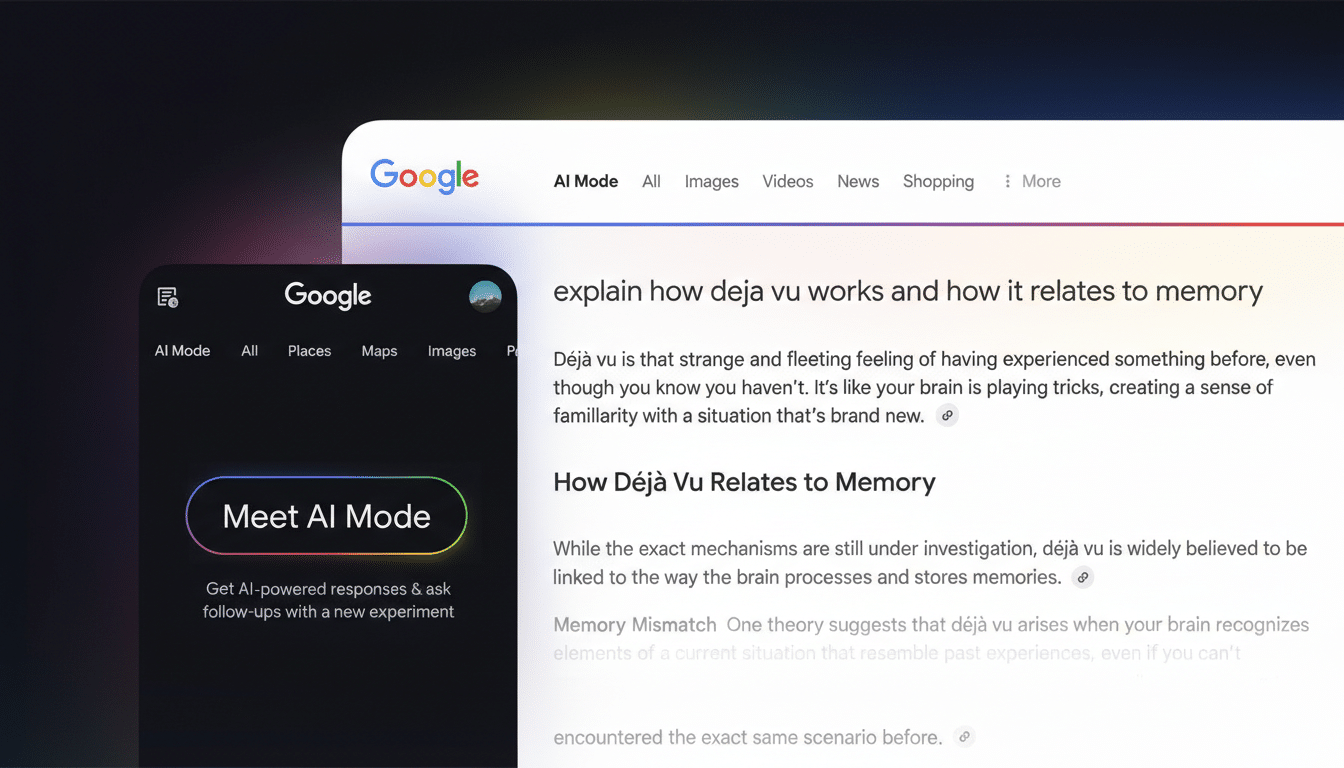
It also works for shopping and everyday tasks. If you ask for a coat recommendation for an upcoming trip, AI Mode can consider your usual brands, your travel dates and destination from Gmail, and suggest items that fit the weather and your preferences. The aim is to replace generic lists with personalized starting points you can refine.
Privacy Controls And Personal Data Boundaries
Google says Personal Intelligence is strictly opt-in and can be toggled off at any time, with granular controls over which sources (like Gmail and Photos) are included. The company emphasizes that the models don’t train directly on the contents of your inbox or photo library; instead, training relies on prompts and model responses, consistent with statements in Google’s public AI documentation.
That reassurance matters: Pew Research Center has reported that a large majority of Americans are uneasy about how companies use their data, and consumer trust is a deciding factor for AI adoption. While Google highlights on-device protections and account-level security, users should still expect standard trade-offs when allowing an assistant to parse personal information: better answers in exchange for scoped access.
Why This Could Be A Big Advantage For Google
Few companies can match the reach of Gmail and Google Photos—Gmail counts well over a billion active users and Photos surpassed the billion-user mark years ago. Tapping those services gives Google a uniquely rich context layer, enabling AI Mode to move beyond one-size-fits-all recommendations toward answers that reflect real habits and history.
Competitively, this mirrors a broader trend. Microsoft’s Copilot ties into Outlook, OneDrive, and Teams via the Microsoft Graph, and Apple’s Personal Intelligence initiative focuses on on-device context across Messages, Mail, and Photos. Google’s pitch is breadth and familiarity: many people already live inside Gmail, Photos, Search, and YouTube, so personalized assistance can come to them without new workflows.
How It Works In Practice For Everyday Queries
Ask AI Mode to “build a weekend itinerary in Chicago near our hotel” and it can pull the hotel address from your confirmation email, estimate travel time between spots, and propose a plan that fits your documented interests. Request “ideas to redecorate my child’s room” and it can infer themes from Photos albums you’ve labeled, then suggest palettes, decor, and a budget shopping list.
For more playful tasks, you might say “create a scavenger hunt for my partner with clues about our memories.” AI Mode can reference shared locations and milestones captured in photos and emails to generate a personalized route and hints, saving you the heavy lifting while keeping you in control of edits.
Availability And Setup For Eligible Subscribers
Personal Intelligence is rolling out first to AI Pro and AI Ultra subscribers in the U.S., in English. Users who gain access will see a setup flow to turn it on and choose which sources to include. You can revisit settings anytime to pause access or remove a source if something feels too sensitive.
As with any AI system, expect occasional misses or hallucinations. Google encourages users to check cited details—like dates, addresses, or product specs—and to rely on built-in controls to correct preferences. The company says it will expand the feature set and language support over time based on feedback.
The Bottom Line On Google’s New Personal Intelligence
By letting AI Mode consult Gmail and Photos with consent, Google is turning personal archives into practical context for planning, shopping, and organizing. The value proposition is clear: fewer clarifying prompts and more relevant answers from the start. The adoption curve, however, will hinge on how confidently users feel the guardrails protect their most sensitive information—and how consistently the assistant proves it can turn that context into genuinely useful results.
