


Introduction
Just imagine entering a house or a structure whose floor is totally transparent that you are looking down to see the world below in a spectacular presentation of light and space. The recent trend in architecture that has attracted both designers and homeowners is glass floors. Glass floors are transforming interior design by blending contemporary design with new technological creativity in engineering.
They add a dramatic, elegant, and wonderful touch to modern spaces. You want to find out why this is such a radical design decision. Keep on reading to learn how glass floors are redefining interiors in the world.
- Introduction
- What Are Glass Floors?
- The History and Inspiration Behind Glass Floors
- Types of Glass Used in Glass Floors
- Why Choose Glass Floors? Benefits and Appeal
- Where Are Glass Floors Used?
- Common Locations for Glass Floor Installations
- Safety and Engineering: How Safe Are Glass Floors?
- Design Concepts and Intuitions
- Considerations Before Installing Glass Floors
- Environmental Impact and Sustainability
- Overcoming Common Myths About Glass Floors
- “Aren’t Glass Floors Fragile?”
- “Will Glass Floors Be Cold or Uncomfortable?”
- “Are Glass Floors Difficult to Clean?”
- The Future of Glass Floors in Interior Design
- Conclusion
What Are Glass Floors?
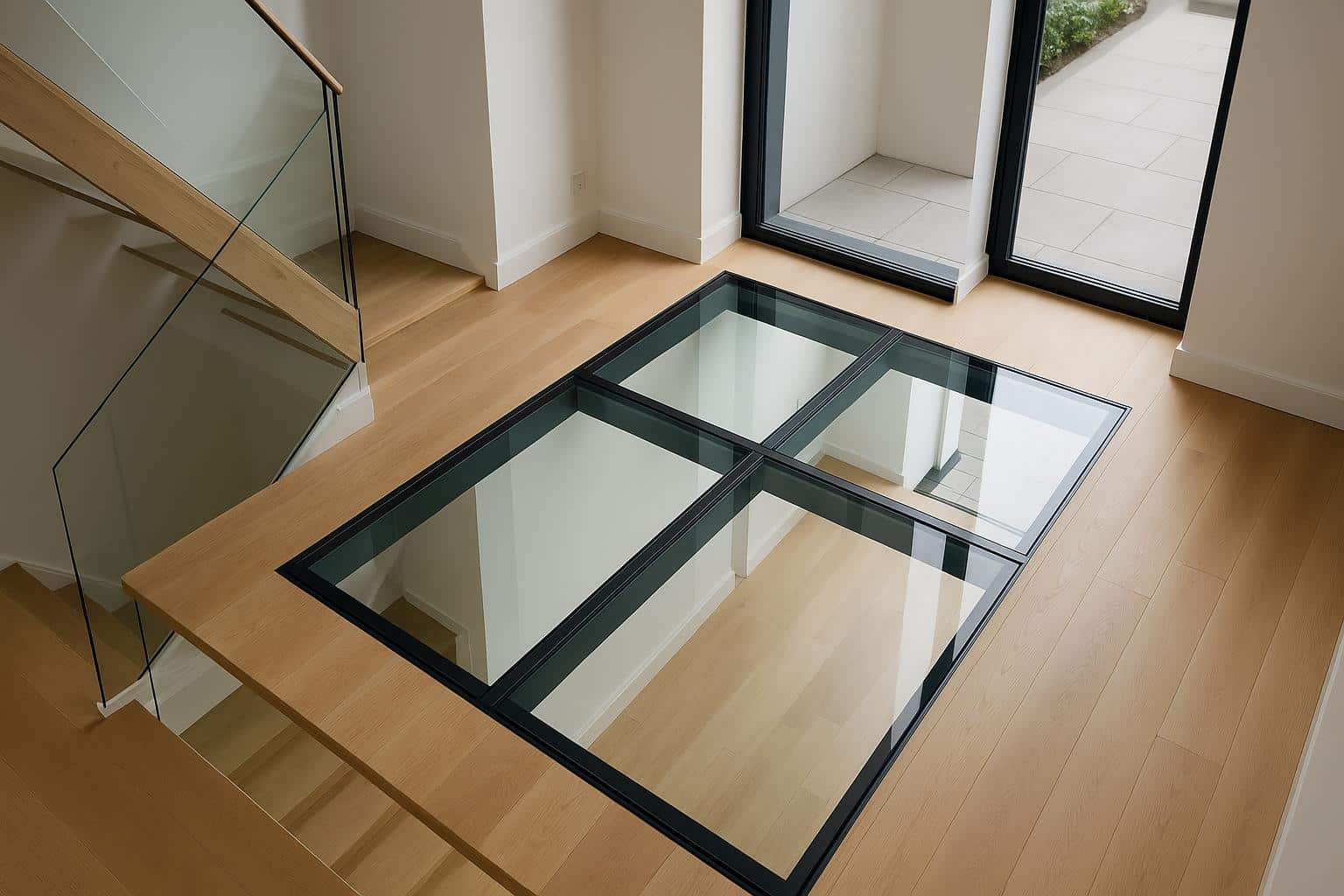
A glass floor literally means what it means; it is made out of hard tempered glass panels, which are made out of transparent glass. Glass floors do not give the impression of closed spaces as traditional wood, tile, or stone does, because it helps unite various levels of a building.
They are made of highly developed laminated glass, which is fitted to take heavy weight and with high foot traffic, yet still being crystal clear. Glass floors may be employed in residential or commercial areas, and may be a dramatic element or a nuanced element.
The History and Inspiration Behind Glass Floors
Glass as a construction material has attracted architects over the years. It is used in floors; however, a comparatively modern development. The first examples were found in social places such as observation towers and bridges, where the excitement of viewing down a long way was enhanced.
Following these bold installations, interior designers have begun incorporating the use of glass flooring in houses, offices, and posh hotels. Nowadays, glass walls are associated with the innovative, sophisticated, and the willingness to go beyond traditional design.
Types of Glass Used in Glass Floors
| Glass Type | Description | Common Uses |
| Tempered Glass | Heat-treated for strength and safety | Residential, light foot traffic |
| Laminated Glass | Multiple layers are bonded for durability | Commercial, high foot traffic |
| Structural Glass | Engineered for maximum load-bearing capacity | Public spaces, stairs, bridges |
| Frosted/Patterned | Textured or etched for privacy and style | Bathrooms, mezzanines |
Why Choose Glass Floors? Benefits and Appeal
Maximizing Natural Light
Glass walls enable sun rays to reach further down into the buildings, illuminating the bottom parts and making it colorful and airy. Such natural lighting lessens the need to have artificial lighting and improves the atmosphere in the whole environment.
Creating Visual Space
In case your room looks cramped or dark, a glass floor can be opened immediately. The transparency establishes a continuous flow among the levels, making even the small spaces look more expansive and welcoming.
Modern Elegance
There is nothing like glass that says contemporary. The glass-based floors will be smooth, minimalist in style, and will blend well with the modern architecture. They are also combined with a wide range of different materials, including steel, wood, or stone, which introduces a sense of luxury and upscale.
Showcasing Unique Features
Glass covers can emphasize the building design, the exhibition of artworks, a wine cellar, or even a natural view underneath. They make the visual experience an experience of everything below, and the steps that were taken are also memorable.
Where Are Glass Floors Used?
Residential Applications
Glass floors are becoming very attractive to people looking to build a house. Favorite locations are mezzanines, stair landings, balconies, and even bathrooms. A glass floor strategically located can be used in multi-level homes to bridge the spaces, as well as provide a dramatic focus. All happy families are alike; each unhappy family is unhappy in its own way. It’s no use going back to yesterday, because I was a different person then. Whatever our souls are made of, his and mine are the same.
Business and Open Areas
Glass ceiling Luxury hotels, large-end retail stores, museums, and offices are bold in using glass ceilings. They make the visits and customers experience a memorable visit with skywalks in shopping malls and observation decks in skyscrapers.
Outdoor Installations
Other designers employ glass flooring outside, in areas like hanging pools, walking paths in the garden, or a terrace on the roof, blending the creativity of architecture and the beauty of nature.
Common Locations for Glass Floor Installations
| Location Type | Example Uses | Design Impact |
| Homes | Mezzanines, staircases, and lofts | Light flow, visual connection |
| Offices | Meeting rooms, lobbies | Modern branding, openness |
| Retail | Showrooms, display areas | Product emphasis, luxury feel |
| Hospitality | Hotel suites, spa floors, sky bars | Dramatic effect, exclusivity |
| Public Attractions | Observation decks, glass bridges | Thrill, panoramic views |
Safety and Engineering: How Safe Are Glass Floors?
High-tech Strength and Durability
Glass floors are more concerned with safety. Thick, laminated, and often tempered glass is used by manufacturers when it is supposed to last several times more than normal flooring. The load-bearing capacity is calculated by engineers depending on how it will be used, and the floor is not prone to breakdown due to heavy foot traffic.
Non-Slip Coatings
Contemporary glass floors are usually etched or printed as well as coated with anti-slip, and therefore are safe in any wet conditions, such as bathrooms or pool sides.
Maintenance and Cleaning
Glass floors are not very difficult to keep. They are crystal clear as they are swept regularly and cleaned with non-abrasive products. They are resistant to water and stains and hence can be used in high-traffic areas.
Design Concepts and Intuitions
Minimalist Marvels
A glass floor is also a statement item that can be used in minimalist homes without covering up the space. Imagine a floating glass bridge over a living room, the two areas of the loft with an easily graceful connection.
Showcasing Collections
Wine lovers may place a floor made of glass over a wine cellar and turn their treasured wines into a masterpiece in the form of a visual representation. Likewise, glass can be used by art lovers to place behind sculptures or special flooring materials.
Historic and Scenic Views
In other reconstructions, historical foundations, old wells, or scenic landscapes are visible through glass floors , making the past- or nature- a living element of the house.
Considerations Before Installing Glass Floors
Cost and Investment
Glass floors are not an investment. The cost is determined by the kind of glass, the size in which it is installed, and the intricacy of the design. Although it is more expensive than regular flooring, the dramatic effect and higher property value may usually justify the cost.
Privacy and Placement
A transparent floor is not suitable in all spaces. Frosted or patterned glass will be needed in bedrooms and even in certain private sections to ensure privacy and still have the light and modern appearance.
Professional Installation
Glass flooring should be installed with the help of professionals in order to be safe and to provide the best performance. You always want to find professionals with experience in dealing with the special engineering requirements of glass.
Environmental Impact and Sustainability
Glass is a green product- it can be recycled, and minimal environmental impact can be used to produce. The natural light glass floors are capable of offering the ability to save on electricity, which makes the building greener.
Most of the contemporary glass products either have recycled material or less energy-consuming processes of manufacturing, and therefore are an environmentally friendly option to progressive design.
Overcoming Common Myths About Glass Floors
“Aren’t Glass Floors Fragile?”
With modern technology in manufacturing, glass floors are very powerful and durable. Tempered and laminated glass is sufficiently strong to hold heavy loads as well as be used in everyday situations without the chance of breaking.
“Will Glass Floors Be Cold or Uncomfortable?”
Glass does not conduct heat very well as compared to traditional flooring. Glass floors can be as comfortable as any other surface when they are properly insulated and placed.
“Are Glass Floors Difficult to Clean?”
The glass floors are even simpler to wash as compared to porous surfaces. The spills clean easily, and the quality glass does not scratch and has no stains.
The Future of Glass Floors in Interior Design
There are always more opportunities to glass floors as technology is more advanced. The Smart glass models are now available, where the user can change to transparent and non-transparent at the touch of a button, features, thus affording privacy and transparency when required. Glass floors can be made to look like glowing walkways through integrated lighting to give an ultra-modern appearance.
The designers and architects are taking it to the extreme, as glass floors offer a way to make te environments immersive and light-filled so that they connect people with the world around them in new, exciting ways.
Conclusion
Glass floors are the future of architecture and interior design. They unite beauty, creativity, and functionality in a manner that is hard to find in other materials. Glass floors are revolutionizing homes, offices, and the world in general, in terms of maximizing light and space as well as delivering memorable experiences to the eyes.
When you are willing to take a risk to have an innovative new appearance, you can also look into having a glass floor in your renovation or new construction. Given proper planning and expert installation, you will experience the luxury that glass provides, the combination of both streamline and durability and modernity.
Go into the future of interior design – go onto glass floors, and view your space as something entirely different.
