


Search is changing in a way that goes beyond the familiar shift from desktop to mobile. People are no longer relying exclusively on a list of blue links to find information. They are asking ChatGPT, Google’s AI features, Microsoft Copilot and other answer engines to summarise options, compare providers and recommend the next step.
That creates a new challenge for brands: how do you become part of the answer?
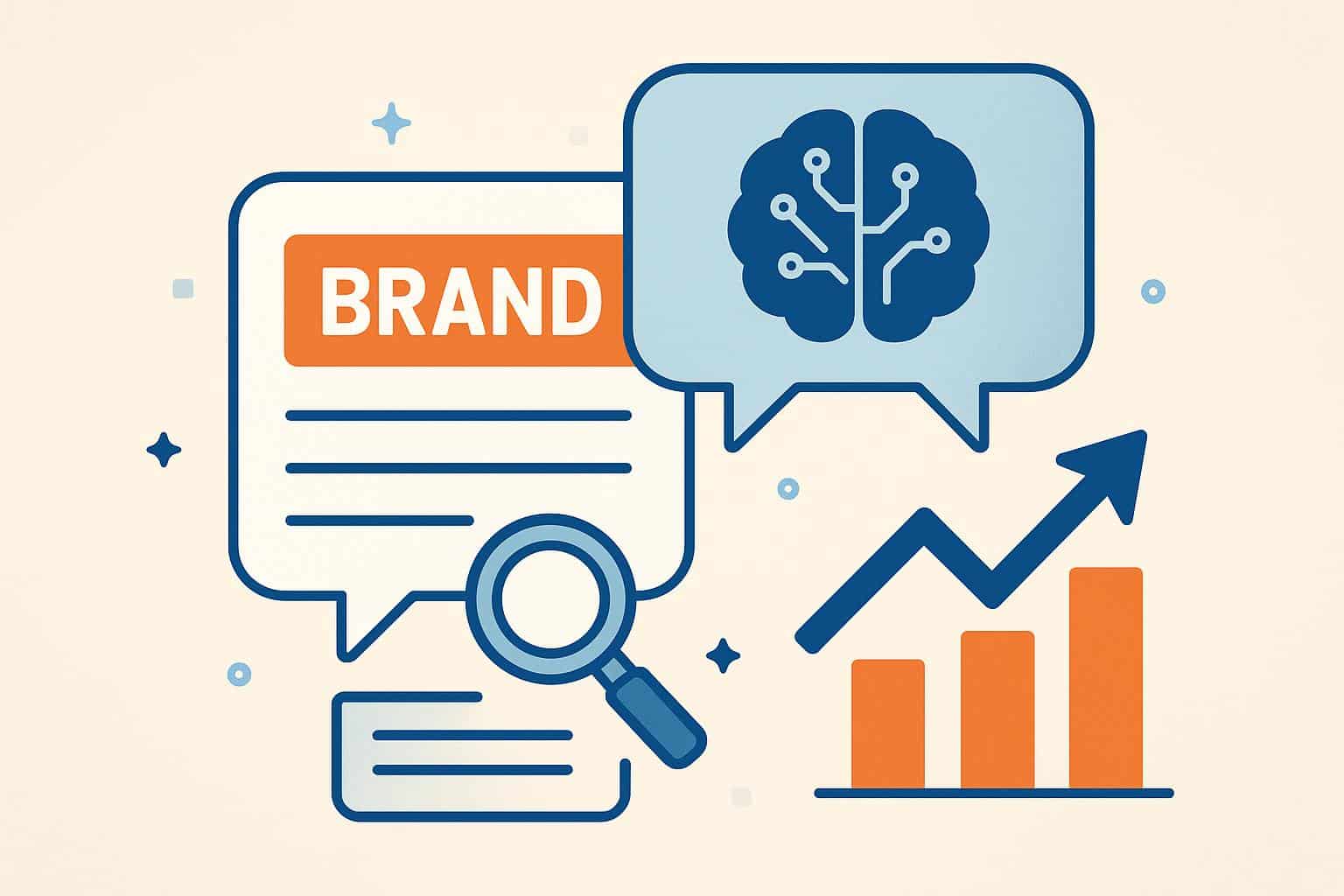
Traditional search engine optimisation still matters, but visibility now depends on more than ranking for a keyword. Brands must also provide the kind of clear, credible and well-structured information that artificial intelligence systems can understand, evaluate and use in their responses.
Search visibility is becoming answer visibility
A conventional search journey might involve several stages: entering a query, scanning results, opening multiple pages and deciding which information to trust. AI-powered search compresses much of that process into a single response.
A customer might ask:
- Which accounting software is best for a small business?
- What should I look for in a commercial mortgage?
- Which local agency can help with technical SEO?
- Is product A better than product B for a particular use case?
The answer may include a short explanation, a comparison and a handful of cited sources. If your brand is absent, you may lose consideration before a prospective customer ever reaches your website.
This does not mean that clicks have become irrelevant. It means the buying journey starts earlier. Customers may encounter your company as a recommendation, a quoted source or a named example before they visit your site. Being represented accurately in that first answer can influence whether they investigate further.
What AI systems look for in a source
Answer engines do not assess content in exactly the same way as a human editor, but they tend to favour information that is easy to interpret and supported by recognisable signals of quality.
Clarity and directness
Pages that answer common questions clearly are more useful than pages that bury the answer beneath generic introductions. If a customer wants to know how long an implementation takes, provide a realistic range and explain what affects it. If there are limitations, state them plainly.
This is especially important because AI systems often extract passages rather than reproduce whole pages. A concise, self-contained explanation has a better chance of being understood in context.
Demonstrated expertise
Claims carry more weight when they are supported by evidence. Include relevant qualifications, practical experience, original research, case studies, named authors and references to established industry sources where appropriate.
A service page that says “we deliver excellent results” gives an answer engine little to work with. A page that explains the methodology, defines success metrics and includes examples of outcomes provides considerably more useful material.
Consistency across the web
AI models draw on multiple sources. Your website is important, but it is not the only representation of your business. Profiles, reviews, trade publications, directories, social channels and third-party mentions can all contribute to how your brand is understood.
Inconsistent company names, outdated descriptions or conflicting service information create uncertainty. Keep your core facts aligned: what you do, where you operate, who you serve and what makes your approach distinctive.
Build content around real questions
The most effective approach is not to produce endless articles based on variations of the same keyword. Instead, map the questions customers ask at each stage of their decision.
Early-stage questions tend to be educational. Prospects may want to understand a problem, its causes or the available solutions. Later, they may ask about pricing, implementation, risks, alternatives and expected results. Each question represents an opportunity to demonstrate expertise.
For example, a cybersecurity company could create useful content around:
- How to identify a phishing attempt
- What a managed security service includes
- How long a security audit takes
- Whether small businesses need endpoint protection
- How to compare cybersecurity providers
Notice that these are not all sales questions. That is precisely the point. Helpful, balanced information can establish relevance before a customer is ready to make contact.
Organise related pages into clear topic areas, with a central guide supported by more specific resources. Use descriptive headings, meaningful internal links and straightforward language. This gives readers a better experience while helping search systems understand the relationship between subjects.
For organisations looking to formalise this work, improving visibility across AI search involves combining conventional SEO principles with content designed for answer engines, including structured information, entity clarity and question-led content planning.
Make your brand easy to interpret
Technical details cannot compensate for unclear positioning. Before refining schema or rewriting headings, ask whether an unfamiliar reader could explain your business after spending two minutes on your website.
Your homepage and key service pages should make several things immediately clear:
- What does the organisation offer?
- Who is it for?
- Where is it available?
- Which problems does it solve?
- Why might someone choose it over an alternative?
Use consistent terminology. If your business calls a service “conversion rate optimisation” on one page and “digital performance improvement” on another, an AI system may not confidently connect the two. Strategic variation is useful for covering different search language, but the underlying meaning should remain stable.
Structured data can also help machines interpret details such as products, services, reviews, organisations, locations and events. It is not a shortcut to inclusion, and it cannot make weak content authoritative. Used correctly, however, it gives search engines additional context and reduces ambiguity.
Earn the references that influence trust
Being mentioned by a credible third party can be more persuasive than making a claim about yourself. Industry associations, respected publications, specialist directories, conference websites and independent reviews all help establish that a brand exists within a wider professional context.
The emphasis should be on relevance rather than volume. A dozen unrelated directory listings are unlikely to build meaningful authority. One detailed, accurate feature in a respected industry publication may do far more for reputation and discoverability.
Original insight is particularly valuable here. Publish survey findings, practical benchmarks, expert commentary or anonymised lessons from projects. These assets give other writers something worth citing and create information that cannot be replicated by simply rewriting existing pages.
Measure more than traditional rankings
AI search performance is still developing, so measurement requires a broader view. Track changes in branded search, referral traffic from emerging platforms, mentions in AI-generated answers where testing is possible, assisted conversions and the questions being raised by sales teams.
Do not expect every improvement to produce an immediate increase in clicks. A customer may first discover your business in an AI-generated comparison, return through a branded search days later and eventually convert through a direct visit. Attribution will often be imperfect.
The practical response is to combine analytics with qualitative evidence. Ask new customers how they found you. Monitor which pages are being cited or discussed. Review your content every quarter against changing customer questions and industry terminology.
The brands that become part of the answer
AI search rewards organisations that are understandable, useful and consistently represented. It is not enough to publish more content or repeat target phrases. Brands need a clear point of view, evidence behind their claims and resources that answer genuine questions better than generic alternatives.
Think of every important page as an opportunity to help a customer make a decision. Explain the issue, acknowledge the trade-offs and show what happens next. When your information is genuinely useful to people, it becomes more useful to the systems trying to assist them.
The future of search will not be defined solely by who ranks first. It will also be shaped by which brands are considered credible enough to include when the answer is generated.

