


Greenland 2 Migration comes as a gut punch, the ruthless sequel that trades in the first movie’s comet-countdown response for a slow burn about human survival. Gerard Butler returns as structural engineer John Garrity, a dutiful dad bearing the sorrow and scrappiness of a fractured society — one who isn’t giving in to his dying days in the name of his wife, Allison, and teenage son Nathan.
Five years after the Clarke event, the sequel portrays a planet scarred beyond recognition.
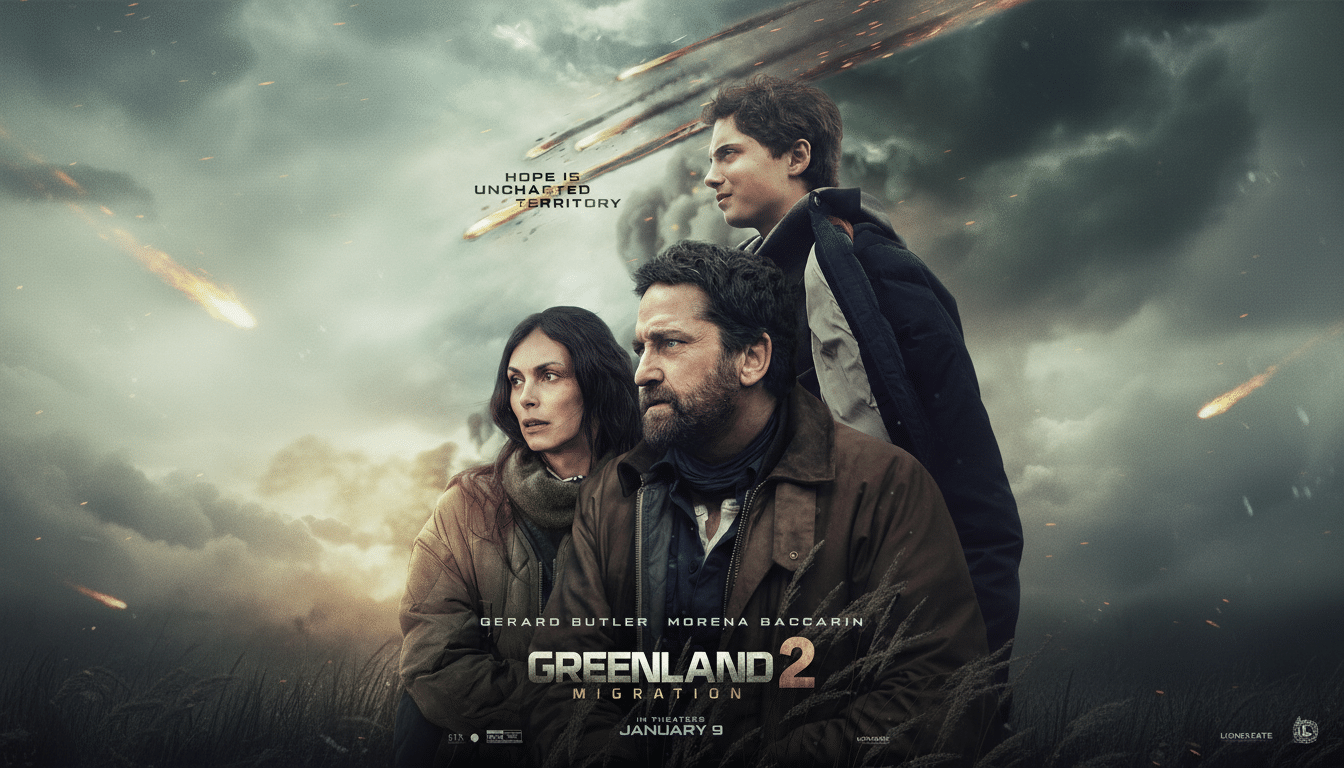
Voiceover informs us that about 75 percent of humanity has been wiped out, with those who remain living in irradiated air that requires masks and working through shrinking rations and the fragility of order within subterranean bunkers. The Garritys’ shelter is breaking at its seams, both literally and otherwise.
Salvation might be in the South of France, where scientists say the central impact crater has left behind an improbable refuge of clean water, fertile soil, and protected slopes against storms. It’s a dangerous haul from Greenland, and the Garritys shoulder it anyway, betting everything on the belief that there’s still a life worth living.
A Sequel That Narrows the Lens on Survival
Where Greenland then ratcheted the nightmare to hellish, ticking catastrophe, Migration shuttlecocks its attention over to carving a niche. The director, Ric Roman Waugh, works in an elegiac key: The danger never really abates, but the pace is less breathless than inexorable. The wattage of the film is in its exhaustion, which is to say that survival feels like a marathon run on crumbled ground.
The path to Europe is fraught with earthquakes, tsunamis, and electric skies that spit lightning, but human fighting can be just as deadly. Motorists maraud highways; cities curl into riot zones. The portrayal of scarcity, mistrust, and tenuous solidarity accords with dynamics that UNHCR has recorded at length in its reporting on mass displacement and refugee movements.
Butler’s Evolving Everyman Hero Finds New Resolve
Butler makes a successful pivot from first-film panic to battle-tested resolve. John is broken but unbreakable, a man who has spent years scavenging beyond the safety of the bunker and has maybe paid for it with his health. His smoker’s cough turns into its own story clock, the ticking reminder that there is more time running out than just one.
His chemistry with Morena Baccarin’s Allison continues to be the franchise’s moral core, even as Roman Griffin Davis presents a Nathan with a guarded resilience that is earned. Butler’s gravelly urgency does the dramatic heavy lifting, and it’s in small moments of fear, tenderness, and unspoken pacts where the notion that Butler is “the dad we need,” as he called himself on Twitter ahead of the movie’s release (followed by #angelhasfallen), lands hardest.
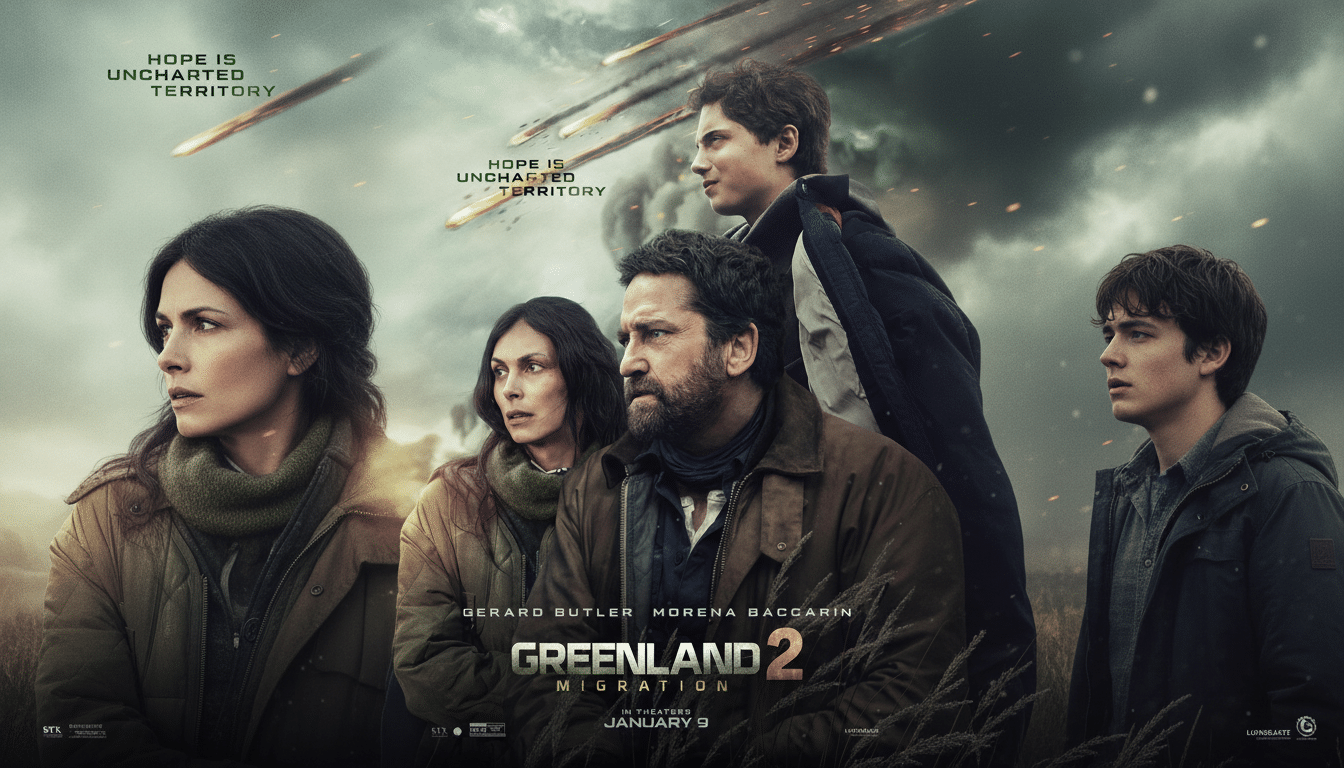
Action Design and Worldbuilding Grounded in Realism
Waugh directs clean, legible set pieces that favor proximity to spectacle. A rocking suspension bridge mid-quake, a flooded subway tunnel turned deadly siphon, a late-night dash through a riot-scarred London block — each sequence is designed for clarity and queasy immersion over showy excess.
The visual effects blend in with a mud-and-metal production design that convinces you of the cost of survival; there’s a tactility to both the cold and ash and relentless wet.
That real-world sensibility mirrors one of the reasons the original film found solid legs on premium VOD, as industry trackers like Comscore and Box Office Mojo noted: pandemic-era performance, indeed a case study for adult-aimed genre resilience.
Where the Script Stumbles and Logic Falls Short
Not every thread holds. Nathan’s diabetes, a point of central tension in the original, is reduced for the most part to a stock-up-and-go beat. The International Diabetes Federation suggests insulin is best kept at 2–8°C; long-haul travel where refrigeration cannot be guaranteed should have been more of a story-generating engine than it turns out to be in these pages. The lapse doesn’t sink the movie, but it does mar its otherwise exacting logic.
There’s a trade-off, too, for the sake of tone. The elegy is absorbing, though patches of danger can grow repetitive, and the film’s gray mood may flatten thrills for some viewers. Research from the American Psychological Association has found that disaster media can amplify stress responses; Migration amps that up, though it’s salted with grace notes — strangers who assist, communities that share — to keep hope flickering.
The Verdict on Greenland 2 Migration’s Stark Journey
Greenland 2 Migration doesn’t dazzle with the breathless energy of its predecessor, but it feels more soulful. Butler provides a workable if bruised performance around which the franchise has been reframed, shifting its focus toward caretaking and sacrifice; Waugh’s set pieces remain intimate and brutally effective. It’s an honest hermeneutic; the film’s bleakest takeaway is also its most truthful: that nature is terrifying, but under pressure people can be worse. And yet, the film argues convincingly, stubborn love is a survival strategy still.
And, for those who wish the disaster genre also delivered dramatic aftershocks, this is a very good, nerve-pricking chapter — one that permits Butler to be a rock-solid dad to a planet that can always use more of them.
