


Google has just thrown a meaningful switch for its AI assistant: custom “Gems” within Gemini Pro can be shared with other people now. It’s nothing fancy, but it’s the kind of platform-aware gesture that transforms a lone assistant into a collaborative one — and not one easily approximated with ChatGPT’s Projects today.
What shareable Gems are really doing in Gemini
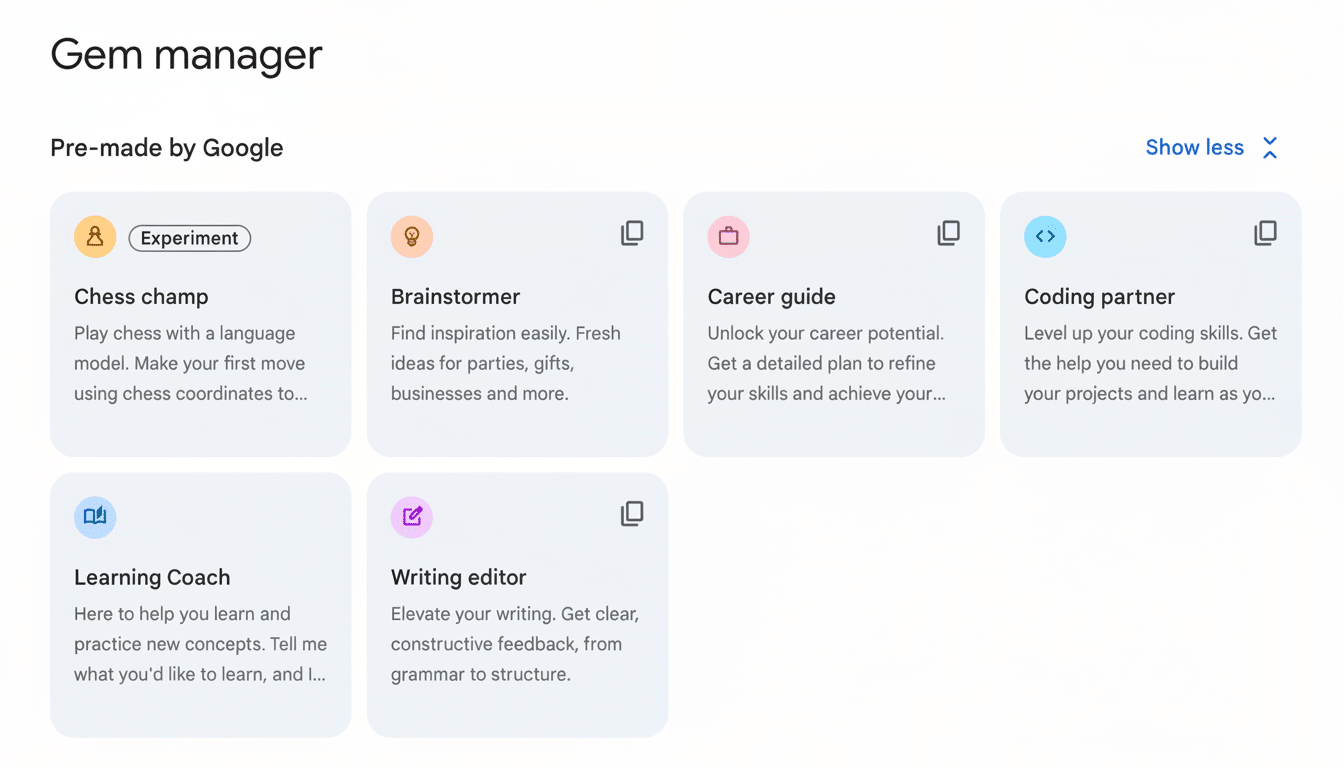
Gems are long-term workspaces in Gemini that remember how you want to say something, and the tone or context of a task.
You might think of them as templated brains you spin up for recurring work — campaign planning, workout coaching, code review, investor updates — without re-explaining yourself at every turn.
Google is now allowing you to hand those setups over to others as simply as sharing a document. Via the web Gem manager, you can invite people or teams, grant them view or edit rights, even create a link. The user experience mirrors Google Drive’s own permission model, so most users need literally zero training to adopt it.
In practical terms, that means:
- A product team can co-own a research Gem and, just as they would their codebase, easily add end-user data collection to the project roadmap.
- A sales org can standardize outreach by sharing customers between playbooks.
- A teacher can distribute a “curriculum” Gem that his colleagues are able to adapt.
The “remembered context” moves along with the share, so that collaborators are served up with the same instruction and guardrails.
Why it’s difficult for ChatGPT to reproduce this
OpenAI’s Projects and shared chats are good ways to organize work, but those projects aren’t designed to have things handed off with Drive-style permissions. And the distinction is more than just a toggle — it’s infrastructure. Google already has a fully formed identity and sharing layer across Gmail, Groups, Drive, and Workspace admin controls. Replicating that muscle isn’t just about slapping on a “share” button.
There are three big hurdles.
- Firstly, identity: Drive‑grade sharing isn’t going to run on a flaky user/group directory.
- Second, governance: enterprises want to see audit logs, DLP policies, and granular permissioning, which already exist across Google’s productivity stack.
- Third, user behavior: billions of people are trained on the “view/edit/link” model in Docs and Sheets — so, less friction to adopt.
OpenAI has a decent enterprise product, but no integrated sharing fabric that is native and everywhere. Without a cross-app identity graph and admin policy engine, turning Projects into genuinely shareable entities would require some deeper platform work or partnerships. That’s not insurmountable — Microsoft Copilot benefits from Microsoft 365 and SharePoint — but it explains why Google’s initiative lands quickly and widely.
Collaboration gains—and caveats to keep in mind
Common Gems reduce the time it takes for new team members to onboard. A marketing lead can document brand voice, competitive context, and approval steps in a Gem that others can be granted edit rights to evolve as campaigns shift. A customer success team can keep a Gem up to date on product updates as well as support tone, guaranteeing consistency in the responses across all agents.
The upside is measurable. Consulting firm research has long suggested that knowledge workers devote a meaningful portion of their week to searching for information and re-creating work. Enclosing process and context into a reusable, shared assistant prevents that waste and promotes standard outputs without turning every prompt into an armed camp.
There are guardrails to consider. Users can inadvertently disclose sensitive information to others with shared commands if they aren’t careful. Companies should decide what goes into a Gem and rely on other available admin controls. Like any piece of collaborative artwork, version discipline matters: who is editing, who can approve a change, and when to fork the Gem instead of just overwriting.
Availability and who benefits most from shareable Gems
Google says the feature is currently live. It’s accessible for Gemini Pro subscribers, so you won’t see it if you’re on the free tier. The biggest near-term beneficiaries are teams who already dwell within Google’s productivity stack. They’re naturally accustomed to sharing via names, groups, and link permissions.
Developers and operations teams can benefit as well. A shared incident-response Gem can store runbooks, command templates (e.g., “/event”), and escalation etiquette; an engineering review Gem can enforce standards around code style and documentation; a finance Gem can maintain consistent forecasting assumptions across analysts.
The competitive read on Google versus OpenAI
The AI assistant race is sliding from single-user smarts to team-wide assistance. Making Gems shareable in that way lets Google capitalize on one of its many unjust competitive advantages: an almost universal sharing model which people already feel comfortable with. ChatGPT is still a powerhouse when it comes to reasoning and plugins, but in this particular dimension — transforming custom assistants into collaborative collaborators — Gemini Pro has now raised the bar.
