


France’s national mail carrier La Poste and its banking subsidiary, La Banque Postale, are dealing with a presumed distributed denial-of-service attack that has impacted online access to essential services including websites and mobile apps. The companies said their core systems were working in branches, but digital channels were sporadically not accessible as teams worked to cleanse harmful traffic and restore service.
What La Poste and La Banque Postale Are Saying Today
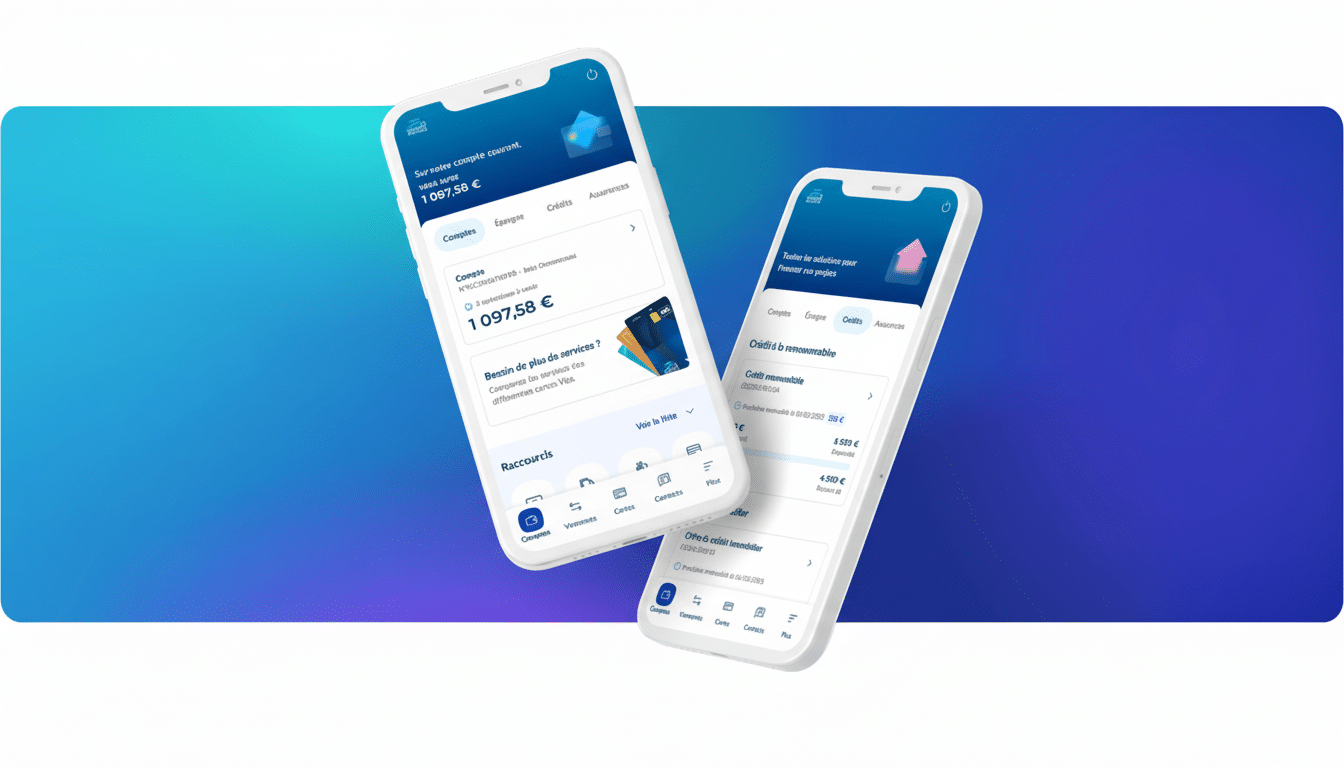
La Poste called the event a major network incident affecting information systems that support its public website, online mail tools, and customer portals. La Banque Postale said customers could not access its online banking space and mobile app temporarily. Both, however, said in-person visits are continuing, and payment as well as postal counter operations are open.
- What La Poste and La Banque Postale Are Saying Today
- How DDoS Attacks Can Disrupt Vital Services
- Attribution and motive remain unclear at this stage
- A wider trend in recent cyber incidents across France
- Effect on customers and business continuity
- What customers can do now to stay safe and informed
- What to watch next as services stabilize and reports land
So far there has been no public indication that customer data was accessed or exfiltrated. That would align with DDoS attacks, which flood services with traffic to take them offline instead of breaking into storage containers full of data. However, investigators usually search for any other second-order intrusion attempts that might be hiding under the cover of a wide-blast DDoS.
How DDoS Attacks Can Disrupt Vital Services
DDoS attacks send high traffic (or packet) volumes to web-facing infrastructure, such as servers or network devices, causing them to run out of capacity or application resources. Even modest latency can lead to cascading timeouts that prevent customers from gaining access at institutions running public and bank-secured websites. The financial and electric utility industries protect themselves by using multilayered defenses — anycast routing, scrubbing centers, rate shaping, and web application firewalls — to try to discriminate between good and bad packets.
New DDoS attack surfaces have emerged. The size of DDoS campaigns has increased considerably. Google and Cloudflare have published reports about unprecedented levels of traffic associated with the HTTP/2 “Rapid Reset” approach, in some cases climbing well into the hundreds of millions of requests per second. According to ENISA’s most recent threat landscape reports, public administration and finance are among the most targeted sectors in Europe, with continued operations by ideologically motivated collectives against government-adjacent services.
Attribution and motive remain unclear at this stage
A pro-Russian hacktivist group took responsibility on social media, but authorities have not confirmed that claim. Anonymous claims are par for the course during high-profile outages, where numerous parties may leap to claim credit with no receipts. France’s national cybersecurity agency ANSSI and CERT-FR usually work closely with affected organizations and upstream providers to analyze traffic patterns, indicators of compromise, as well as botnet fingerprints before they would even consider any attribution.
Financial and mail services platforms represent enticing targets for short, heavy-hitting DDoS outbursts: they make the public aware quickly, they give media outlets a chance to amplify the disturbance, and attackers can describe an outage as some form of geopolitical counterstrike with little operational risk. In past European campaigns, botnets built from hacked routers, cameras, and unpatched servers were easy to rent on criminal markets for small sums of money, allowing waves of attacks across multiple targets.
A wider trend in recent cyber incidents across France
The outage comes at a difficult time for cybersecurity in France. It follows a recent revelation of a hack on the country’s Interior Ministry email accounts and leaked confidential documents, as well as reports from rail operators who have observed anomalies in their operational systems. There is no confirmed connection between those cases and the La Poste incident, but the concentration highlights pressure on national services and their suppliers.
In recent years, France has bolstered its defensive posture with requirements for vital service operators to report incidents and by developing public-private response capabilities. Major French network providers and hosting companies maintain massive DDoS defense capabilities, but attackers have adapted their tactics to favor attacks including application-layer floods and protocol exploitation intended to bypass volume-based defenses.
Effect on customers and business continuity
For customers, the immediate impact is inconvenience: failed logins, stuck transactions, and no ability to get their account information online. For La Poste as well as for La Banque Postale, keeping branch counter services and payment rails operating takes precedence over even more important battles: in the backrooms, IT engineers are now working to keep enemy traffic off by rate limiting while slowly connecting the digital platforms. Product owners may throttle features down in stages — read-only mode first, and then limited transaction capability until stability is regained.
The mechanisms employed by these organizations are often fairly formulaic: shift traffic behind scrubbing providers, flip to alternative DNS and content-delivery paths, and work with upstream carriers to null-route — i.e., throw away — attack traffic closer to the source. Straightforward communication helps eliminate customer confusion and squash the opportunistic phishing that accompanies high-profile outages.
What customers can do now to stay safe and informed
Customers should use in-branch services wherever possible and never try to log into their accounts multiple times until official updates confirm that the service has been restored. Watch out for phishing SMS and emails concerning the outage — attackers often replicate system alert communications as a means to phish credentials. The risks are mitigable, at least in part, by two-factor authentication on your account and updated banking app versions once services return. And if a transaction seems to have failed, please confirm in-branch or at the official call center before retrying, or you may receive duplicate transactions.
What to watch next as services stabilize and reports land
The lingering questions are how long the instability lingers, whether attackers shift to other targets, and what telemetry shows from the botnet infrastructure at work. Whatever the case, the report from ANSSI and post-incident analyses by the companies should reveal whether this was a one-off wave or part of an organised campaign. So far there has been no indication that any data was compromised, and on-premises services are still running as digital access is restored.
As more and more vital services around the world come under attack, organisations’ readiness to respond quickly must be tested, supplier diversity is crucial, and authorities must lead the response by focusing on quick coordination with national cyber teams. France’s experience this week is a reminder that accessibility — not just confidentiality — is still the front line in securing critical services.
