


Patients whose large brain metastases are removed surgically had fewer recurrences at the surgical site when follow-up radiation was delivered over three to five sessions rather than in one session, according to results from a randomized phase III trial presented at the American Society for Radiation Oncology meeting in Boston.
In the 242-patient Alliance A071801 study, 87% of people assigned to fractionated stereotactic radiosurgery were free of recurrence in the surgical cavity one year after treatment, compared with 81% of those assigned to single-session radiosurgery. The 6-percentage-point difference was reported as statistically significant. The finding could influence a common decision after removal of a larger metastasis, when physicians must balance control of microscopic cancer cells around the cavity against radiation exposure to nearby healthy brain tissue.

What the trial compared
Brain metastases are tumors that spread to the brain from cancer elsewhere in the body. Surgery can relieve pressure or remove a sizable lesion, but it does not necessarily eliminate cancer cells left around the surgical margins. Stereotactic radiosurgery, despite its name, is radiation treatment rather than an operation: precisely targeted beams deliver a high dose to a defined area.
Alliance A071801 enrolled patients from 2019 through 2022 who had one to four brain metastases and at least one surgically removed lesion larger than 2 centimeters. Participants were randomly assigned to radiation in one session or to a fractionated approach spread across three or five sessions. If they also had metastases that were not removed, those lesions were treated according to the assigned schedule.
The comparison had been prospectively described while enrollment was underway. A 2022 report from the American Association of Neurological Surgeons characterized A071801 as a phase III trial of single-fraction postoperative radiosurgery against treatment in three to five fractions, with local control followed through two years as its primary outcome. That earlier account listed a target enrollment of 208 patients; the newly reported analysis includes 242 patients.
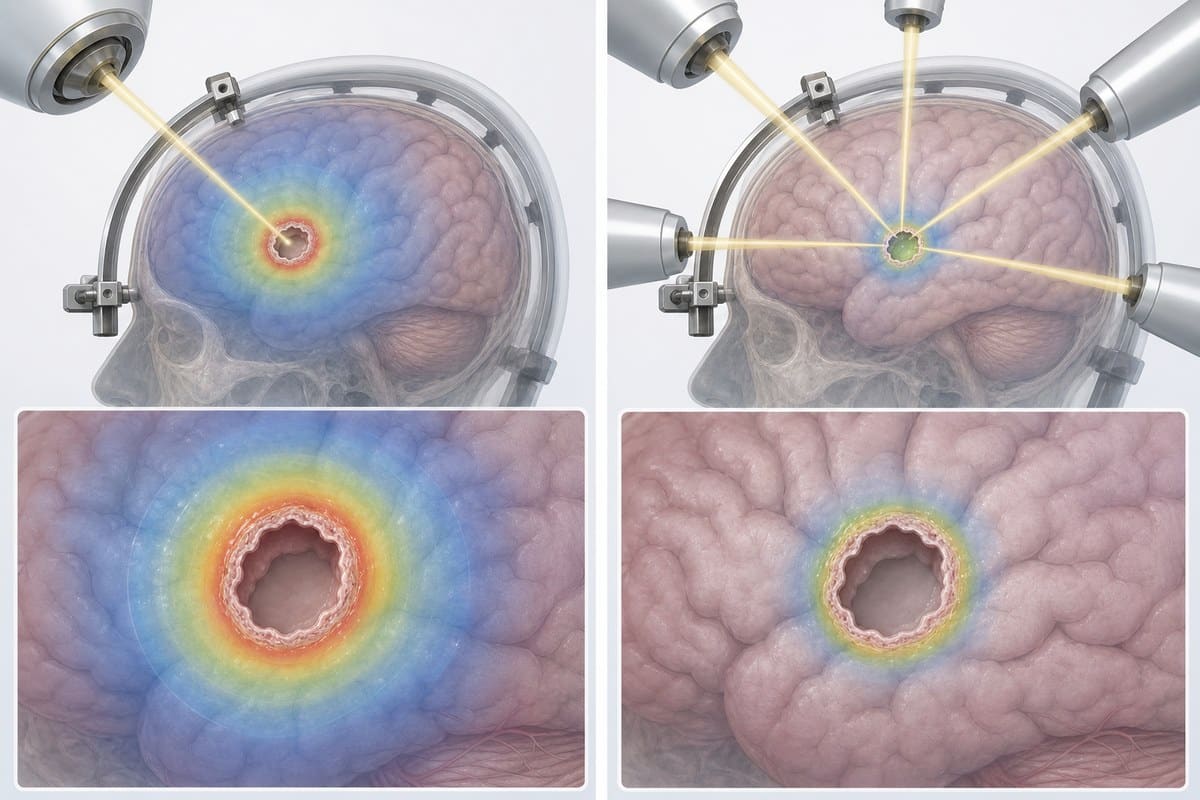
The rationale for splitting treatment is radiobiological as well as practical. A single high dose can be difficult to deliver safely when the postoperative cavity is large, because more normal brain tissue may lie close to the target. Spacing the dose over several visits is intended to preserve tumor-directed treatment while allowing normal tissue time to recover between exposures. The tradeoff is that patients must make additional trips for treatment, an access and scheduling issue that the available results do not quantify.
Local-control finding is the clearest result
With a reported median follow-up of four years, the trial found better one-year freedom from recurrence at the surgical site in the fractionated group. Put another way, for every 100 patients treated, the reported results translate to roughly six additional patients without a recurrence in the cavity at one year when radiation was divided across several sessions rather than delivered once.
The data were reported in a release describing the Alliance trial presentation, not in a peer-reviewed journal article or a full publicly available conference abstract. The release does not provide confidence intervals, detailed radiation dose schedules, complete adverse-event counts, subgroup results or the full statistical analysis plan. Those missing details limit how precisely clinicians and patients can judge the size of the benefit, whether it was consistent across different tumor types and cavity sizes, and which patients may benefit most.
Still, random assignment is an important strength. It reduces the likelihood that differences in baseline health, disease burden or treatment selection explain the surgical-site control result. Earlier support for fractionating postoperative radiosurgery for larger cavities had largely come from retrospective studies, in which treatment choice can be linked to patient and disease characteristics.
The trial also reported progression in unresected metastases in 4% of patients receiving fractionated treatment and 11% of those receiving single-session treatment. That difference was not statistically significant, and it should not be interpreted as proof that fractionation better controls tumors elsewhere in the brain. It is separate from the significant finding involving the surgically treated site.
An unexpected survival difference needs fuller scrutiny
Median overall survival was reported as 29 months in the fractionated-treatment group and 20 months in the single-session group. After adjustment for patient and treatment characteristics, the investigators reported a 31% lower risk of death associated with fractionated treatment.
But the researchers described the survival result as unexpected and said the study was not designed to establish why it occurred. They did not identify a clear explanation in additional analyses, according to the release. Although randomization makes the comparison more informative than an observational association, the available account does not establish a biological mechanism or show whether differences in subsequent treatment, cancer outside the brain, or other factors might have contributed.
Survival findings in trials of brain metastasis treatment can be especially difficult to interpret because outcomes are influenced by the type and extent of the original cancer, therapies received elsewhere in the body, the number and location of brain lesions, and care after intracranial progression. A full manuscript and detailed meeting data would be needed to assess how the survival analysis was specified and how robust it is.
Reported adverse-event rates were low in both groups, with no statistically significant difference between them. That is reassuring but incomplete without event definitions, severity grades and longer detail about effects that can matter after brain radiation, including radiation-related tissue injury and neurocognitive symptoms.
For now, the trial offers randomized evidence that fractionated postoperative radiosurgery can improve control around a larger resection cavity without an apparent increase in reported adverse events. Whether the survival difference will hold up under fuller analysis, and how clinicians should weigh the added treatment visits against the local-control benefit for individual patients, remain open questions.

