


A new reader poll offers a portrait of a broken reality for YouTube viewing habits: across the globe, people are paying to skip ads, even as nearly as many are finding workarounds that break or rewire the system altogether.
Quality leads, but hacks remain in YouTube viewing
Among the results were that 31% of people have a YouTube Premium subscription, making the official service the most popular. Not far behind, 26% turn to third-party Android apps for stripping out ads or adding controls that Google doesn’t offer. Another 18% opt not to switch from the official app, accepting the interruptions. Advanced video-controlling browsers accounted for 16%, 5% don’t watch YouTube on their phone, and 4% use others.
There’s no landslide winner. The fact that Premium is already heading the charge (excuse the pun) indicates a clear appetite for things to be more convenient, and we’re almost at 50% of respondents avoiding the default experience in some capacity. That divide points at a bigger tension: people may love YouTube’s content, but not the ad load or lack of finer control.
How people really skip ads on YouTube today
Third-party Android apps are notorious for looking just like the official version while adding features and removing ads. Community favorites tend to include things like background play, sponsor blocking of paid parts of videos, and denser playback controls. These tools exist in a hazy zone where they can break YouTube’s terms of service and are often whack-a-moled by platform changes.
The other big camp is browser-based setups. On desktop, viewers often combine a privacy-oriented browser with additional, well-regarded content blockers and extensions that filter sponsorships. On phones, some turn to browsers that permit background audio and pop-out players. Network-level alternatives such as Pi-hole also exist in the wild, but they’re more maintenance-heavy.
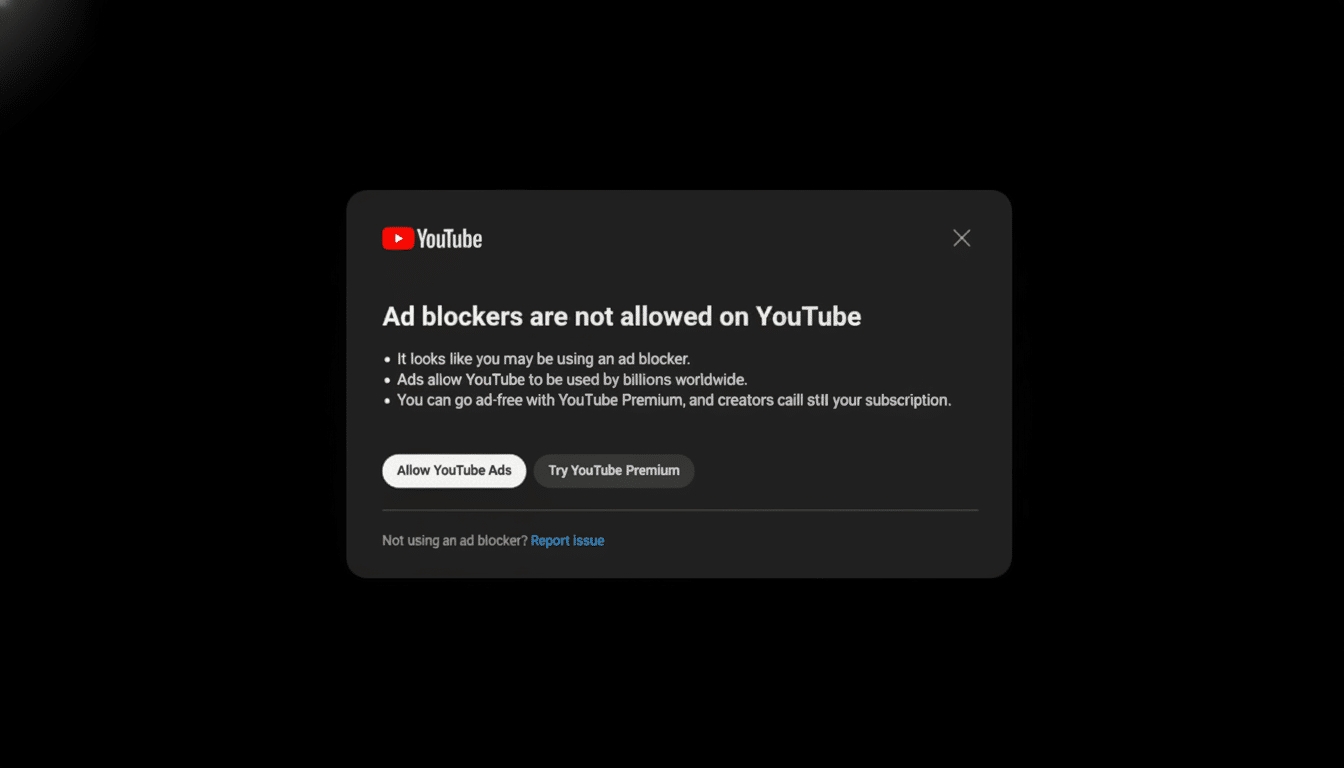
YouTube has also become more aggressive in cracking down on ad blocking, through warnings or temporary video pauses when disruption is detected. On connected TV, the platform has moved toward longer ad pods and unskippable formats, which for some viewers leads them to apps built for smart TVs that try to filter ads at the player layer.
Why the split is important for Google and creators
Google has increasingly portrayed Premium as the clean solution, and it seems to be working. The company has publicly cited surpassing 100 million paying Music and Premium consumers as an indication of the momentum behind the ad-free tier. Premium also pays creators from a pool of subscriber revenue, usually calculated using watch time, which can provide some offset when ad blocking eats into monetization.
At the same time, advertising is still YouTube’s main business — and that industry is undoubtedly in flux. Research firms like eMarketer are reporting higher consumption on YouTube via connected TVs, with ad formats beginning to mirror those in traditional TV. Meanwhile, the Pew Research Center has consistently shown YouTube to be among the most heavily used online platforms, particularly among younger audiences, helping make sure there is demand for those ads even as user tolerance ebbs and flows.
The 18% who said they would accept ads in the poll may represent users with less watch time, or a higher tolerance for interruptions. For heavy users, though, the decision is typically to pay for Premium or to put time into techy workarounds. That calculus reflects the bigger streaming picture: convenience rules if it feels like a fair trade on price; otherwise, control and customization win.
The trade-offs users weigh when watching YouTube ads
Cost is the obvious friction. Premium costs different amounts in different markets and is higher for family plans, but it includes background play, downloads, and ad-free music — extras that can tip the scales for people who watch or listen to YouTube every day. Yet others say it’s ad frequency and repetition, not ads in total, that are the real issue. When ad loads rise or repeats accumulate, the value of sidestepping is perceived to increase.
There’s also a values question. Some subscribers say they pay to support creators, who get a cut of Premium revenue. Others would rather offer direct support through memberships, Patreon, or merch, which keeps the viewing layer free but still gives back to the channels they enjoy. And a big, if shrinking, niche is perfectly happy with occasional watching where ads are easily ignored.
What to watch next as YouTube tightens ad blocking
Expect YouTube to continue tightening up enforcement against aggressive ad blocking while adding more sweeteners in the Premium bundle, especially on television where the biggest screens command the most lucrative ad dollars.
Establishing that multiple pipes of revenue will help is particularly clear since sponsored segments and memberships are likely to remain cornerstones even as the platforms’ policies change back and forth.
The headline of this poll is straightforward but revealing: 31% choose to pay; 26% choose to hack, the new code for hacking being the desperation-buster; and nearly everyone else is trading off in between. The result is not so much a rebellion as a negotiation — over time, attention, and the cost of an uninterrupted watch.
