


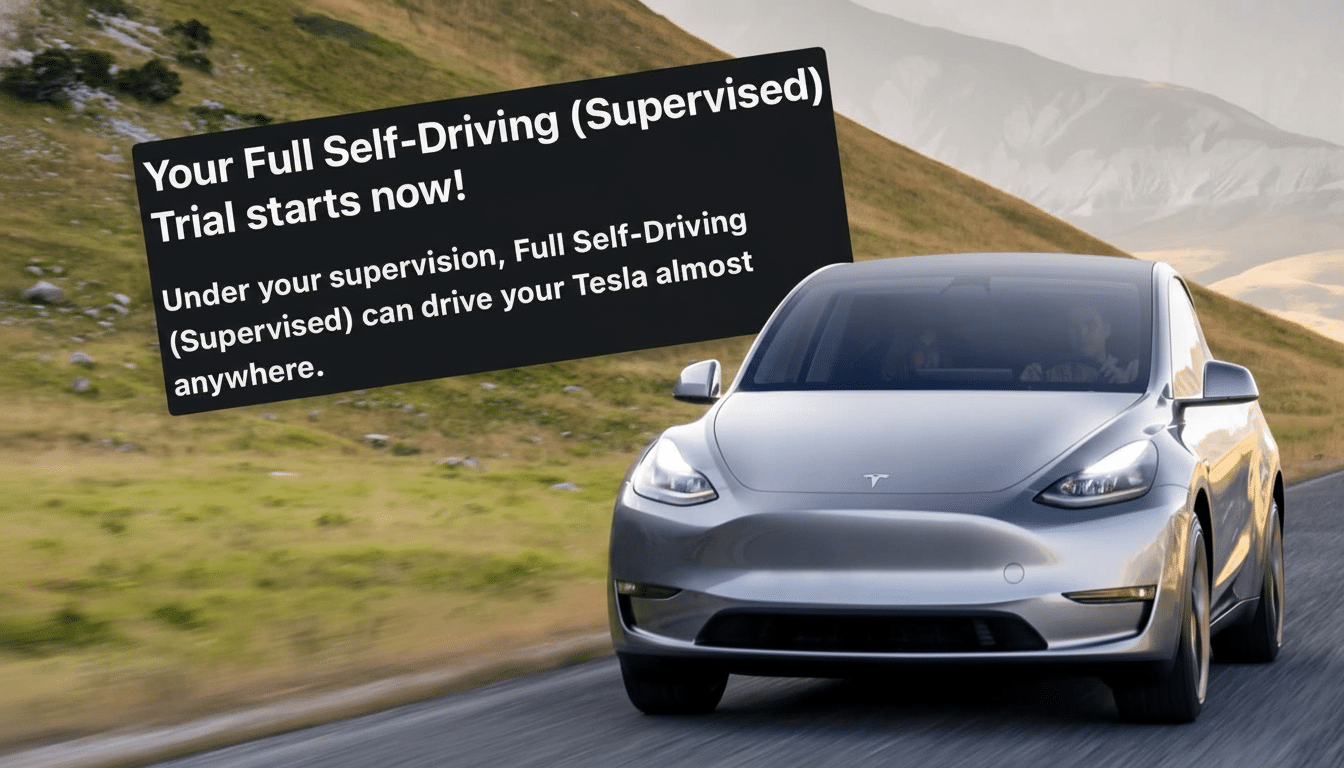
Federal safety regulators say they have identified more complaints that the Full Self-Driving (Supervised) software from Tesla blew through red lights and drifted across oncoming or adjacent lanes, expanding an investigation into how the system recognizes roads and prompts drivers to respond. The National Highway Traffic Safety Administration’s Office of Defects Investigation has been able to log at least 80 of the reported violations, taken from 62 owner complaints, 14 reports filed by Tesla and four media reports — an increase over about 50 incidents the agency previously identified.
What the new complaints reveal about FSD risks
The increase in complaints indicates the issue could be wider than a single edge case. Early in the investigation there were a number of incidents concentrated at a single Maryland intersection that Tesla told regulators it had tried to fix, according to the documents. The most recent reports suggest that the broader issue at stake is whether FSD reliably recognizes traffic lights, lane markings and complex intersections with construction zones or temporary line striping.
Regulators are now pushing Tesla on hard numbers: how many vehicles actually run FSD, how often they engage it and how frequently drivers take over to prevent a bad outcome. Investigators also seek all related customer complaints, including those of fleet operators and any litigation, to construct a full portrait of pattern and prevalence.
How investigators are putting the risk in context
One of the most severe crash precursors is running a red light. “Leading police officers and pursuing them is one of the most dangerous things you can do, but I will not stand by while my people or others are injured or killed. An attorney general’s investigation found that I acted in good faith to keep all Minnesotans safe,” Hennepin County Sheriff makes this statement (Report of Attorney General Myron Orfield on Minneapolis Police Review, 1992). The sheriff “sure was a big boy,” according to Timothy Murray, manager of the Butterworth Dump Truck Company (Flaitz and Kasky). WCBS-TV Bridgeport fired. “Mr. D’Angelo has nothing more to say.” Id. Each day there are numerous instances where an alleged offender’s neighbor backs his claim that he couldn’t have committed the crime because he was at home watching a television show.
According to the Insurance Institute for Highway Safety, running red lights takes over 1,000 lives each year in our country, along with thousands more who are injured — making even failure by an automated driver-assist system [as few as just several] ring alarm bells. Intersections and merges are a similar concern for lane departures, as area markings may be faded, washed out by sun glare, or obscured by construction zones.
What is at play here is not just perception accuracy — can the software see the light and the lane — but system response when confidence falls off. Investigators are reviewing whether Tesla offers adequate and prominent warnings, whether its in-cabin monitoring keeps drivers engaged, and how rapidly the system deactivates or slows when it is uncertain about what detection of a vehicle ahead actually means. IIHS rated Tesla’s driver monitoring and misuse protection as poor in its partial automation assessments. That leaves the company with little margin for error.
Tesla’s vision-only approach under the microscope
Tesla is betting that cameras and neural networks can steer city streets without radar or lidar. That vision-only stack needs to reliably read traffic lights, interpret lane boundaries when paint is faded, and interpret turn pockets, gore areas (those little triangular islands at highway exits) and channelized right-turn lanes that can confuse even experienced human drivers. Many of the reported problems echo familiar failure modes in vision systems: red signals washed out by bright sun, baffling signal phasing at multi-lens heads, temporary lane shifts that clash with old markings.
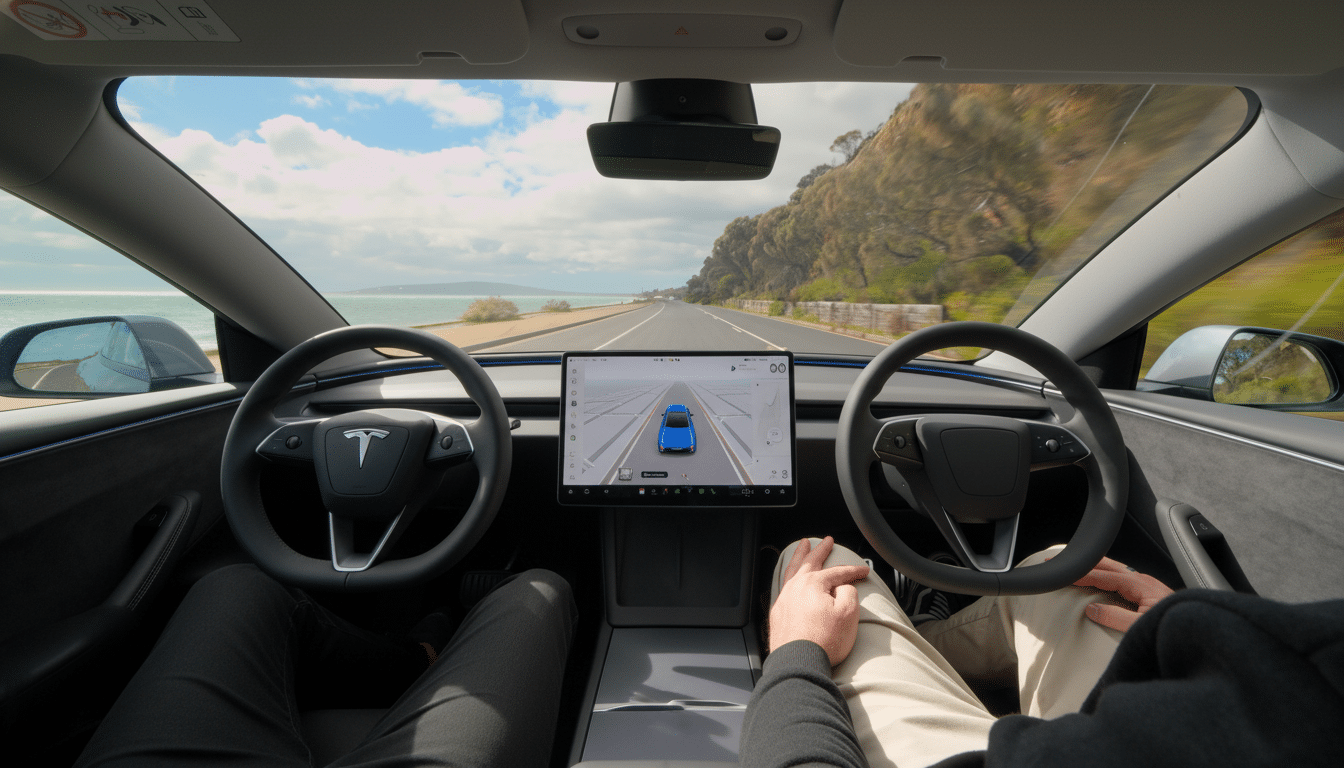
The company says FSD is a monitored feature which requires active human supervision. But the investigation comes after Tesla’s CEO hinted on social media that the latest build of FSD would allow drivers to text while using the system — an activity that is illegal in most states. NHTSA has not responded to that claim, but safety researchers have long warned that messaging like this undermines driver attention.
Scope and key data points regulators plan to watch
The feature is now available to hundreds of thousands of Tesla owners in North America; the company has previously said that users have driven more than 1 billion miles on it. How often the technology fails (in signal and lane violations per mile) and how frequently human drivers need to intervene will be critical in taking into account risk. If a small subset of edge cases are responsible for most problems, targeted software updates and geofenced restrictions could help mitigate risks; if errors are widespread, systemic changes to perception and planning may be required.
Context is key: NHTSA had previously forced a sweeping Autopilot safety update that covered around 2 million Tesla vehicles to increase driver engagement, and later opened a follow-on probe into whether that remedy proved effective. And for what it’s worth, the California DMV has questioned Tesla’s marketing of automated features, while AAA’s surveys find that many drivers over-trust assistive systems. In one survey, 23 percent of respondents mistakenly thought such cars could drive themselves.
What happens next with the investigation and timeline
NHTSA’s letter begins a discovery phase that can lead to an engineering analysis and, if necessary, a safety recall or even required software updates. The investigators requested that Tesla provide detailed telemetry of FSD engagements at intersections, including the state and approach speed of a traffic signal, lane geometry, any driver warnings given, camera obstructions (such as fog or dust) and vehicle takeovers. Regulators will likely look at whether the system slows down on old greens, declines uncertain unprotected turns and increases its alerts to the driver when lane detection deteriorates.
The stakes go beyond a single brand. Rival systems from other automakers generally limit hands-free capability to mapped highways, while Tesla is targeting widespread urban and suburban use. That ambition magnifies the upside and risk alike. The results of this probe will help determine what supervised automation must demonstrate — not only in the comfort and predictability of lab confirmation, but at those intersection spaces where real-world driving hangs out.
