


The U.S. Army has scheduled two controlled detonations at the Iowa Army Ammunition Plant in Middletown for about noon Nov. 20, under an emergency environmental permit issued to deal with deteriorated lead azide that regulators say cannot safely be moved. The operation is a planned hazardous-waste treatment action, not an accidental blast.
Residents in Middletown’s City Park neighborhood were asked to leave the area from 8 a.m. to 2 p.m. because of the potential for localized window damage, according to the Army. Officials also expect a short-lived dust plume containing some lead, making the operation a public-health concern even though the available documents do not estimate individual doses, off-site lead concentrations or the likelihood of illness.
Why the material is being detonated in place
The Environmental Protection Agency’s emergency permit, issued Nov. 13 and effective through Feb. 11, 2027, authorizes the Department of the Army to store and treat the lead azide through intentional, in-place detonation. EPA says the material meets hazardous-waste definitions for both reactivity and lead toxicity.
Lead azide is an explosive compound. In this case, EPA said the stored material had recrystallized, making it more sensitive to friction and shock. The agency concluded that disturbing or transporting the containers could create an unacceptable risk of an unintended detonation. The planned treatment is therefore intended to manage the immediate explosive risk posed by material regulators say cannot safely be moved.
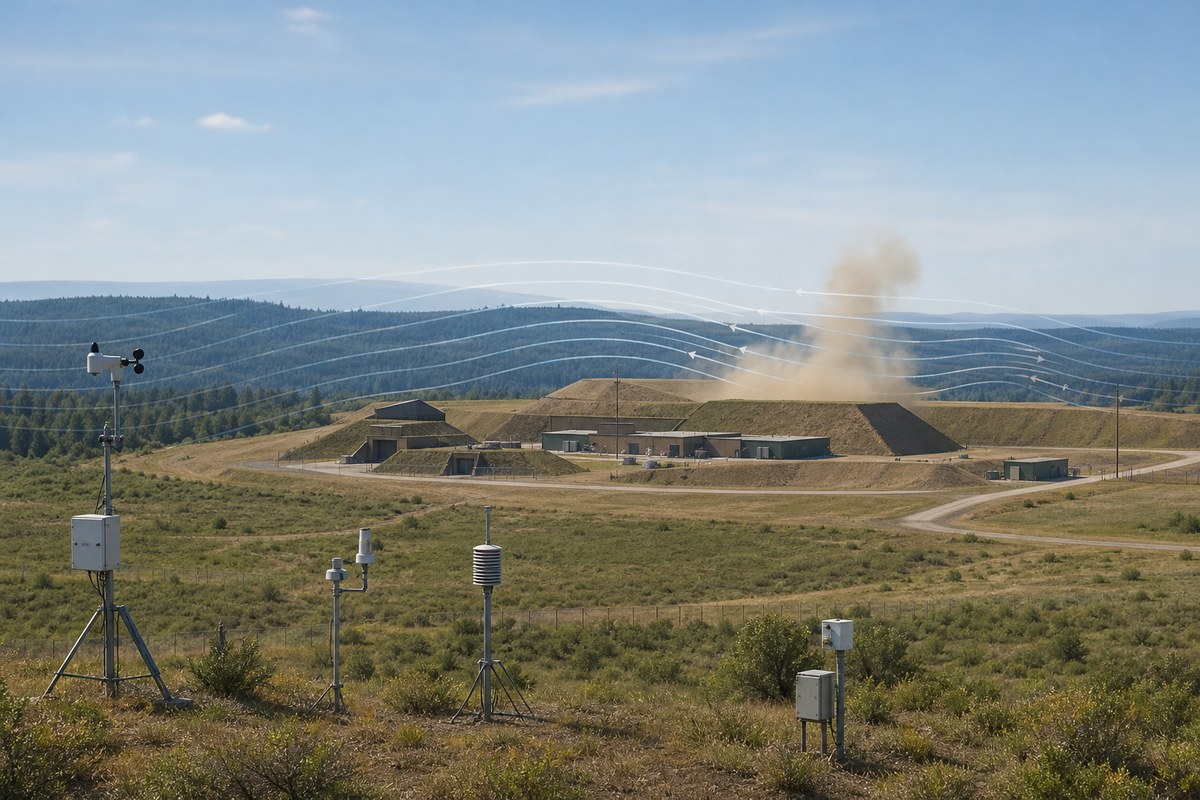
The Army’s public advisory, published Nov. 15, says two detonations are planned. It anticipates temporary noise, ground vibration and a dust plume containing some lead. The Army said the dust should remain airborne for no more than about an hour, depending on wind speed, and that it plans to use earthworks and soil wetting to reduce the plume.
Iowa Capital Dispatch, citing information from the ammunition plant, reported that the operation involves 68 drums of deteriorated lead azide. That figure does not appear in the EPA notice or the Army advisory, so it remains an attributed detail rather than an independently confirmed count in the federal documents.
What is known about the potential dust plume
The most consequential uncertainty is where dust may travel and how much lead, if any, could be measured beyond the plant. The Army has confirmed that some lead will be present in the dust plume, but its public advisory does not provide a distance forecast or a quantitative release estimate.
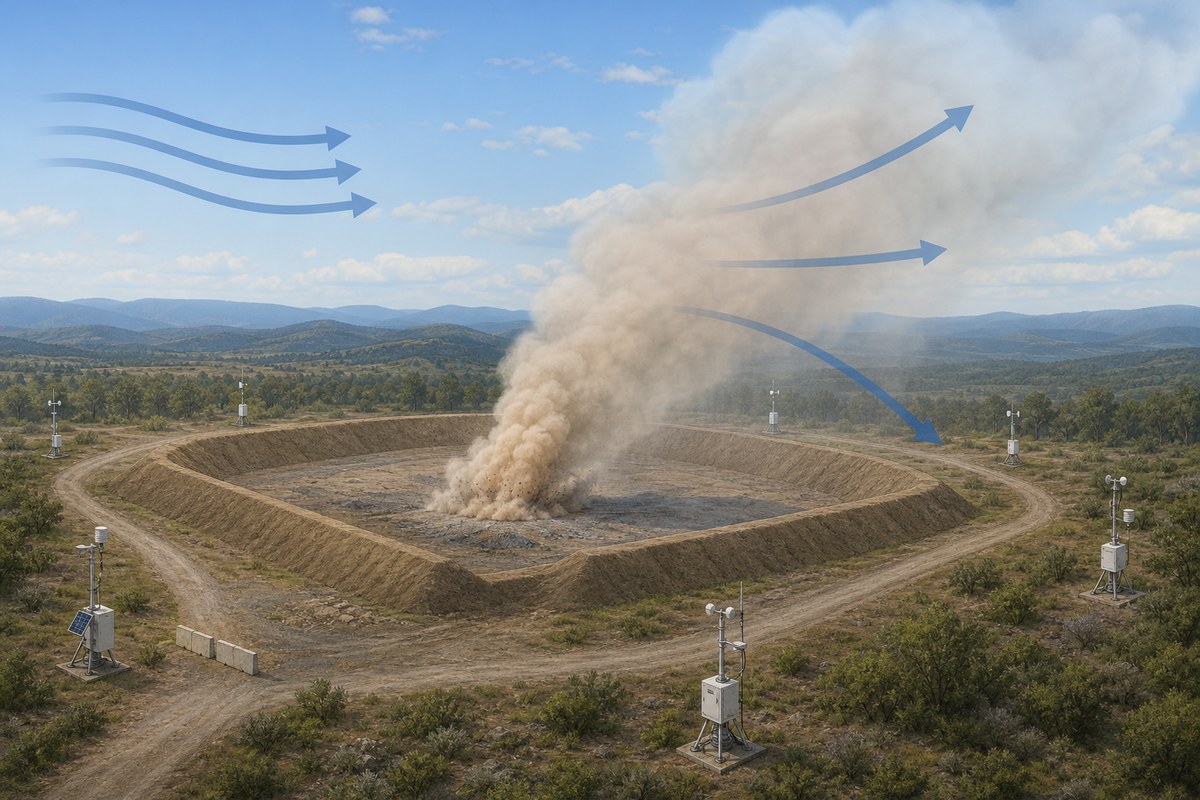
Iowa Capital Dispatch reported that Army modeling then indicated airborne dust could travel nearly 100 miles northeast, while lead-containing dust could be deposited within roughly 40 miles. Those are weather-dependent modeled projections, not measured contamination boundaries or evidence that harmful exposure will occur throughout those areas. Wind direction, wind speed and conditions at the time of the detonations can materially change where particles travel and settle.
That distinction is especially important for interpreting a lead warning. Lead is toxic, and officials are treating the possibility of lead-bearing dust seriously enough to require precautions. But neither EPA nor the Army has released an estimate of the amount of lead expected to be released, a predicted dose for nearby residents or a health-risk calculation. No monitoring results were available before the scheduled operation, and there have been no documented illnesses tied to it.
The Army said it had conducted sampling before the event and established air monitors around the perimeter. It also plans environmental sampling in the blast radius after the detonations. Those measurements can help show what was detected at selected sites and times; they cannot, by themselves, establish exposure at every location reached by a modeled plume.
Permit requires monitoring, notification and cleanup
EPA attached conditions that extend beyond the detonation itself. The permit requires sampling and monitoring before, during and after treatment, as well as public notification before and after the work. It also requires cleanup and reporting, creating a record that regulators and the public can use to assess the event after sampling is completed.
The Army’s neighborhood evacuation request is narrower than the reported dispersion model. It is directed at an area where officials said blast effects could include window damage, rather than serving as a declaration that all locations in a modeled dust path face the same hazard. The two concerns involve different mechanisms: pressure and vibration near the site, and the possibility of particulate movement downwind.
EPA’s use of an emergency permit reflects the agency’s finding that the deteriorated material poses an imminent and substantial endangerment if left in its unstable condition. The permit does not mean that off-site contamination has been found. Rather, it authorizes a treatment method under specified controls because the agency concluded conventional handling posed too much risk.
For residents, the next consequential information will be the required post-detonation monitoring, cleanup and reporting. Those results, rather than the pre-event dispersion estimates, should determine whether lead was detected outside the treatment area and whether any further response is needed.

