


Las Vegas once again turned into tech’s proving ground, and this year’s standouts didn’t just dazzle—they solved real problems. After sifting through hundreds of debuts, our editors crowned the most consequential products and technologies of CES 2026, prioritizing readiness, usefulness, and step-change innovation. The result is a snapshot of where personal tech, AI, and robotics are genuinely heading next.
The Consumer Technology Association has long pitched CES as the industry’s crystal ball, and 2026 delivered on that promise. From AI PCs poised to hit mainstream momentum to robots finally doing useful work at home and on factory floors, the winners here point to a year when ambitious ideas cross into everyday reality.
- AI PCs and breakthrough silicon redefine next-gen laptops
- Displays that redefine work and play for home and office
- Phones and personal AI evolve from novelty to utility
- Robots move from demos to duties at home and in industry
- Health, home, and everyday ingenuity address real needs
- Wildcards to watch that could reshape how we power and play
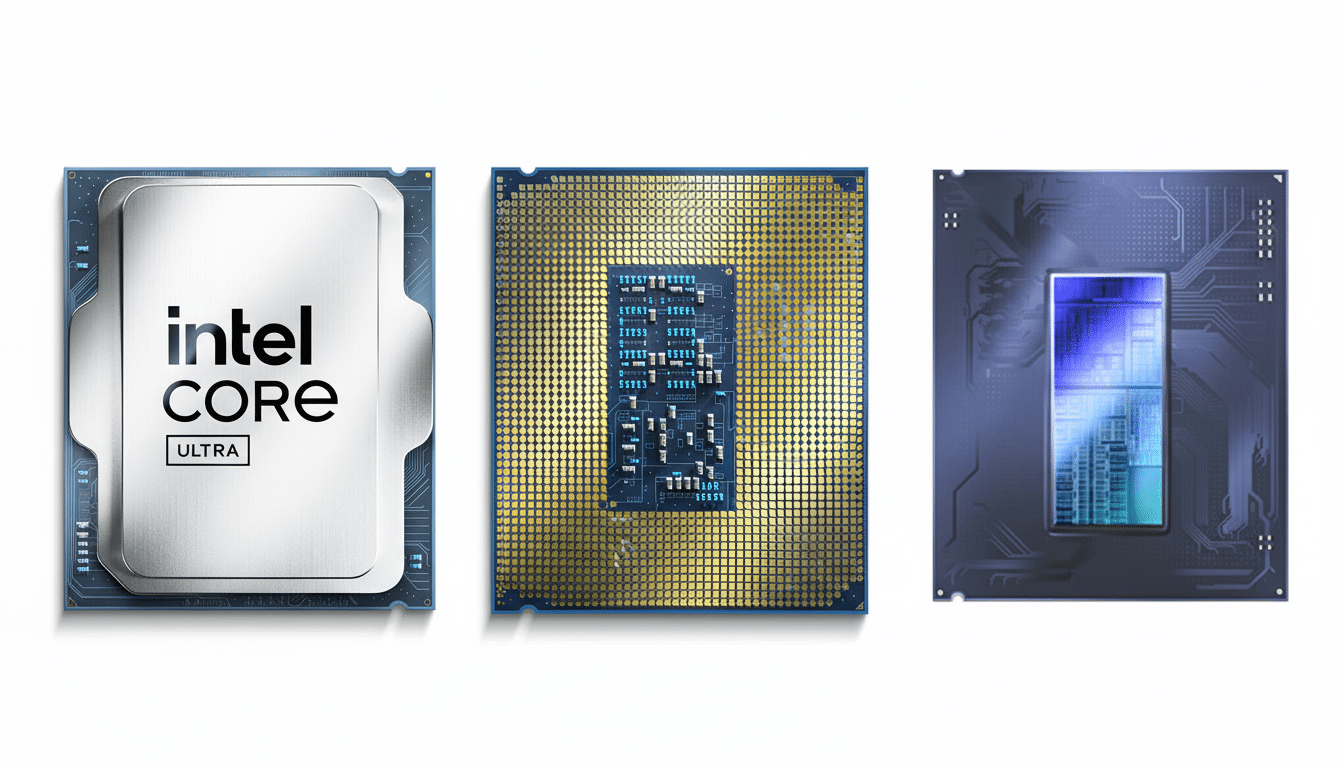
AI PCs and breakthrough silicon redefine next-gen laptops
Intel’s Core Ultra 300 Series platform—codenamed Panther Lake—set the tone for a new generation of laptops. With up to a dozen Xe3 graphics cores and upgraded on-chip AI acceleration, the chips push integrated graphics to territory once reserved for discrete GPUs while enabling faster, private on-device AI. IDC projects AI PCs to dominate shipments before the decade’s end, and these CPUs look built for that curve.
Sustainability and serviceability also took center stage. Lenovo’s ThinkPad X1 Carbon introduced a Space Frame design that lets users access and replace individual parts with less hassle, pushing modularity from niche to mainstream business machines. That same right-to-repair momentum surfaced in unexpected formats: HP’s EliteBoard G1a revives the keyboard PC with mini desktop guts under the keys—Ryzen AI 300-series silicon, up to 64GB of memory, and serious storage—delivering a grab-and-go workstation without the bulk.
Displays that redefine work and play for home and office
For command-center productivity, Dell’s UltraSharp 52 Thunderbolt Monitor (U5226KW) dominated the booth buzz. A sprawling 52-inch 6K ultrawide with a 120Hz IPS Black panel, it packs excellent sRGB and DCI-P3 coverage and enough I/O to juggle multiple systems at once. It is, effectively, a wall of pixels designed for modern multitaskers.
On the entertainment side, Samsung’s S95H OLED turned heads with a 35% brightness boost and a clever twist: it can run wired for gaming-grade responsiveness or wirelessly for a clean install with more flexible placement. Anti-burn-in advances let it moonlight as an art display, bringing premium image quality to the living-room gallery concept.
And if you’ve dreamed of ultrawide gaming that travels, Lenovo’s Legion Pro Rollable concept hints at the future. A rollable OLED that expands on demand could finally square the circle between portability and cinematic immersion—if the durability and battery trade-offs pencil out.
Phones and personal AI evolve from novelty to utility
Samsung’s Galaxy Z TriFold pushes foldables into true tablet territory, opening to roughly 10 inches while still pocketing like a phone. The hinge engineering felt more mature than past experiments, suggesting this format is crossing from curiosity to category.
Meanwhile, Lenovo’s Qira exemplifies this year’s smarter assistant trend: hybrid AI that blends on-device processing for privacy and speed with cloud models for breadth. The approach aligns with what major platform players have signaled for 2026—less “send it all to the cloud,” more “do what you can locally, escalate when needed.”

Robots move from demos to duties at home and in industry
Boston Dynamics’ latest Atlas drew crowds for its fluid gait, but the bigger news is deployment. With Hyundai integrating the platform on production lines, humanoids are taking a pragmatic turn—from viral videos to repeatable tasks in real factories. IEEE researchers have long argued that locomotion and manipulation must mature together; this feels like that moment.
At home, Roborock’s Saros Rover tackles the staircase Achilles’ heel with bendable, independently controlled legs that climb and clean as they go. Beatbot’s AquaSense X brings a self-emptying ecosystem to pool care, rinsing internal components automatically to keep performance consistent—exactly the kind of unglamorous reliability consumers want.
Mobility tech emphasized dignity and independence. Dephy’s Sidekick exoskeleton acts like an extra calf muscle, making every step easier, while Strutt’s Ev1 mobility scooter maps and navigates autonomously via voice or safe assist. With the World Health Organization noting rapid global aging, these designs meet a pressing demographic reality.
Health, home, and everyday ingenuity address real needs
Women’s health got overdue attention. Peri, a wearable for people in perimenopause, tracks symptoms like hot flashes and sleep disruptions and pairs them with actionable guidance, whether you pursue lifestyle changes, supplements, or clinical care.
For social connection, Tombot’s Jennie—an animatronic puppy with expressive movement—won fans in memory care settings, reflecting research from gerontology groups that social robots can reduce anxiety and loneliness when human interaction is limited.
In the kitchen and beyond, practical ideas shone. Allergen Alert previewed a $200 portable tester for food allergens, licensing tech from bioMérieux; that’s a meaningful shot at a problem affecting an estimated 6% of adults and 8% of children in the U.S., according to the CDC. Ecoldbrew compresses cold brew into five minutes via a compact grinder-brewer that docks onto a standard thermos, while Satellai’s Collar Go uses AI to flag subtle changes in a dog’s behavior before they escalate. Coro solves a simple but stressful puzzle—how much a baby is eating—with quiet precision. And Lego’s Smart Play “smart brick” adds light, sound, and proximity sensing to spark new modes of building and gameplay.
Wildcards to watch that could reshape how we power and play
Willo’s alignment-free wireless power demo delivered energy to multiple moving devices without coils or pads—a tantalizing leap that will hinge on safety certifications and regulatory approvals. On the other end of the spectrum, Lepro’s Ami, a tiny AI character in a glass cylinder, probed a more human question: when does an AI companion become meaningful instead of novel? The answer may depend less on feature lists and more on thoughtful design and guardrails.
CES 2026 felt less like a lab and more like a launchpad. The winners here aren’t just clever—they’re timely, addressing sustainability, accessibility, and real-world friction. As products ship and software matures, we’ll test how these promises hold up in daily life, from battery endurance to AI reliability. For now, consider these your best bets on the near future.
