


South Korea’s Edenlux is preparing a U.S. launch for Eyeary, a wellness device designed to combat digital eye strain and help users retrain overworked focusing muscles. The company plans an initial crowdfunding campaign and has established a U.S. subsidiary in Dallas for final assembly, positioning the product for a wider North American rollout.
A Glasses-Like Trainer For Tired Eyes And Ciliary Muscles
Eyeary looks like everyday eyewear but hides a lens system with 144 diopter focal points—far more granular than the five-step system in Edenlux’s earlier Otus device sold in parts of Asia. That fine control allows the lenses to cycle through micro-adjustments that encourage the eye’s ciliary muscle to contract and relax, a process the company frames as daily “visual recovery.”
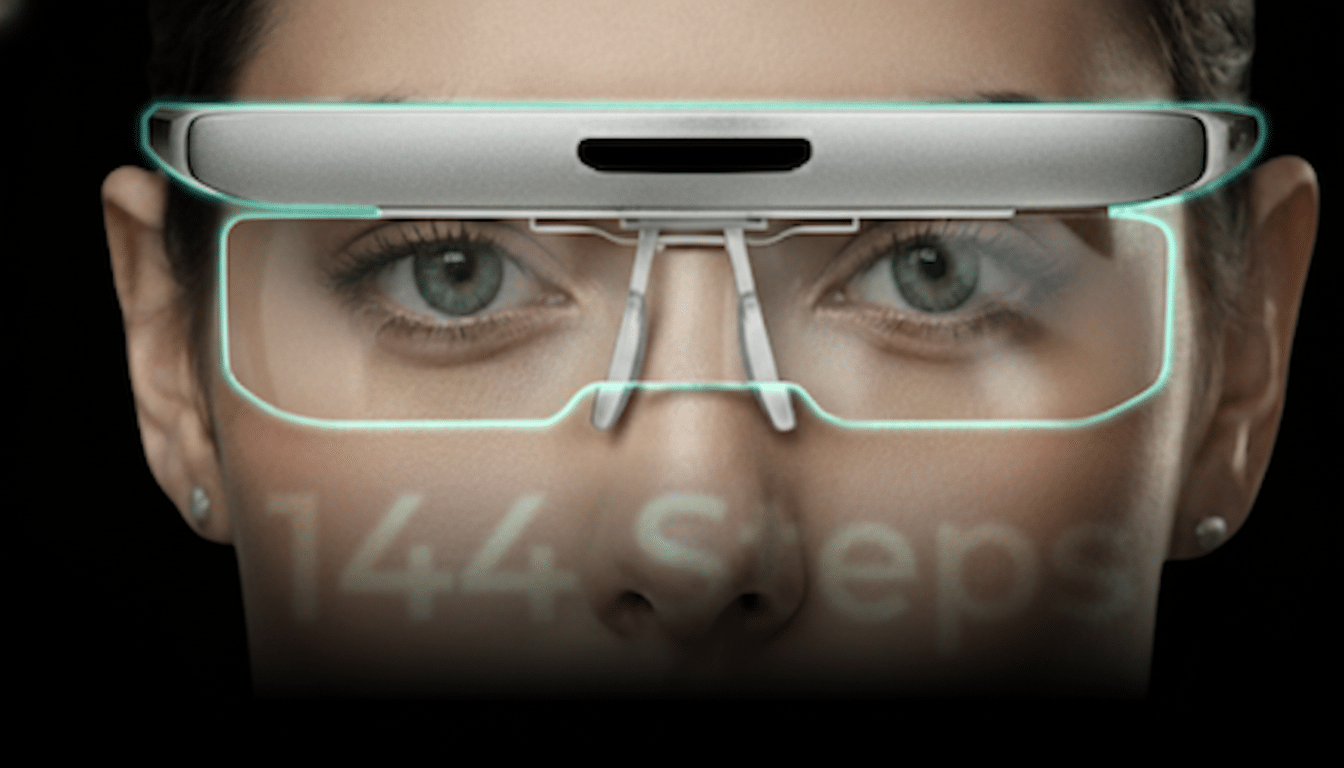
Data is central to the pitch. Eyeary pairs over Bluetooth with a mobile app, logs session frequency and intensity, and uploads anonymized usage data to Edenlux’s servers. The company says it uses AI models to tailor training plans by age, baseline accommodation, and symptom profile, then predicts improvement timelines. Edenlux claims Eyeary could cut the time many users need to reduce reliance on reading glasses from roughly a year with Otus to about six months, though those outcomes will depend on adherence and individual physiology.
The device is being marketed under the U.S. Food and Drug Administration’s General Wellness policy, which allows consumer products that promote a healthy lifestyle without diagnosing or treating disease. That positioning helps Edenlux move faster than traditional medical devices, while keeping claims focused on training and comfort rather than clinical treatment.
Why Eye Strain Is A Growing Target For Wellness
Prolonged near work—hours spent reading on phones, laptops, and tablets—keeps the ciliary muscle engaged at close range. Over time, that sustained demand can translate into fatigue, headaches, and blurred vision symptoms often grouped as computer vision syndrome. The American Optometric Association notes that a majority of regular computer users report such symptoms, and studies have linked intensive near work with rising myopia rates.
The concern is not fringe. Research published in Ophthalmology projects that by 2050 roughly 50% of the global population could be myopic if current trends continue. While myopia management requires medical oversight, consumer-grade routines that encourage regular breaks, distance viewing, and accommodation flexibility are gaining attention as complementary habits in screen-heavy lifestyles.
From Founder’s Story To A Personalized Data Platform
Edenlux’s origin traces to founder and physician Sungyong Park, who experienced temporary focusing muscle paralysis earlier in his career and used structured visual training to recover function. That hands-on experience informs the company’s product roadmap: hardware that stimulates controlled focusing effort, paired with software that personalizes progression and nudges daily adherence.

The approach borrows from modern consumer health: hardware-as-sensor plus a recurring software layer. Park has cited Oura Ring as a comparable model—collect data often, translate it into specific feedback, and build a subscription relationship with users. Where sleep and cardiovascular metrics have flourished in wearables, Edenlux is betting vision and hearing will be the next frontier.
Market Fit And The Competitive Landscape For Eyeary
Eyeary arrives as consumers sift between comfort accessories, vision-training apps, and clinically managed myopia solutions. Blue-light filtering, for example, has mixed evidence for strain relief, while prescription options like multifocal contact lenses or low-dose atropine target myopia progression under clinician care. Edenlux is carving out a wellness niche—active, measurable training of accommodation—without entering the regulatory burden of medical treatment.
If the company can demonstrate consistent gains in amplitude of accommodation or reduced near-vision fatigue over multi-month use, Eyeary could appeal to early presbyopes and heavy screen users who want non-pharmacologic routines. The final assembly presence in Texas may also help with logistics and service expectations for U.S. buyers.
Funding, Pipeline, And U.S. Rollout Strategy
Edenlux reports that Otus, its first-generation trainer launched in select Asian markets in 2022, generated about $10 million in cumulative revenue, providing product-market validation and a dataset to refine algorithms. The company is well-capitalized after raising $39 million in a Series A and $60 million in a Series B, and says it chose crowdfunding for Eyeary to build community demand rather than to finance production.
Beyond Eyeary, Edenlux has disclosed a pipeline that includes Tearmore for dry eye, Lux-S for strabismus support, Lumia for myopia prevention, and Heary for auditory recovery, with several products expected to remain Asia-first. The company is also exploring integrations with major smartphone makers, aiming to embed vision-protective routines into the daily device ecosystem.
For now, all eyes are on the U.S. debut. With a familiar glasses form factor, more precise focal stepping, and a software platform built around adherence, Eyeary represents a timely bid to turn eye wellness into a measurable, everyday habit—one training session at a time.
