


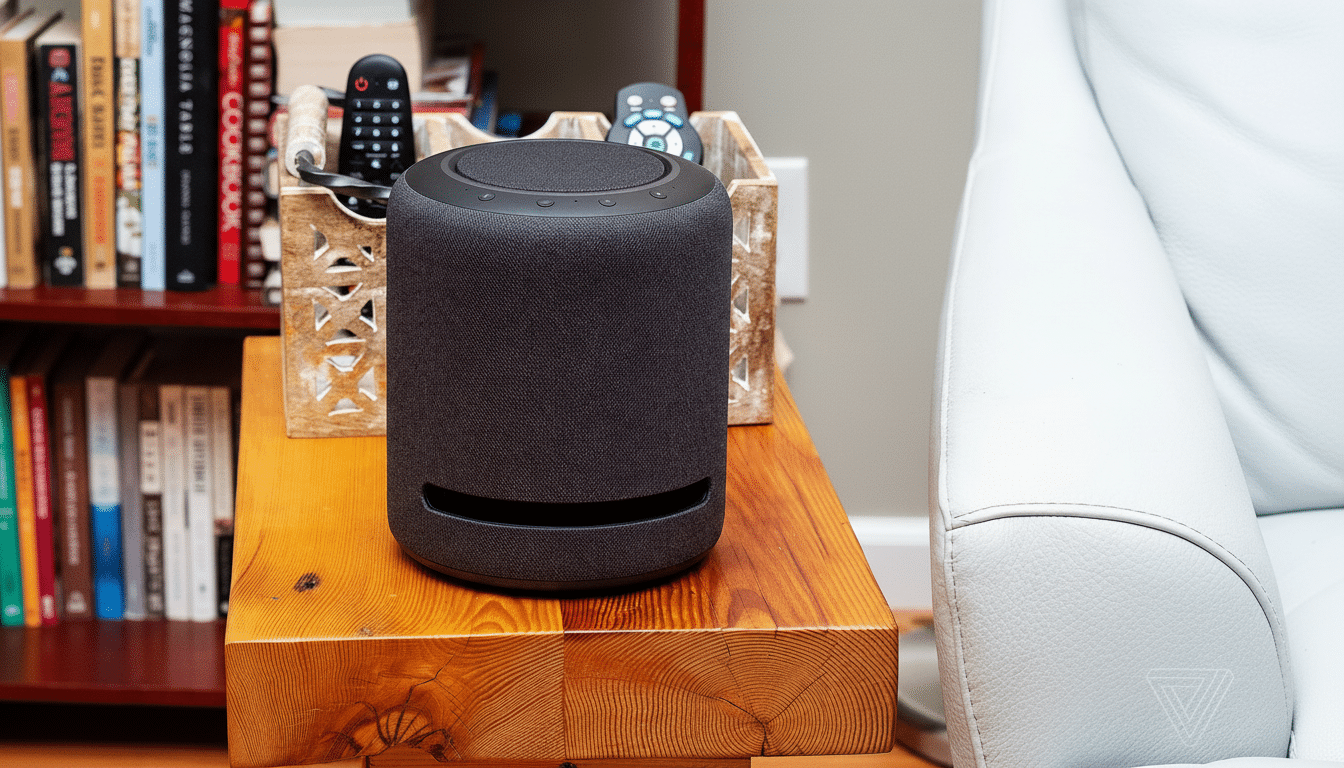
The latest Echo Studio goes all in on sci‑fi minimalism, and I’m here for it. The spherical profile, particularly in Glacier White, immediately recalls the Death Star without devolving into cosplay. It’s crafty industrial design, familiar enough to inspire a smile, restrained enough to look at home in a living room. Even more significant is the fact that it’s not just for show — this actually aids in the acoustics Amazon is promising.
Why the Rounded Aesthetic Appeals in Speaker Design
Rounded shapes minimize sharp edges that introduce diffraction, the micro-echoes that smear high frequencies around cabinets. Audio engineers at Harman — where Floyd Toole and Sean Olive are founding figures in this research — have demonstrated for years that listeners prefer speakers with even off‑axis response. A near-spherical shell allows the Echo Studio’s drivers to project sound more evenly, a fitting choice for a product designed to fill an entire room rather than anchor the listener in one sweet spot.
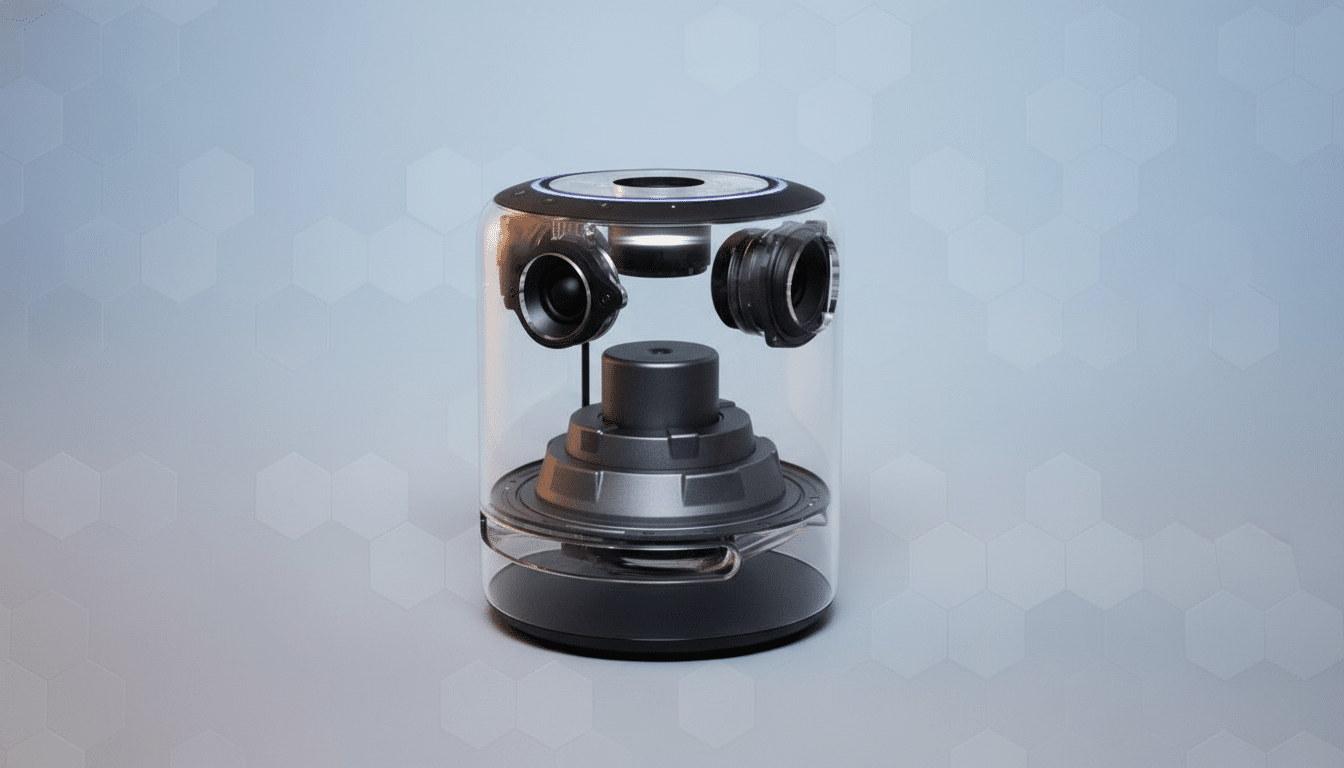
There’s also just physics: more internal volume means woofers have room to breathe. The fact that the new Studio feels heavier than we anticipated is good news. Mass can damp vibrations, aiding bass definition and preventing the midrange from blurring when you play it loud.
Design That Serves the Sound and Enhances Acoustics
The 3D‑printed mesh fabric by Amazon is a standout. Traditional grilles can color sound, but research from labs like the Fraunhofer Institute has revealed that precisely partitioned textiles can be acoustically transparent and still look sharp. If this Amazonian weave does filter interference as promised, you can expect cleaner treble without anyone guessing that you are wearing anything but a head full of hair.
Under the hood, the recipe is three full‑range drivers and a custom woofer combined with spatial audio processing and Dolby Atmos support. Folding in new custom silicon—the AZ3 family—there’s also more headroom for beamforming, room tuning, and dynamic loudness control here. The thing to watch is Omnisense, which adjusts the sound output for your room and can synchronize with multiple units, giving you a surround-like field. Do it well and this is where a spherical shell excels: uniform dispersion combined with smarter DSP leads to a broader, more convincing stage.
Even the lighting is a factor. The built-in LEDs are subtle status signaling, not strobe-light display, which keeps the silhouette clean — that iconic trench line on that certain battle station, implied instead of traced out. It sounds high-end without shouting for attention when the music ends.
A (Slightly) More Recognizable Galaxy In Your Living Room
Pop‑culture echoes are no accident. Consumer tech has a rich history of taking cues from sci‑fi—think Devialet’s Phantom for another orb that appears to have been wrenched off the side of a star cruiser. The Echo Studio’s nod to the Death Star is in just the right space, because it’s suggestive rather than literal and doesn’t succumb to novelty. Amazon has already dabbled with fandom in the form of themed stands for smaller Echo models, so don’t be shocked if accessories adopt a similar approach.
Still, form follows function. Yes, for viewers who marry the Studio with a TV, Atmos can supply some valuable height cues when content is mixed for it. Now, it’s the major services such as Prime Video, Disney+ and Apple TV+ that offer expanding libraries in Dolby Atmos — if only because what was once promised now doesn’t just sound cool, but lives up to its promise. When a spaceship whizzes overhead on your screen, the system’s vertical imaging and bass steering will make or break the illusion.
How It’s Unlike Other Smart Speakers on the Market
Apple’s HomePod also takes on a circular form, but its look feels softer with an all-in-one knit and a top glass touch panel. Sonos’s Era series employs more rectilinear shapes with waveguides to manage dispersion. The Echo Studio’s new design is somewhere in between: more sculptural than Sonos, and definitely more assertive than the cylinder of a HomePod, and now equipped with a claimed leap in processing power meant to fill those speaker grilles.
Compared to boutique orbs like the Devialet Phantom, it’s obvious Amazon is favoring accessibility and ecosystem over sheer SPL bragging rights. The Studio’s pitch is “cinematic and smart,” rather than “blisteringly loud,” which seems about right for how most people actually listen in shared spaces.
What to Monitor in Real-World Use and Daily Listening
Room correction is everything. The best DSP will adjust bass levels to suit your space, not leave boomy nodes if you put the speaker against a wall, and keep dialogue intelligible. Clean midrange sound at moderate volumes, stable vocals when you’re on the move, and, with let’s say two Studios, precise effect placement. The Haas effect demonstrates that our brains do strengthen sounds occurring within a few tens of milliseconds, so it’s very important to have the tightest sync between your pair if you are going to successfully fool folks into hearing stereo or surround solutions.
If Amazon’s AZ3 platform and Omnisense pull it off, the Echo Studio’s Death Star look won’t just be a vibe—it will become visual shorthand for a more intelligent, cinematic speaker. And that’s a design you can appreciate when the music stops.
