


Drime is running a limited-time promotion that offers lifetime access to 2TB of secure, EU-hosted cloud storage for $129.97, billed once. The company positions the deal as a 56% markdown from its $299 list price, with a feature set that blends end-to-end encryption, collaboration tools, and unrestricted file sizes—aimed at freelancers, small teams, and privacy-first users who want to escape recurring fees.
What You Get for $130: Features in Drime’s 2TB Plan
The 2TB plan includes Drime’s encrypted Vault, where files are encrypted locally before upload using AES-256 and designed to be accessible only by the owner. Storage is hosted entirely in Europe and built to comply with GDPR, keeping data within EU jurisdictions. There are no file size limits, which is handy for 4K video archives, large project files, or raw photo sets.
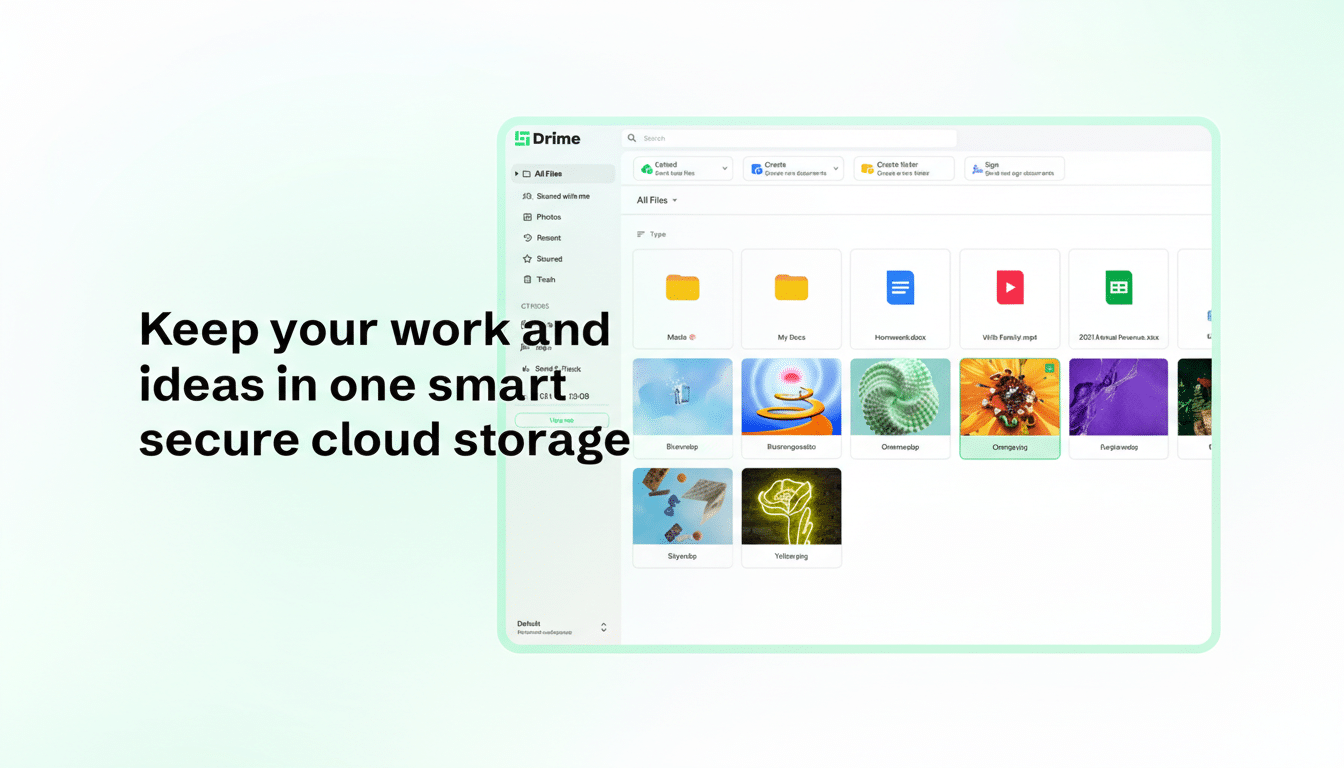
Beyond storage, Drime bundles collaboration workspaces so teams can organize projects, clients, and folders in shared environments. Built-in tools support document and media editing, time-stamped comments, and smooth streaming for large video files. Advanced sharing adds password-protected links, expiration dates, custom link options, and basic usage statistics—useful for auditing who accessed what and when.
Drime also includes integrated e-signature via Drime Sign, plus automatic file syncing across devices and an interface aimed at reducing friction for non-technical users. Taken together, it positions the platform as a hybrid of secure cloud drive, lightweight collaboration hub, and content distribution system.
Security and privacy posture of Drime’s cloud storage
End-to-end encryption with client-side key handling is the core promise: Drime says files are encrypted locally and remain unreadable to the service. AES-256 is the industry standard for symmetric encryption used by banks and governments, and when implemented with robust key management, it aligns with best-practice guidance from organizations like the Cloud Security Alliance and ENISA.
EU-only hosting and GDPR compliance will appeal to businesses with strict data residency requirements or those wary of cross-border requests. As with any encrypted cloud, it’s worth confirming details such as two-factor authentication support, recovery key procedures, and whether previews or web editing are always end-to-end encrypted or use transient server-side processing for convenience.
Price Check Against Big-Name Rivals and Break-Even Math
At $129.97 one-time for 2TB, the effective cost is about $65 per terabyte—paid once. By comparison, mainstream 2TB subscriptions typically run around $100 to $120 per year: Google One’s 2TB plan is commonly about $100 annually, Apple’s iCloud+ 2TB is $9.99 per month, and Dropbox Plus 2TB often lands near $120 per year, depending on billing. Against those baselines, Drime’s break-even is roughly 14–16 months, after which the one-time purchase can keep saving money if the service continues to meet your needs.
Lifetime cloud storage offers are not unprecedented—providers like pCloud and Internxt have promoted similar one-time tiers—so the category is maturing. Still, “lifetime” refers to the life of the service, not your lifespan. For any lifetime plan, prudent buyers evaluate the company’s track record, business model, and export options in case they ever need to move.
The broader backdrop is relentless data growth. Industry analysts such as IDC have projected double-digit annual expansion of the global datasphere as 4K video, high-res photos, and remote collaboration drive storage needs. In that context, a 2TB tier will suit many households and solo professionals today, though power users may eventually want more headroom or tiered archiving.
Who Should Consider It and What to Watch
This deal makes sense for creators, consultants, and small teams who want a private workspace with simple sharing, plus e-signature and feedback loops, without a monthly bill. It’s also compelling for privacy-conscious users who prefer EU data residency.
Before committing, verify practical details: versioning and file recovery policies, bandwidth or transfer caps on shared links, uptime guarantees, and whether there’s WebDAV or other integrations for backup workflows. Also check multi-factor authentication, passkey support, and how account recovery works if you lose credentials—critical in end-to-end encrypted systems where the provider can’t reset your keys.
Bottom line on Drime’s 2TB lifetime cloud storage deal
For buyers seeking a one-and-done price on a privacy-first platform, Drime’s 2TB lifetime plan at $129.97 is a strong value. It undercuts a year or two of typical 2TB subscriptions while layering in collaboration features, EU-only hosting, and end-to-end encryption. As with any lifetime cloud deal, due diligence on security, portability, and service longevity is essential—but the math and feature mix will be hard to ignore for many users.
