


Robotic vacuums have flirted with manipulator arms for years, but two premium contenders are finally attempting to make the idea useful at home. Dreame’s new Cyber 10 Ultra arrives as a direct challenger to Roborock’s Saros Z70, the first mainstream bot-vac with a clamp-style arm. On paper, Dreame’s engineering leap—more lift, more suction, and a promise of tool use—targets the Z70’s early misfires.
Arm design and payload: Dreame’s lift versus Roborock’s
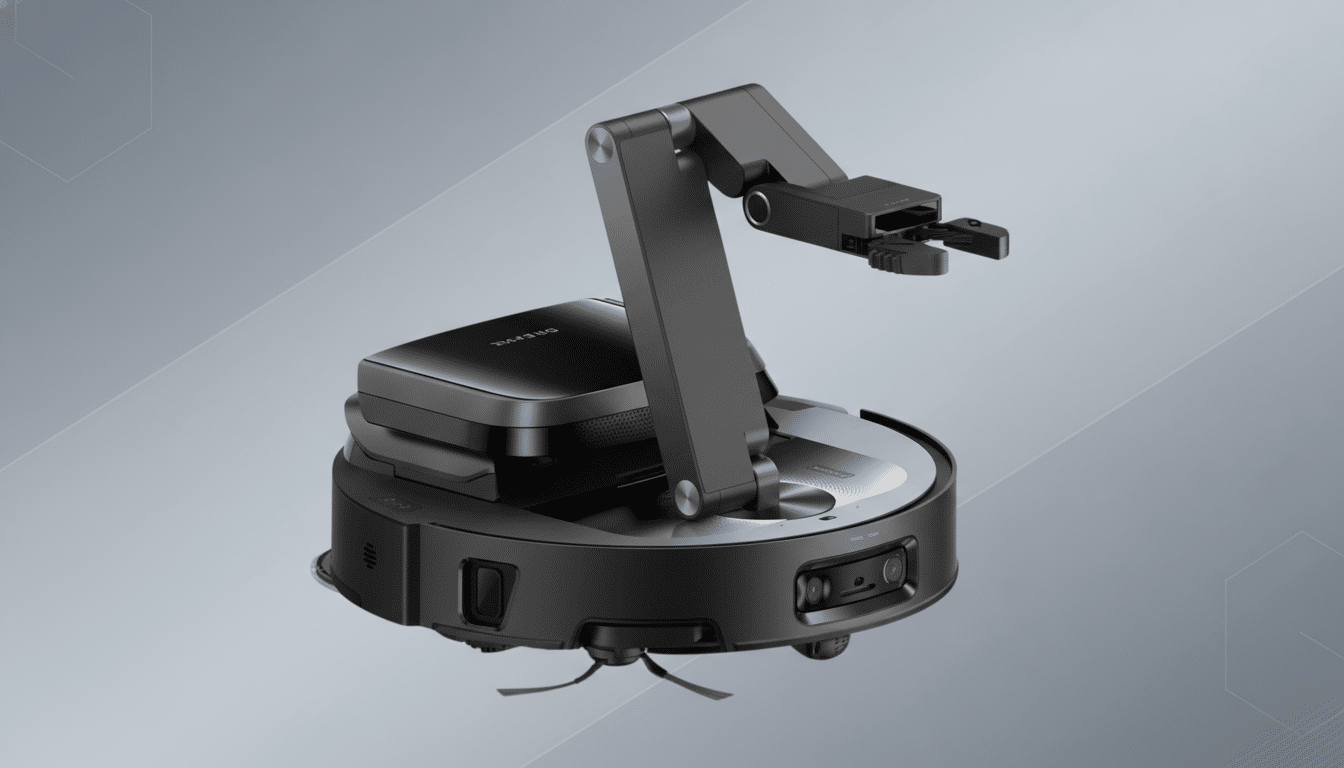
The headline spec is muscle. Dreame rates the Cyber 10 Ultra’s arm at a 500 g payload, outpacing the Saros Z70’s 300 g limit by a wide margin. That extra headroom matters: it can be the difference between reliably moving a TV remote or small toy versus dropping it mid-lift. Beyond numbers, Dreame’s fold-out crane looks more robust than Roborock’s skeletal mechanism, suggesting higher joint torque and better stability when the robot nudges objects at floor level.
- Arm design and payload: Dreame’s lift versus Roborock’s
- Vision, recognition, and autonomy for reliable object handling
- Core cleaning power and mopping performance in daily use
- Docking and maintenance: attachments, upkeep, and reliability
- Price and value: where Cyber 10 Ultra could land
- Bottom line and early verdict on Dreame versus Roborock
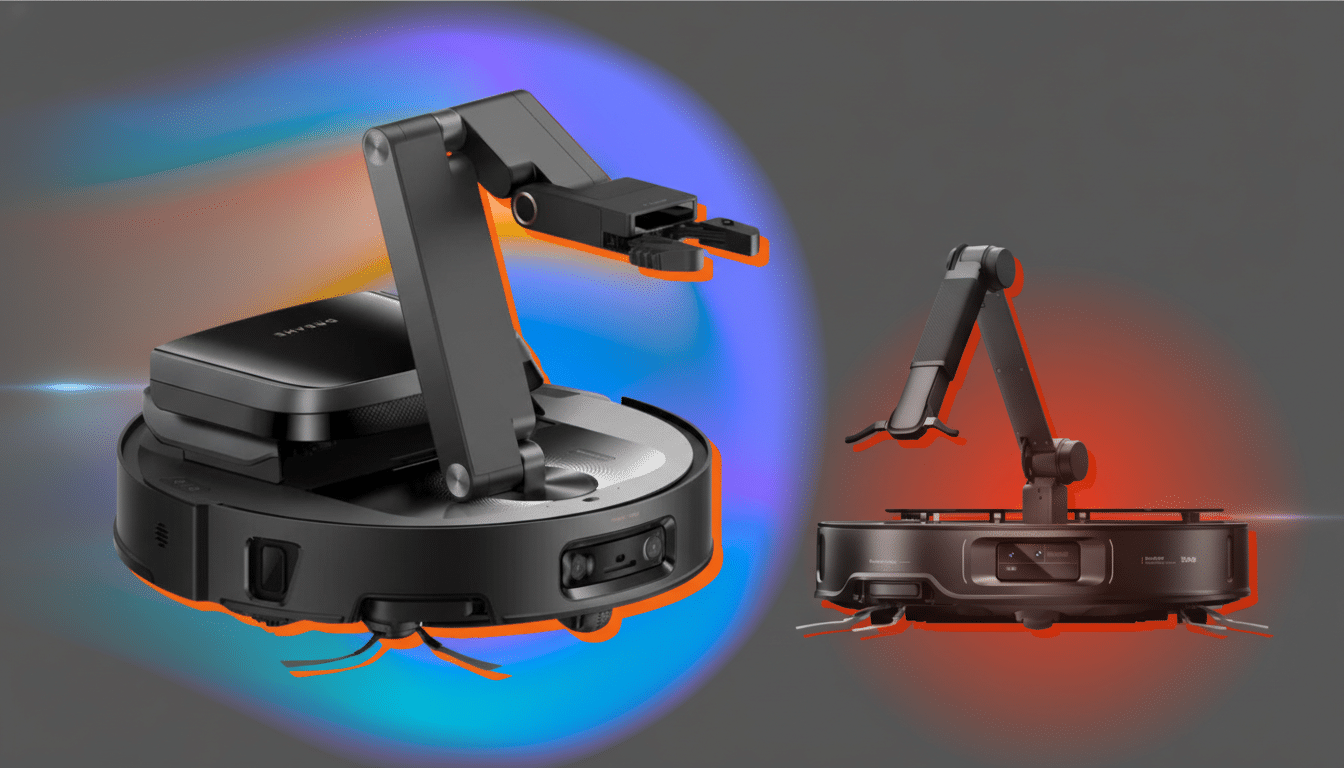
Roborock proved the concept could ship, but not that it could consistently help. Reviewers widely noted that the Z70’s claw struggled with common clutter—socks, slippers, pet toys—and often spent long moments circling or pausing before acting. By contrast, Dreame signals a broader target set, though it hasn’t published a certified list of graspable items. Real utility will hinge on grasp geometry and compliance: a smarter end effector with tactile feedback and wider opening can handle soft, irregular objects far more reliably than a rigid pincer.
Vision, recognition, and autonomy for reliable object handling
Arms are only as good as their perception. Both robots pair LiDAR navigation with RGB cameras for object detection, but the failure modes differ. The Z70’s most common misses involved low-contrast items on dark floors and partially occluded objects near furniture legs—classic computer vision edge cases. Dreame’s pitch leans on improved classification and path planning, aiming to reduce that “stare and shuffle” behavior that frustrated early adopters.
Dreame’s most intriguing claim is “autonomous tool-utility technology.” In theory, the Cyber 10 Ultra can pick up brush or nozzle attachments from its dock to clean in tight gaps or along baseboards before returning the tool. If realized, that’s a genuine capability jump, effectively giving the robot a modular end effector without asking the owner to intervene. It also introduces new challenges: precise docking alignment, attachment detection, and error recovery if a tool is dropped out of reach. Until independent testing confirms cycle-time and success rates, consider this a high-upside but unproven advantage.
Core cleaning power and mopping performance in daily use
Even if the arm never lifts a sock, vacuuming and mopping still carry the day. Dreame lists 30,000 Pa of suction for the Cyber 10 Ultra, eclipsing the Saros Z70’s 22,000 Pa. That’s a meaningful boost for deep carpet pickup and edge debris, and it places Dreame alongside other top-tier performers such as the Narwal Flow 2 and Eufy Omni S2 at similar suction levels. For context, brand siblings like the Dreame X60 Max Ultra and Roborock Saros 20 push to 35,000 Pa, though those models skip the arm to focus on raw cleaning.
Both the Cyber 10 Ultra and Saros Z70 use dual spinning mop pads and support base-station pad washing and hot air drying, which helps reduce odor and cross-contamination. The differentiators will be downforce on the pads, edge reach, and how well the robots lift mops on carpet transitions—areas where incremental software updates can markedly improve results over time.
Docking and maintenance: attachments, upkeep, and reliability
High-end docks are workhorses now: pad washing, water refill, and drying are table stakes. Dreame’s potential tool rack inside the dock is the novel twist, essentially turning the base into a mini garage for attachments. That convenience, however, adds moving parts that must remain precisely calibrated. Based on past flagship docks across the category, expect periodic cleaning of pumps and channels to keep water flow and drying efficient.
Price and value: where Cyber 10 Ultra could land
Roborock’s Saros Z70 launched at $2,599.99 before promotional pricing cut it near $1,299.99, reflecting mixed reception of the arm in real homes. Dreame hasn’t announced pricing for the Cyber 10 Ultra, but context matters: the Dreame X60 Max Ultra sits at $1,699.99, and adding an arm plus a more complex dock points to a premium above that. Keeping the Cyber 10 Ultra under $2,000 would sharply strengthen its value case against both the Z70 and non-arm flagships.
Bottom line and early verdict on Dreame versus Roborock
If you want a robot that actually helps manage clutter, the Cyber 10 Ultra’s stronger arm and tool-use ambition give it a credible path to outperform the Saros Z70. Success will depend on grasp reliability and perception speed, not just payload claims. If Dreame’s execution closes the loop—fast identification, confident pick-up, and clean stow—it rewrites what a robot vacuum can do between cleanings.
If the arm remains a party trick, raw cleaning value still favors simpler powerhouses without manipulators—where 35,000 Pa machines routinely excel for less money. For now, spec sheets tip toward Dreame on strength and suction, while Roborock holds the distinction of being first to market. The next round of independent testing will determine which vision of “a vacuum with hands” finally sticks.
One more frontier looms: both brands are teasing stair-climbing robots—Dreame’s Cyber X and Roborock’s Saros Rover—with Eufy exploring similar concepts. If arms brought robots closer to tidying, true stair mobility could make whole-home autonomy a reality. Until then, the Cyber 10 Ultra vs. Saros Z70 fight is the clearest sign yet that the smart home’s most practical robot is learning to do more than just roll and suck.
