


Guillermo del Toro’s decade-in-the-making Frankenstein comes to life as a rarity: A horror film that aches with emotion. With a luminous cast that includes Oscar Isaac, Jacob Elordi and Mia Goth, the filmmaker concocts a ravishing Gothic that weds terror to tenderness, recasting the myth of Mary Shelley as an intimate drama of creation and responsibility, and the bruising urgency of love.
Del Toro stages the story like an icy confession: A broken man pulled from the far north narrates the catastrophe he has wrought, while the being he has created sidles along the edges of the frame, a memory that won’t go away.
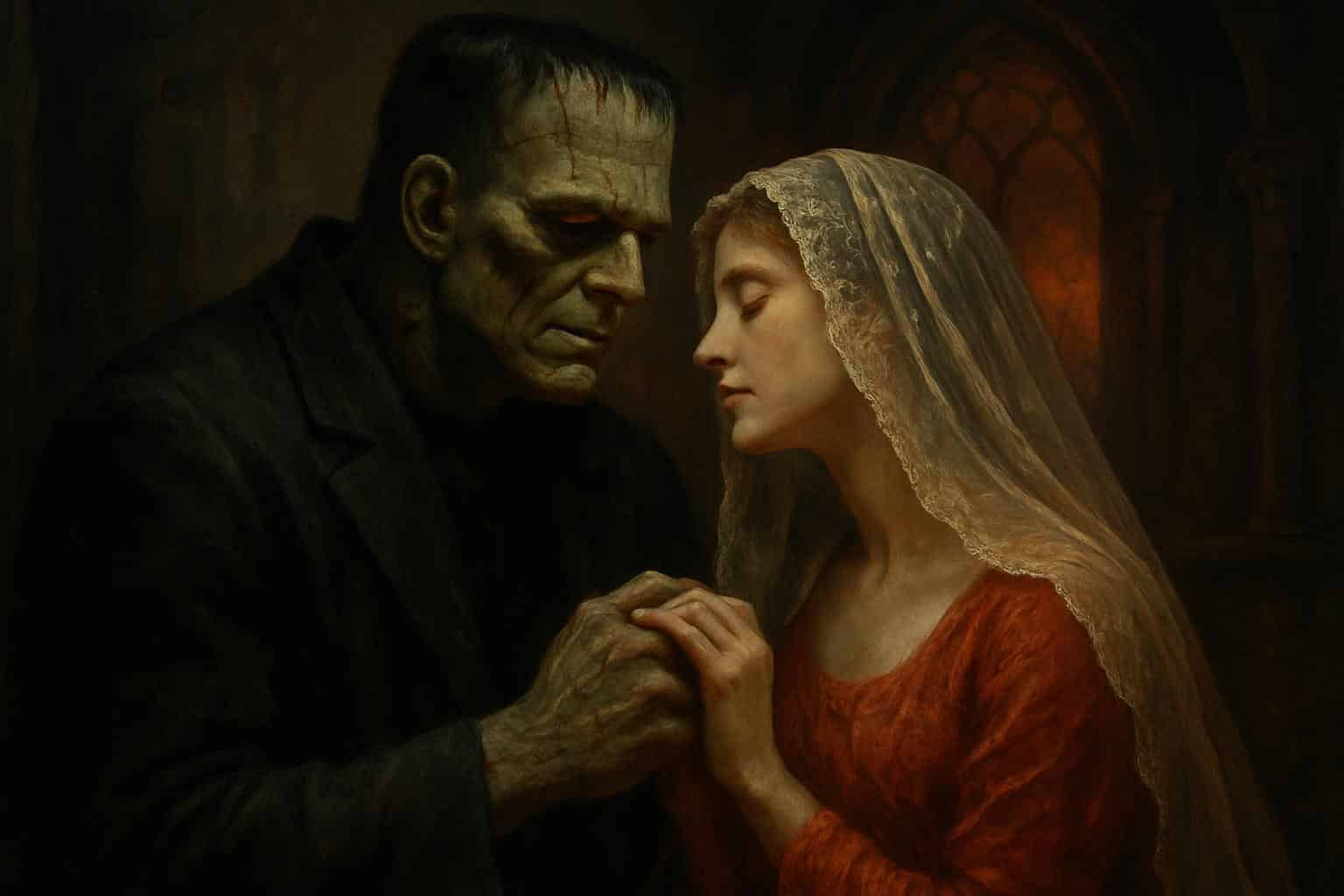
The result is part chase, part romance and part reckoning.
A vision of fathers, sons and the price of creation
This Frankenstein is rooted in the language of family. (Isaac’s Victor isn’t a cackling madman but a son whose soul has been twisted by cruelty, the victim who believes he can will life to repair a primal wound.) Del Toro makes this legacy of damage chill-inducingly clear, drawing a direct line from a father who punishes (played with glacial authority by Charles Dance) to a “parent” who wants a child designed in his own image.
That Mia Goth is being in two places at once — the beloved mother, the gifted Elizabeth — is what gives the drama its Oedipal voltage. The film’s nerviest move is to take the act of creation and make it feel like a love letter writ in the wrong direction: science in the service of grief. When the experiment works, it yields a cycle, not salvation, and the results are etched in stitched skin and wordless rooms.
Performances that humanize monster and maker
Isaac portrays Victor as a man who confuses control with care. His look blazes with pride and panic, his tenderness is brittle; he shies from the empathy he so desperately needs. It’s a story of genius souring into tyranny, more frightening than any lightning bolt.
Elordi’s Creature is a testament to motion and to memory. Tall and alabaster, he starts with a toddler’s wonder, hands in water, fingers toward flame, and gradually builds from there, language as a fragile scaffold across pain. The vocal treatment makes his words feel like they are coming up from the subterranean depths, but it’s the cut of his eyes as he says this that is devastating: someone reaching some sort of obnoxious awareness of the world as a place that responds to difference with fear.
Goth brings flinty warmth to Elizabeth, a scientist at heart who sees opportunity where others see danger. Christoph Waltz sneaks in as an amoral patron, one whose money paints the labs a garish moral red, further binding ambition and exploitation in knots. Every piece of casting imbues the theme: the families we’re born into and the families we choose.
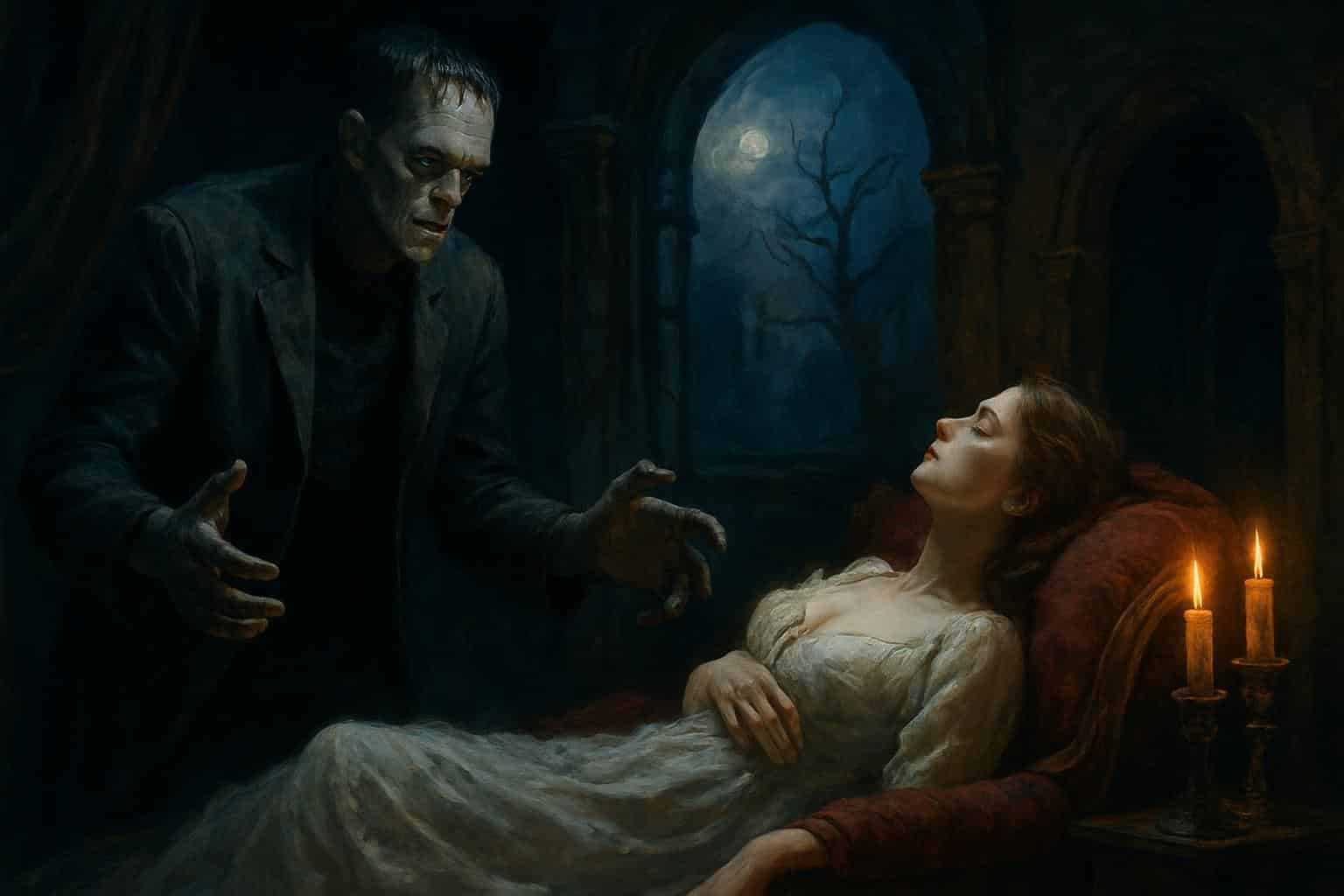
A handcrafted Gothic: design, score, sound
Del Toro’s imagery is lush and utilitarian — fairy-tale silhouettes designed to slice. Needle-thin towers jut through cloudbanks; vaults hum with the tick and whir of improbable machinery; ice fields shimmer like porcelain. A slashed-red motif runs through gloves, books, wreaths, a life line of color against an ash-and-bone palette; it reminds us that there is life even where cruelty prevails.
Costume designer Kate Hawley shapes fabric like anatomy: corseted ridges call to mind spines, greatcoats murmur of scar tissue. The crying and sobbing and taking of teens’ virginity is accompanied by a score, by Alexandre Desplat, in which his strings swell with players whose tears and rages and subtended rapes go a long way to binding you in romance to dread. It’s elite company — Desplat twice an Oscar winner, del Toro Best Picture and Best Director in his own right, among other awards from the Academy — but the craft here feels newly alive, not museum-piece prestige.
Why this Frankenstein now
More than two centuries after it was published, Shelley’s novel is still among the most adapted stories in the history of the screen, as cataloged by institutions like the British Film Institute. Del Toro pays homage to legacy — James Whale’s 1930s classics, the operatic frenzy of Kenneth Branagh’s 90s take — while reframing the gaze onto the ethics of caregiving and the dignity of the Other. At a time grappling with issues of identity, agency and chosen kin, the Creature’s odyssey lands with unusual power.
With an opening at the Toronto International Film Festival followed by a theatrical rollout and a launch on Netflix, the film seems to be made for both vast auditoriums and living room screens. With a platform boasting well over 250 million members globally, per company filings, Netflix comes pretty close to ensuring that this Frankenstein will penetrate the cultural blood stream, be discussed in dorms, living rooms and film schools, and generate a marketing budget of $0 to make it happen.
The verdict
Guillermo del Toro built a Frankenstein that pulses like a heart, wounded but strong, and brimful of love and need. It’s a combination of precision and wildness, performance and design, that makes a monster story a radical act of empathy. Watch it big if you’re able; let it haunt you otherwise.
