Dangote Petroleum Refinery and Petrochemicals FZE is reportedly expected to begin trading in Lagos on Dec. 1, moving Nigeria’s largest industrial public offer from its subscription phase toward the stock market. The prospective debut follows a sale of 4.1 billion shares at 525 naira each, a transaction that raised about 2.15 trillion naira and put the refinery at the center of a consequential test for Nigerian capital markets.
The start date has not been independently confirmed through an exchange admission notice in the available public materials. But CNBC reported on Nov. 28, citing multiple media reports, that trading was expected after regulatory approval. At the offer price, Reuters calculated an implied equity valuation of roughly $47 billion. That would make the company a major African public-market valuation, while giving investors a way to buy into a refinery whose operating scale is reshaping regional fuel flows.

Offer terms set a low retail entry point
The Nigerian Exchange Group’s account of the offering puts the core terms in clear numerical context: 4.1 billion ordinary shares were offered at 525 naira apiece, producing gross proceeds of approximately 2.15 trillion naira. The subscription window opened Sept. 14 and was scheduled to close Oct. 13, subject to the prospectus.
Retail access was designed into the offer. The minimum subscription was 10 shares, requiring 5,250 naira rather than 5,250 naira per share. That distinction is important because some initial coverage conflated the minimum order value with the individual share price. The exchange said the offer was open to retail and institutional investors as well as eligible African investors.
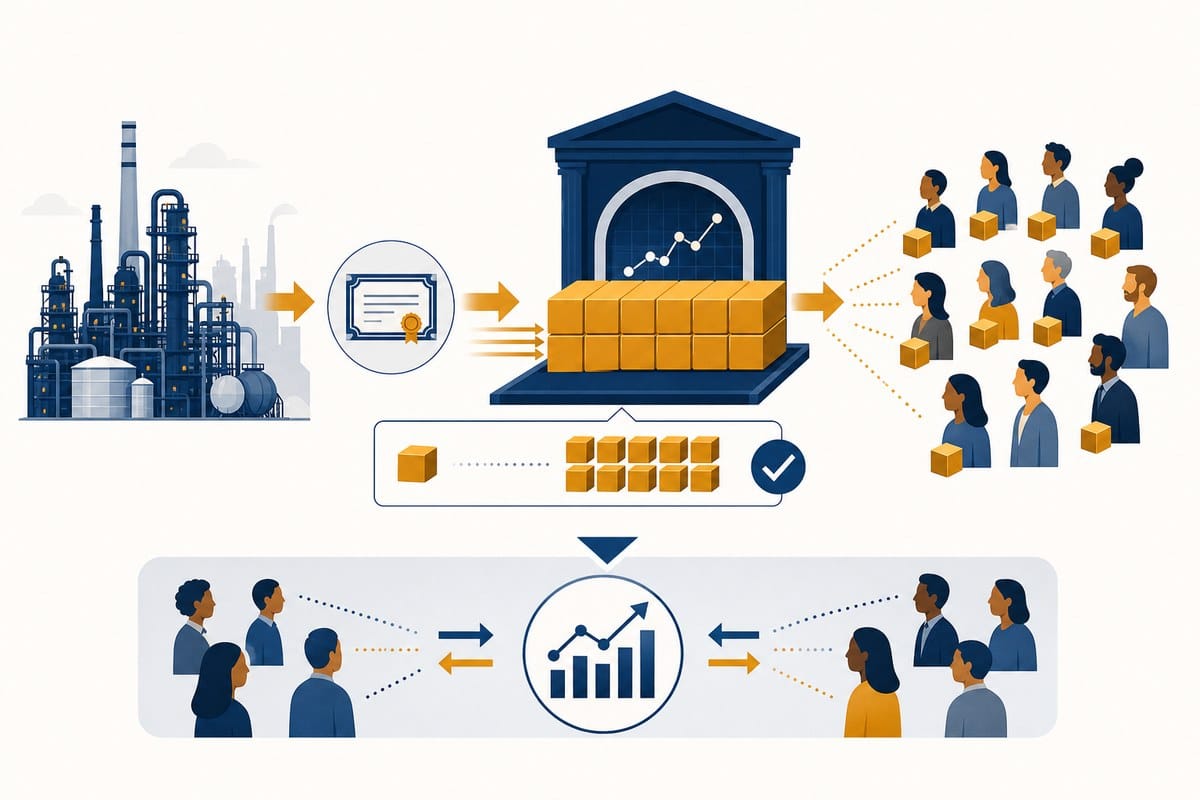
The size of the planned float is also separate from the value investors are assigning to the entire company. NGX said the 525-naira price implied a market capitalization of about 65.22 trillion naira. Dividing that capitalization by the offer price yields roughly 124.2 billion shares underlying the calculation, meaning the 4.1 billion-share sale represents only a limited portion of the implied share base. Final allocation and ownership details, rather than the headline offer proceeds alone, will determine the freely tradable supply available to new shareholders.
An Associated Press report said Aliko Dangote retained 87% ownership during the offering. That figure underscores the founder’s continuing economic stake, though it should not be treated as a complete description of post-offer voting rights, governance arrangements or the ultimate public float without fuller disclosure.
Valuation figures reflect currency conversion, not competing estimates
The $47 billion valuation cited by CNBC and a roughly $49 billion figure in other reporting are best understood as different conversions of the same offer-price-based naira capitalization, rather than fundamentally different assessments of the refinery’s worth. Exchange-rate assumptions and rounding can produce a multibillion-dollar gap when converting a 65.22 trillion-naira market capitalization into dollars.
Nor is the figure an enterprise value, which would also take account of debt and cash. It is an implied equity valuation: the market value produced when the stated per-share offer price is applied to the company’s registered share count. For prospective investors, that is a useful starting point, but it does not settle the question of what the shares will trade for once buying and selling begin.
The company has said demand was strong. CNBC reported that Dangote Refinery described the offer as heavily oversubscribed, with applications from investors across 120 countries and all 54 African countries. CNBC also said a refinery spokesperson did not respond to its request for comment. The reported demand, therefore, remains a company claim rather than an independently published allocation result.
Operating scale supports the strategic case, but risks remain
Dangote Refinery began operations in 2024 and has crude-distillation capacity estimated at between 650,000 and 700,000 barrels a day, according to CNBC. Its scale is central to the investment case: a large, newer refinery can potentially capture value by processing crude into fuels and petrochemical products closer to fast-growing demand centers and export markets.
Management has presented a sharply expanding business. In remarks reported by NGX, Aliko Dangote said the refinery generated 19.47 trillion naira of first-half 2026 revenue and 2.55 trillion naira of profit after tax. David Bird, the refinery’s chief executive, said it had become the largest single supplier of refined petroleum products into Europe. Those are company statements reported by the exchange, not independently audited performance analysis in the available disclosures.
The expansion plan is equally ambitious. CNBC reported that the refinery intends to double capacity to 1.4 million barrels a day by 2029. The project, if completed as described, would extend the company’s reach well beyond its current operation. It would also require investors to assess construction costs, execution and the market conditions into which that new capacity would arrive.
Cyril Widdershoven of Blue Water Strategy, quoted by CNBC, pointed to the refinery’s construction costs and commissioning delays, as well as the possibility that additional refining capacity could pressure margins. Some investors have also questioned whether the valuation is too high, an assertion refinery officials have disputed.
The public offer’s structure makes the coming trading period especially consequential. A small retail minimum can broaden participation, but a market price after admission will depend on the number of shares actually available for trading, investor demand after allocations and confidence in the refinery’s earnings and expansion targets. The Dec. 1 date remains reported rather than confirmed by a trading-admission notice; the offer price has already established the much larger benchmark the market will be asked to test.