


Introducing the pocket gizmo that aims to teach you to code in between clicking away your pangs of idle energy. Cyber Fidget is a pocket-sized (palm-sized) aluminum shield that is both an ultra-cool tactile fidget toy and a fully programmable microcontroller platform for anyone who’s ever wanted to tinker, learn and, yes, responsibly HACK!
A Small Box Full of Real Hardware and Controls
Inside sits Espressif’s ESP32-PICO-MINI-02 microcontroller module, a Wi-Fi/Bluetooth-capable power-sipping chip favored by IoT projects for its rich connectivity and minimal energy leakage. The board operates a 0.96-inch 128×64 monochrome OLED, and includes four RGB LEDs, microphone, speaker, microSD slot, USB-C connectivity, and a three-axis accelerometer — plus those satisfyingly clicky buttons and slide switch that make it fidget-worthy even before you flash a single script.
- A Small Box Full of Real Hardware and Controls
- Not Just a Toy, a Teachable Cyber Range
- Assembly First, Then Creativity and Customization
- How It Compares To Flipper Zero and Friends
- Old Parts, New Possibilities for Play and Learning
- Who It’s For and Why It Matters to Educators
- Bottom Line A Clicky On-Ramp To Real Skills
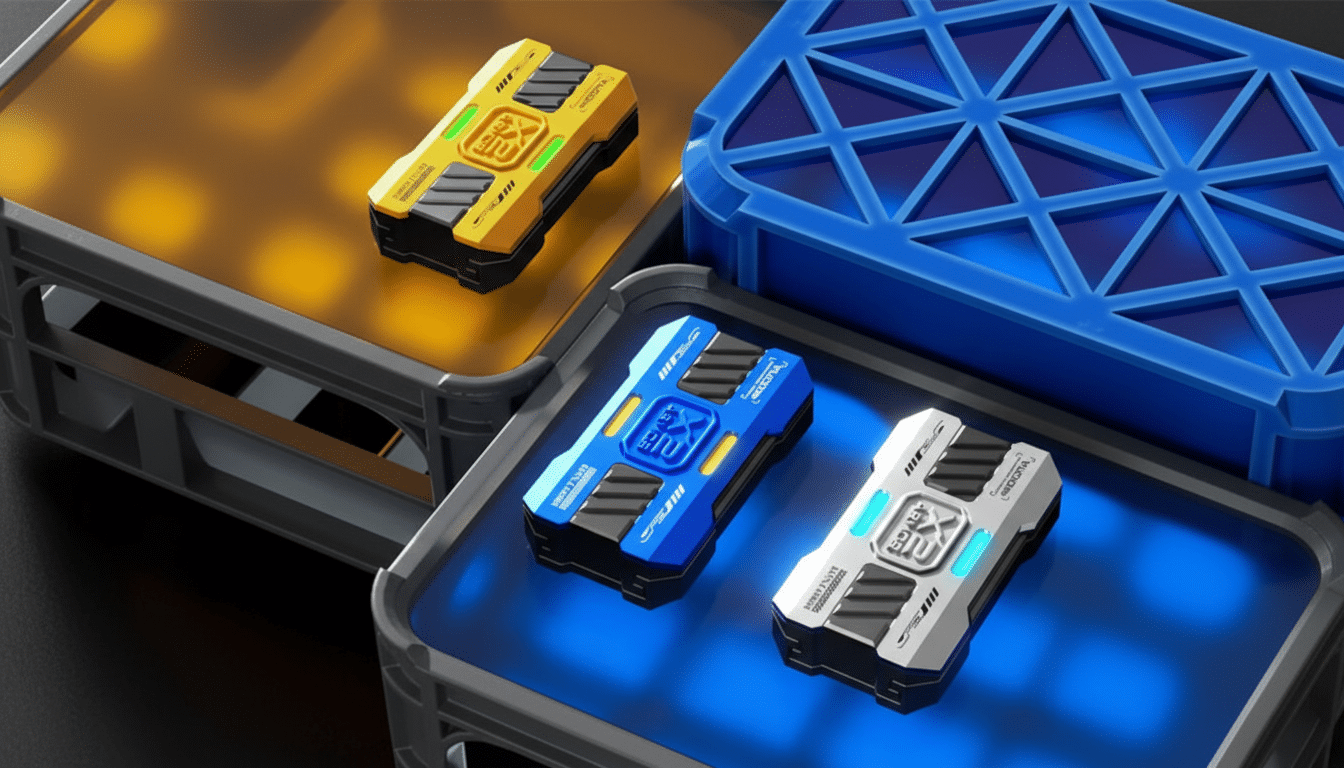
The case itself is roughly 2.2 by 1.8 by 0.8 inches, so it really does disappear in a pocket. It does come as a kit, screws included (no soldering required), so users will get to know the hardware while putting it together — a valuable step that gets skipped far too often and helps demystify how embedded devices get made.
Not Just a Toy, a Teachable Cyber Range
Cyber Fidget is an Arm Cortex-M0+ development board for beginners, and CircuitPython compatibility means it also attracts those of us with more experience. This combination opens up a wide range of possibilities: games, voice memos, MP3 player, Bluetooth beacon, secure all-in-one wallet… You can do it! A companion to the PyGamer or even for standalone use, you can code and design your own graphics in MakeCode Arcade and load it over. With the on-board sensors and radios, it also becomes a training tool for safety-focused security concepts such as signal scanning, protocol decoding, etc.
This is more than a novelty. The ESP32 from Espressif powers hundreds of millions of connected devices across the globe, and CircuitPython’s board support covers over 200 platforms according to Adafruit documentation. Learning to script on a small device like this maps directly to skills that will be put to use in classrooms, makerspaces, and beginner security labs.
Assembly First, Then Creativity and Customization
Cyber Fidget comes as a do-it-yourself kit: case, board, buttons, screen, and fasteners. You can go from parts to a working unit in an afternoon, the company says. Prefer to customize? Another, lower-cost option has just the electronics and STL files so you can make a case yourself out of whatever material you like. That’s a canny hat tip to the maker community, where iterative prototyping and personalization are half the fun.
Pricing targets enthusiasts, not impulse buyers: $179 for the full kit ($149 for early birds). (Kickstarting it, as will be familiar to all parties, brings its own cautions.) A University of Pennsylvania study requested by Kickstarter estimated that approximately 9 percent of projects do not deliver rewards, so backers should weigh the standard risks associated with campaigns alongside how well the device has been executed as a proof-of-concept.
How It Compares To Flipper Zero and Friends
If you’ve been thinking of Flipper Zero, you wouldn’t be wrong to make comparisons. Flipper has more general RF tooling, support for NFC/RFID, and GPIO for hardware expansions, and is focused on penetration testing from the get-go. Cyber Fidget, on the other hand, is really a Swiss Army knife for learning: less oriented toward offensive activities out of the box but more open-ended when it comes to coding, sensing, and playing around. That distinction might also help find it a niche in classrooms or other events where stand-alone pentest gadgets are limited.
Old Parts, New Possibilities for Play and Learning
The design reflects Gunpei Yokoi’s famous “lateral thinking with withered technology” ethos: Instead of pursuing bleeding-edge specs, use mature, affordable components in novel ways.
An ESP32, a small OLED display, a number of sensors, and quality machining will never win any benchmark showdowns, but in the right configuration they instead form an engaging learning platform with a feedback loop built right in — see how pixels start clicking and glowing more after each function you write!
Who It’s For and Why It Matters to Educators
Teachers, hackerspace attendees, and curious newcomers will get the most out of it. Code.org’s recent State of Computer Science reports indicate that the majority of US high schools have begun to offer CS, but hands-on embedded hardware experiences are still behind the curve of software-only curricula. A gadget like Cyber Fidget can help solidify the bridge between them: portable enough to take on existing FIS missions and strong enough to show off sensors, storage, networkability, and sound in one tiny sandbox.
The bigger story is habit-building. By integrating the “fun” part within the “learning” lesson, it encourages users to do daily micro-sessions of hands-on coding and testing. And that’s the rhythm of confidence and portfolio-building: A hacker who walks through an accelerometer today gives a class on it tomorrow, or posts that to Git repos, with nice versions.
Bottom Line A Clicky On-Ramp To Real Skills
Cyber Fidget is not going to be a replacement for a full-spectrum security toolkit, but that’s not the point. It’s a carefully designed door into the basics of embedded development and ethical hacking that you can hold in your hand, too! If you’ve ever hankered after a fidget toy that justifies the space it takes up in your pocket, this is the rare gizmo that asks you to play — and learn something worthwhile every time you press one of those buttons.
