


Cooler Master is hoping to directly address one of PC building’s longest-standing headaches: those first few minutes after you touch your GPU power connectors. The company’s all-new GPU Shield features active monitoring and fail-safe logic that links to the 12V-2×6 connector to detect bad insertion or uneven current draw before it burns a cable, a card throttles, or a connector melts.
How Cooler Master’s GPU Shield Monitors and Protects Power
Instead of depending on passive connectors and user watchfulness alone, GPU Shield adds intelligence to the power path. Cooler Master claims this system keeps you informed in real time, alerts when things are awry, and jumps into action if needed. It’s onboard with MWE Gold V4 power supplies (750W to 1,000W), and for greater compatibility an in-line adapter is placed between the PSU and the graphics card.
- How Cooler Master’s GPU Shield Monitors and Protects Power
- Why GPU Power Cable Meltdowns Happen Under High Loads
- What Cooler Master Brings to the Table with GPU Shield
- Context from the Wider PC Power and GPU Cable Market
- Trade-offs and Practicalities for Builders and Cases
- Bottom Line: A Practical Safety Layer for GPUs
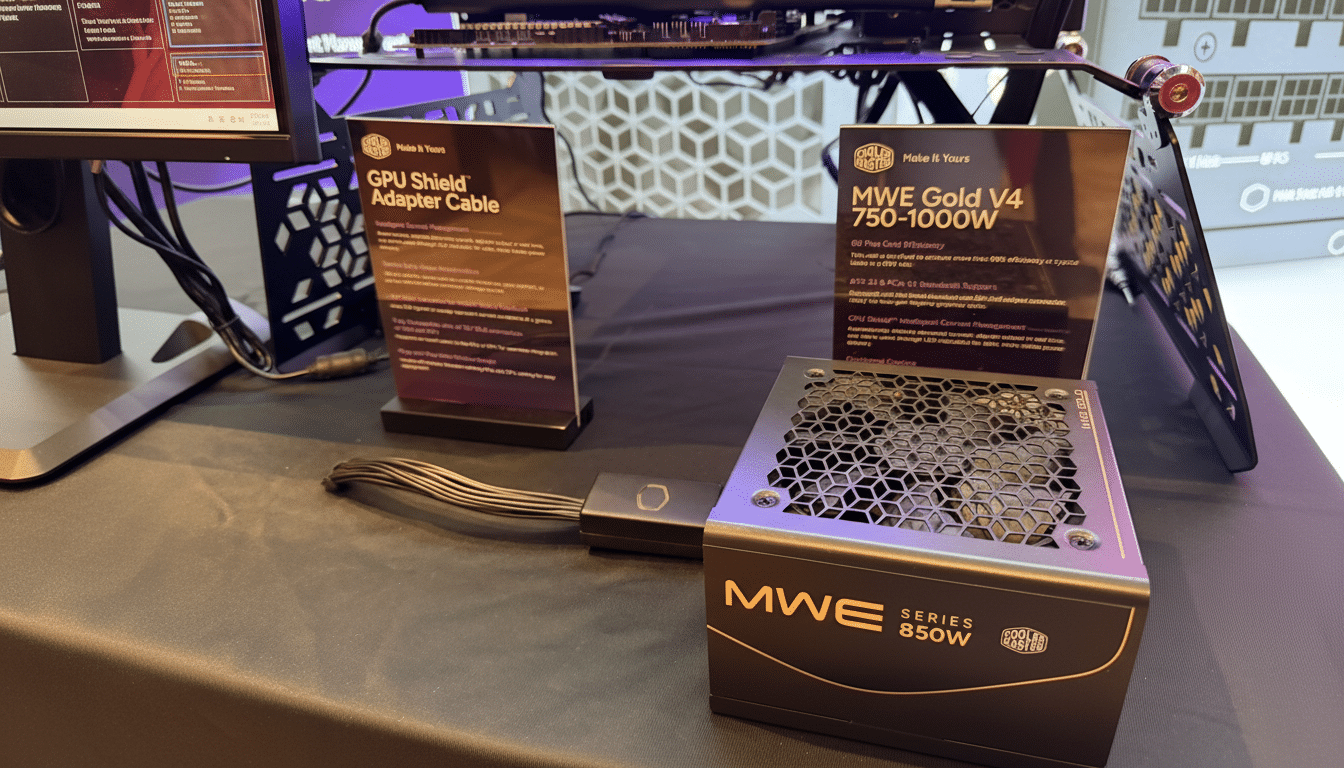
The adapter features LEDs that indicate when a plug is fully inserted, addressing one of the issues that turn into heat-generating problems by keeping contact resistance low. It also reads current through the 12V-2×6 lines and looks for imbalance between pin groups. Assets leaked to the press by TechPowerUp indicate an Intelligent Current Management feature, capable of adjusting output on the fly if load imbalance suddenly becomes too much for it, or shutting down briefly.
Why GPU Power Cable Meltdowns Happen Under High Loads
Today’s high-end GPUs can pull orders of magnitude more power in aggressive, pulsed transients than in steady-state numbers. If a 12V-2×6 (the new name for 12VHPWR) connector is not fully mated, the contact resistance between one or more of the pins becomes high. More power is concentrated in fewer conductors, resistive heating compounds, and a failure cascade will ensue. Unseated or dirty connectors had come out as the main suspects in GamersNexus’ bench testing a while back, and while Nvidia has said overall failure rates are low, they are definitely real.
Industry groups stepped up to bulletproof the supply chain: PCI-SIG’s 12V-2×6 update modified sense-pin geometry and retention size to better detect partial insertion; PSU makers adjusted for guidance outlined in Intel’s ATX guidelines. Even so, add-in boards and cable configurations differ, and when a high-power card encounters a flimsy connection, heat is the winner. Active monitoring closes that gap.
What Cooler Master Brings to the Table with GPU Shield
GPU Shield attacks both user mistakes and edge-case anomalies with its two-layer approach: physical cueing (via LEDs) provides guidance to the user who needs an additional reminder not to force a card improperly, while electrical supervising circuitry keeps tabs on the current drawn over time, cutting power if something goes wrong.
If the system senses that one side of the connector is taking an unfair share of the load, it can notify users and reduce or halt delivery before temperatures get out of hand. That’s a modest improvement on status quo solutions that color-code just the plugs.
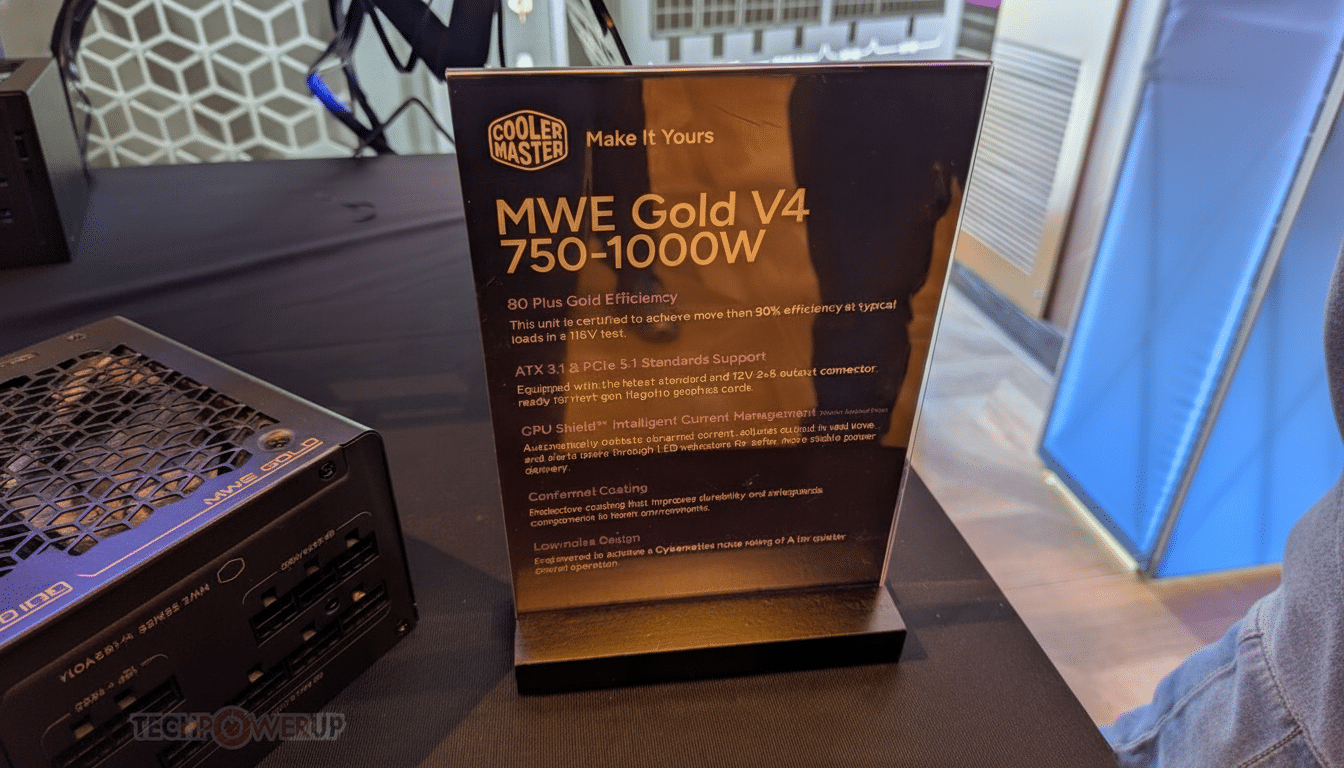
It’s important to note that Cooler Master is not pitching GPU Shield as a brand-new connector, but rather a safety layer around today’s ecosystem. It renovates the MWE Gold V4 line while also being offered as a standalone adapter for builders who aren’t prepared to swap out their power supplies. That flexibility will be important to owners of more recent RTX 40- and 50-series cards who want insurance without a full rebuild.
Context from the Wider PC Power and GPU Cable Market
Other vendors have tried similar guardrails. ASRock has current detection built into some PSUs already, and boutique cable manufacturers offer a stiffer boot, an LED-equipped heat sink, or an insertion indicator. Those are important, but they also don’t generally try dynamic current balancing or take action automatically. With logic inside the power path itself, Cooler Master is edging the industry a little closer to the type of active protection that is standard issue in more archaic DC gear.
The shift also coincides with broader reliability attempts. Because of PCI-SIG’s connector revisions and PSU makers’ focus on transient response, there are already fewer headlines about melted plugs. A visible, user-friendly indicator that catches bad seating before first boot could help drive incidents down even further, particularly as more boards head out with higher factory power targets.
Trade-offs and Practicalities for Builders and Cases
An in-line adapter will add some cable bulk, so this could be a deal-killer for small-form-factor builders or anyone who craves that showroom-clean appearance. But when you’re dealing with a GPU that can be well north of four figures at retail, most will gladly accept one more block in the cable run to cut down on RMAs and reduce the risk of seeing smoke. There could be some compatibility questions with vertical GPU mounts, tight shrouds, and case clearances — builders will want to carefully check dimensions.
It’s important to note, too, that active protection is a supplement — not a replacement — for best practices: seat the connector until it clicks, avoid sharp bends at the housing, and keep debris away from pins. Given those fundamentals, a watchdog that watches over individual-connector behavior is the smarter second line of defense.
Bottom Line: A Practical Safety Layer for GPUs
GPU Shield is a pragmatic reaction to a relatively rare but expensive failure mode. Cooler Master accomplishes this by instrumenting the 12V-2×6 rail and responding in real time, giving PC enthusiasts something they have long been asking for: an early warning system when things go sideways with power delivery. If it does what it says on the can and comes in at a reasonable premium, then other PSU brands will have no choice but to follow suit — and you’re less likely to see those horror shots of toasted connectors in your feed.
