


OpenAI has begun showing advertisements to ChatGPT’s free users in the US, marking the company’s first broad test of paid placements inside its flagship chatbot. Ads appear as clearly labeled sponsored units beneath the model’s reply—separate from the generated text—and are informed by what you’re discussing and how you’ve interacted with ads in ChatGPT.
What’s Changing for Free Users as ChatGPT Tests Ads
The rollout targets logged-in adult accounts on the free plan. Sponsored modules now surface at the bottom of the conversation, and OpenAI says the model’s wording won’t be altered to include ads in its answers. Think of it like a search results page: an organic response first, followed by a labeled, visually distinct ad section.
- What’s Changing for Free Users as ChatGPT Tests Ads
- The Free Way to Avoid Ads in ChatGPT Right Now
- Who Still Gets an Ad-Free Experience in ChatGPT
- How This Advertising Test Fits Into AI Monetization
- Privacy and Control: Signals, Settings, and Trade-offs
- What to Expect Next as OpenAI Iterates on ChatGPT Ads
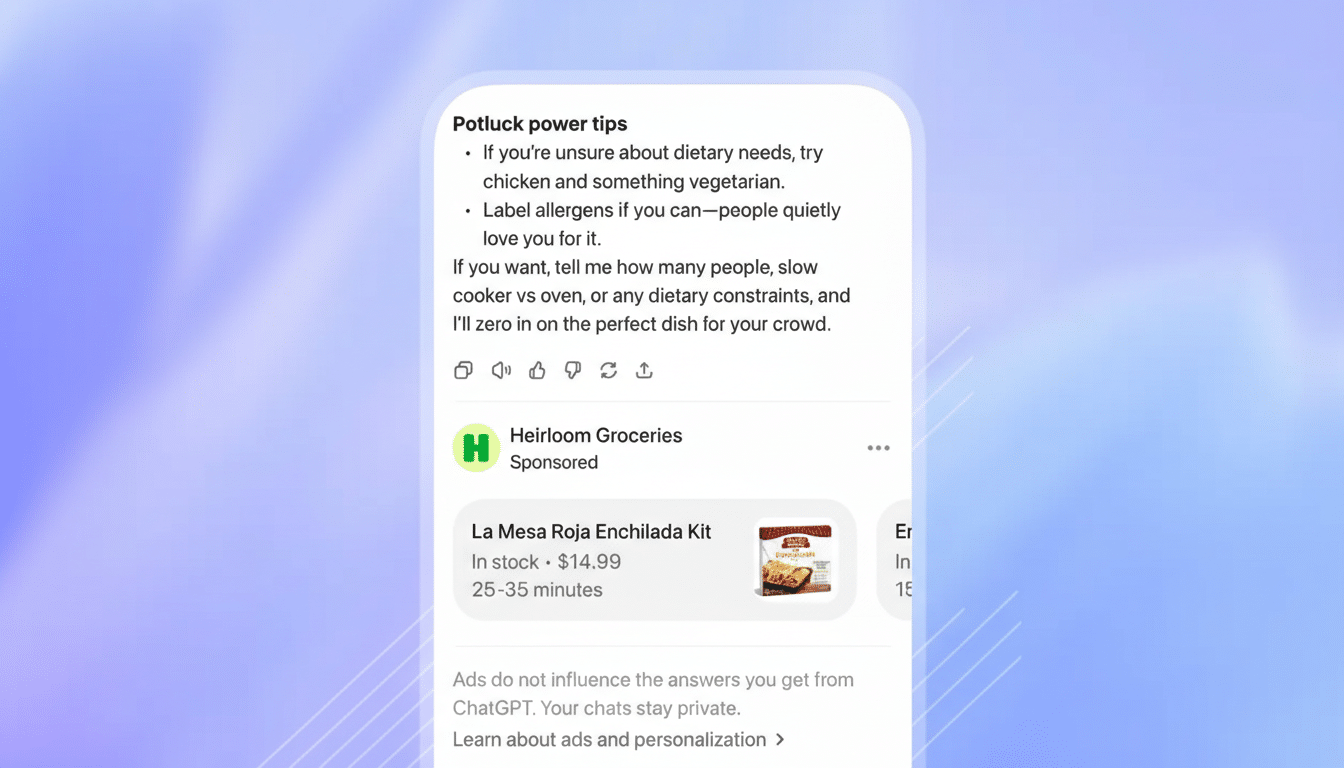
Ad relevance can draw on three signals: your conversation history, the active topic in your current chat, and past engagement with ads in ChatGPT. That approach resembles how search and social platforms tailor promotions, but here it’s gated to the area below the AI’s response rather than embedded in it.
The Free Way to Avoid Ads in ChatGPT Right Now
There is an ad-free switch for those who don’t want to pay—but it comes with tighter usage limits. In ChatGPT, go to Profile > Settings > Ad Controls > Change Plan to Go Ad-Free > Reduce Message Limits. Opting in removes sponsored modules for free accounts while cutting the number of back-and-forth messages you can send. OpenAI hasn’t disclosed the exact cap, so expect the ceiling to adjust as the test evolves.
Another no-cost workaround, for now, is to use ChatGPT without signing in. That avoids ads but also disables personalization features and access to saved history. If you frequently rely on the chatbot to remember context across sessions, this trade-off may feel steep.
Who Still Gets an Ad-Free Experience in ChatGPT
Subscribers to ChatGPT Plus and Pro, as well as customers on the Business and Education offerings, won’t see ads. Notably, the budget ChatGPT Go plan—introduced in the US at $8—will include ads. In short: paying at least $20 per month preserves both higher message limits and an ad-free interface, while enterprise and school tiers keep promotional content out by design.
How This Advertising Test Fits Into AI Monetization
Generative AI at scale is expensive. Training and serving large models carry heavy compute costs, and many competitors already blend ads into AI experiences. Microsoft’s Copilot (formerly Bing Chat) has shown sponsored links in conversational results since its early days, and Google continues to experiment with sponsored modules alongside AI Overviews. OpenAI’s test follows a familiar playbook: introduce ads to subsidize free usage, while preserving an ad-free tier for paying users.
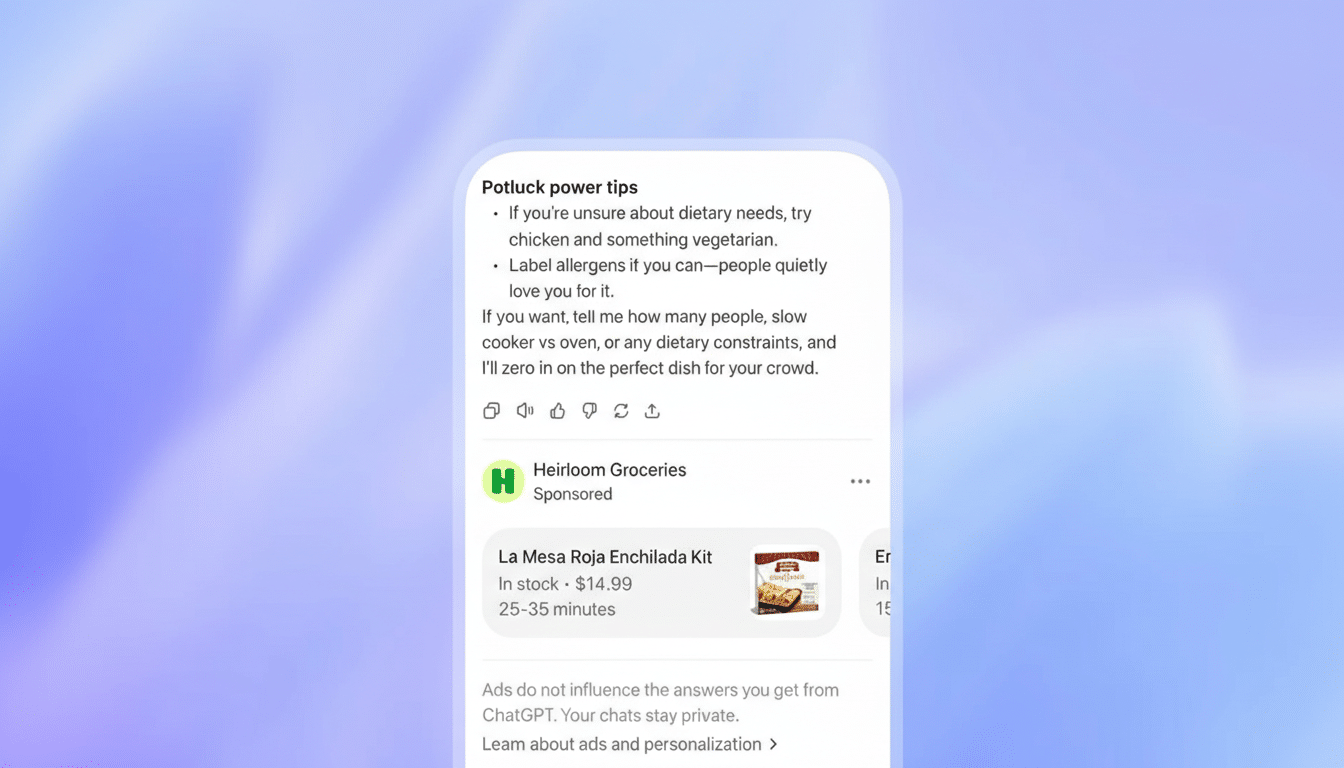
Industry groups such as the Interactive Advertising Bureau have emphasized a shift toward first-party and contextual signals as privacy rules tighten. Chat-based ads, which can align with the topic at hand without placing them inside the generated answer, are a logical extension of that trend.
Privacy and Control: Signals, Settings, and Trade-offs
Because ad relevance can reference your chat history, the feature raises predictable privacy questions. OpenAI says sponsored content is clearly labeled and separated from the response, and that the model’s wording isn’t influenced by advertisers. Users can also turn off ad personalization by choosing the free ad-free mode with reduced limits, paying for an ad-free tier, or using the service logged out—each with its own trade-offs in capability or convenience.
Practical example: Ask for help planning a weekend trip, and you might see a travel offer beneath the AI’s itinerary. Search-style relevance without altering the answer preserves transparency, but users should still review their settings if they prefer minimal data use for advertising.
What to Expect Next as OpenAI Iterates on ChatGPT Ads
OpenAI describes this as a learning phase, signaling that formats, frequency, and controls may change quickly based on feedback and performance. Watch for clarifications on message caps for the free ad-free option, potential expansion beyond the US, and new ad formats that aim to be more useful than intrusive.
For now, the decision tree is straightforward: keep using ChatGPT free with ads; switch to the free ad-free mode and accept lower message limits; pay for an ad-free subscription; or stay signed out and forgo personalization. If you value unlimited back-and-forth and a clean interface, subscriptions still carry the fewest compromises. If you’re cost-sensitive and chat lightly, the free opt-out is the rare lever that lets you ditch ads without opening your wallet.
