


Chai Discovery has vaulted from a scrappy AI outfit working out of OpenAI’s offices to clinching a high-profile partnership with Eli Lilly, underscoring how fast generative biology is moving from research slides to pharma deal tables. The pact positions the young company—and its antibody-design system, Chai-2—at the center of a race to use AI to design medicines faster, cheaper, and with higher odds of success.
From OpenAI Roots to the Biotech Spotlight Today
Chai’s origin story reads like a Silicon Valley relay: conversations with Sam Altman, early work by cofounder Josh Meier at OpenAI, and company formation in borrowed space at the AI lab’s San Francisco HQ. OpenAI later participated in Chai’s seed round, and the startup has since raised hundreds of millions in venture funding, including a $130 million Series B that valued it at $1.3 billion.
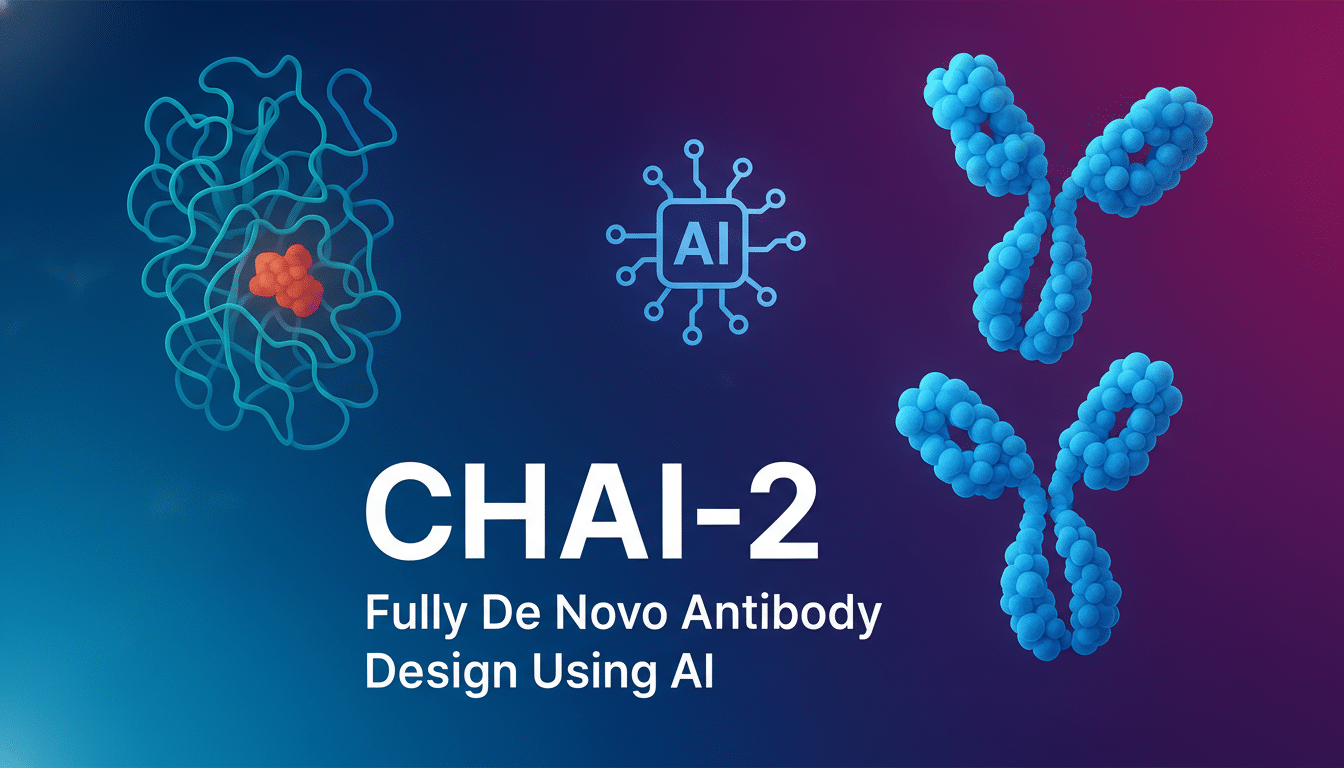
The founding team blends cutting-edge AI and protein science. Meier contributed to early protein language model research at what is now Meta AI and later helped advance AI drug design at Absci. Cofounder Jack Dent joined from Stripe, while Matthew McPartlon and Jacques Boitreaud rounded out the group. The company emphasizes that its models are custom-built rather than fine-tuned from off-the-shelf large language models—an approach intended to optimize for protein intricacies rather than general text patterns.
Inside Chai-2 and the Antibody Bet on Design
Chai-2 targets antibodies, one of the most commercially important biologic modalities. The platform acts like a computer-aided design suite for proteins, proposing sequences that balance affinity, specificity, stability, and manufacturability. In practical terms, that means optimizing for properties such as binding strength, epitope coverage, aggregation risk, immunogenicity, and expression yield—constraints that can pull in different directions and historically require months of iterative wet-lab work.
Protein language models, inspired by advances in natural language processing, learn statistical rules from vast protein sequence corpora. Earlier milestones like DeepMind’s AlphaFold transformed structure prediction, while efforts such as Meta AI’s ESM family showed how learned embeddings capture biochemical regularities. Chai’s bet is that task-specific architectures trained on high-quality, proprietary data—and stress-tested in closed-loop design cycles with labs—can turn those insights into candidates that move more smoothly toward the clinic.
Why Big Pharma Is Leaning Into Generative Biology
Pharma’s interest is pragmatic. The Tufts Center for the Study of Drug Development has estimated fully loaded costs per approved drug in the billions, while analyses from BIO and IQVIA put overall clinical success rates in the single digits to low teens. AI offers leverage across this funnel: prioritizing targets, proposing molecules, predicting developability issues earlier, and reducing the number of costly dead ends.
Eli Lilly’s collaboration with Chai is part of a broader push: the company also announced a separate, $1 billion initiative with Nvidia to stand up a co-innovation lab for AI drug discovery in San Francisco. The logic is clear—pair proprietary datasets and domain expertise with scale compute and specialized models. Similar platform plays from companies like Recursion, Insitro, and Absci have helped normalize milestone-heavy partnerships that swap model access and co-development for downstream economics.
What the Lilly Deal Signals for AI Antibody Design
For Lilly, tapping Chai-2 is a bet that generative design can propose better antibody blueprints from the first draft, shrinking cycles between in silico ideas and viable leads. Lilly’s AI leadership has indicated that pairing Chai’s models with the pharma giant’s proprietary biologics data and know-how should push the frontier on quality-by-design—prioritizing candidates with fewer liabilities before they hit the bench.
For Chai, validation from a top-ten pharma company is a reputational accelerant and a potential data engine. If design suggestions are tested and fed back into training, performance can improve in the same way recommendation systems sharpen with more interactions. Expect the collaboration to focus on concrete deliverables—nominated leads, preclinical packages, and clear downselection metrics—rather than abstract benchmarks.
Hype Check and the Road Ahead for Generative Biology
AI does not abolish biology’s hard constraints. Models still need robust, diverse, and relevant datasets; designed sequences must survive expression, purification, and functional assays; and eventual winners have to navigate safety, manufacturability, and regulatory scrutiny. The question isn’t whether AI can “find drugs” on its own, but whether it can consistently cut cycles, reduce attrition, and widen the search space without sacrificing developability.
That is the bar Chai has set for itself. The company’s insistence on homegrown architectures signals a strategy of deep specialization rather than general-purpose AI. If Chai-2 can repeatedly produce antibody leads that translate from silicon to the lab with fewer iterations—and do so across diverse targets—it will have earned its spotlight. The Lilly deal is a high-profile proving ground, and the next wave of readouts will show whether generative biology’s flash can deliver durable substance.
