


From giant TVs to rollable laptops, and the kind of oddball gizmos only Vegas can provide, CES 2026 is serving up a tsunami of headlines. The throughline this year is, in a way, disarmingly clear: AI has now burrowed deeply into displays, PCs and even pet wearables; the core hardware (panels, processors, batteries) has advanced subtly to enable that magic. Here are the highlights:
TVs drive brightness, color and form factor
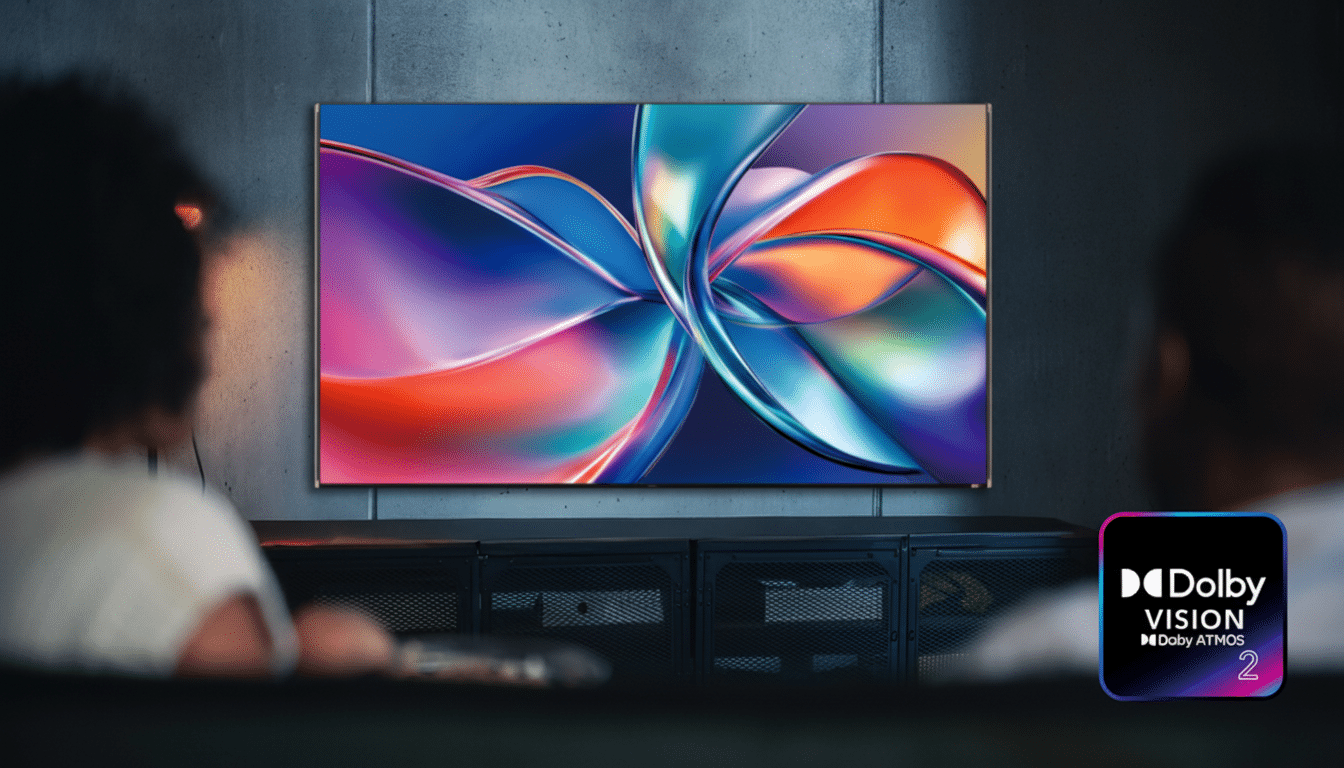
Dolby confirmed the new Dolby Vision 2 standard is being adopted in premium sets, and Peacock has been one of the first platforms to offer compatible content, including live sports. The promise is solid: greater peak brightness, improved tone mapping and audio that adjusts to the scene. Sports is the killer demo because fast motion and high-contrast graphics stress even a high-end panel.
Panel makers are also rallying behind so-called Micro RGB arrays — dense, ultra-uniform LED layouts intended to further improve light control and color accuracy. Samsung, LG and Sony each showed off their version of the tech. The challenge is cost. Early models skew massive and expensive, but TCL’s 75-inch headliner model for around $7,000 serves notice how aggressively priced product might force other manufacturers to follow suit.
LG’s revival of the Wallpaper OLED — now slimmer, 165Hz, benefiting from a wireless Zero Connect box — grabbed more than a few eyeballs. Ultra-thin screens are more than just a parlor trick: The removal of cable clutter and increase in refresh rate finally allows OLED to flex between cinema and high-frame-rate gaming. LG hasn’t revealed pricing, but we expect it to be around the company’s top-tier OLEDs.
Beyond the booth glitz, a quieter milestone: Samsung Display privately demos a creaseless foldable panel. If that scales, it addresses the most obvious issue with foldables and would be the thing (literally) that takes large fold-out screens into the mainstream — whether TVs or tablets or those phones rumored outside of Android.
Laptops get smarter (thanks to AI silicon) — and more upgradable
Dell is resurrecting the XPS line with Intel Series 3 “Panther Lake” chips and eye-watering claims: up to 57% and 78% faster on-device AI in the XPS 14 and XPS 16, respectively — alongside slimmer designs and up to 27 hours of battery life. If the numbers hold up well in testing, creators and road warriors will feel it when rendering video and other deep generative tasks.
Lenovo’s ThinkPad X1 Carbon Gen 14 tries a different approach to long life with a new “Space Frame” motherboard that makes it easier to swap out high-wear items — USB ports, fans, maybe even the keyboard. It’s an explicit nod to the right-to-repair movement, and a smart business decision: longer life cycles reduce total cost of ownership as well as e-waste.
Concepts are bolder this year. Lenovo’s Legion Pro Rollable pulls out from 16 to as wide as 24 inches, transforming a laptop into a panoramic gaming canvas with the push of a button. Asus’s ProArt PZ14 is aimed at creators with a color-true 14-inch OLED screen and the fact that you get a bundled keyboard in the box — something rivals continue to charge extra for.
Under the hood, it starts with Qualcomm’s freshly minted Snapdragon X2 Plus powering midrange Windows machines — a 10-core Oryon CPU, updated Adreno graphics, all-new Wi‑Fi 7 and efficiency gains that matter more than raw gigahertz.
LG’s next Gram Pro models introduce the company’s own Aerominum chassis material, used to shave grams without losing rigidity — little things that count when you office out of a backpack.
AI moves from demos to daily utility across devices
Nvidia has set a high bar with its Rubin, built on a 3nm process and HBM4 memory linkage along with a Vera Rubin Superchip, which the company says delivers 5x performance over the previous generation. The pitch: cut inference costs by an order of magnitude and make agentic AI practical at scale. If cloud partners bite, there will likely be ripple effects felt across everything from laptop copilots to home robots.
On-device assistants got more personal. Motorola and Lenovo unveiled a cross-device aide called Qira that pools together your documents, interactions and “memories” into a personalized, context-aware toolkit. It’s less of a chatbot, more concierge — sliding files around, finding routes or suggesting actions without you spelunking through apps.
Robotics is quietly maturing, too. Narwal’s Flow 2 robot vacuum leverages AI to do more than map a room, adapting — lowering its noise level near a crib, alerting you about objects you’ve tagged as “missing” and managing suction of 30,000 Pa — and self-docking to extend runtime. Elsewhere, a two-legged stair-climbing vac (yes, really) suggests multi-floor autonomy finally becomes policy in the home.
Health and memory tech moved the needle forward slightly. Satellai’s Petsense AI transforms wearable data into early-warning signals for owners of pets. A small AI pin from a start-up working on “Project Luci” captures moments for semantic recall — think, “When was the last time I met Alex?” — with an actual shutter and on-board processing for peace of mind.
The delightfully weird is the new normal
CES wouldn’t be CES without devices that you just have to smile at. Consider these:
- A bone-conduction lollipop emitting chart hits via your jawbone
- Press-on nails that change between hundreds of colors in seconds from a pocket-sized machine
- A near-infrared “sunbooster” light bar that clips to your monitor to fight the winter blahs with controlled 850 nm exposure
OK, so the form factor — think of it as a medical sippy cup that pressurizes children’s nasal cavities while they drink, to help open the eustachian tubes — is weird for such a serious problem; it’s backed by clinicians and a peer-reviewed study, which it showed when you raised your hand.
Wearables are now lighter and more independent. XGIMI demonstrated sub-30-gram glasses with an at-a-glance dashboard that’s activated by a slight nod of your head. Pebble came back with Round 2, this time emphasizing a 10-day battery and an e-paper display that appears analog when you first look at it. And RayNeo demoed glasses with their own cellular connectivity, alluding to a world in which you can leave the phone at home without going dark.
Why it matters for consumers and the tech industry
The theme at CES 2026 is convergence: AI that gets context, hardware without compromise and interfaces that vanish into our lives. That’s why TVs keep getting brighter and smarter, because sports and cinema keep demanding it. Laptops simply live longer and are easier to repair, because it’s what some customers demand. And the weird stuff? It’s a crucible — much of this will never be seen again, but those few wacky ideas will gestate and quietly emerge as the future must-haves. We will continue testing in order to separate the sizzle from what’s going to be ready for your living room and laptop bag.
