


Other category winners and one best in show pick were announced by our independent editorial panel after days of on-the-floor testing, on-stage demos, and expert deliberation.
The judging panel, consisting of staff from several tech titles across the same media group, looked for products that offer real-world benefits, an original approach, or measurable performance gains.
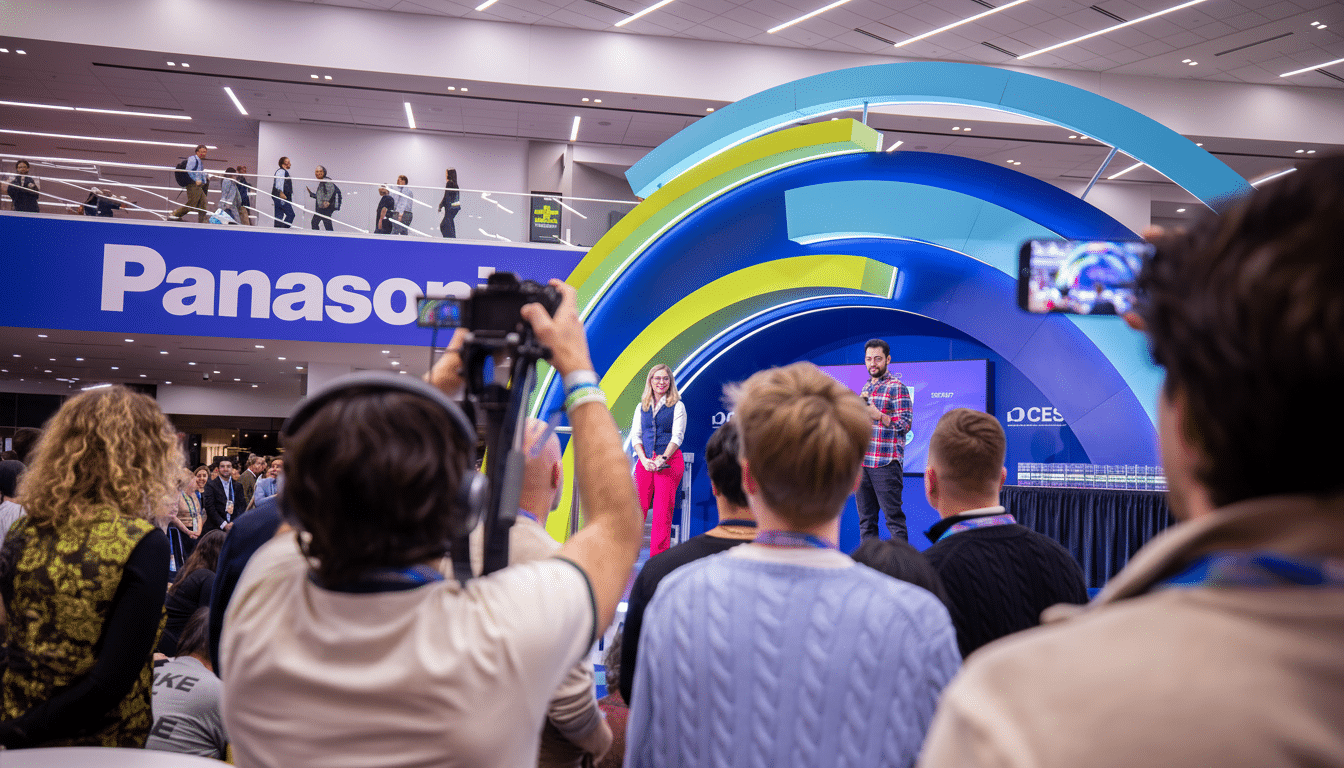
How the Winners Were Selected by Our Independent Panel
To be considered, a product had to be an official show exhibitor and satisfy at least one of our core criteria: introduce an awesome new idea, solve a real consumer issue, or set the bar for quality or speed in its category.
More than 40 editors and reporters participated in the process, which emphasized live demos over slide decks, tough questions, and long-term usability along with short-term wow factor. That emphasis reflects the stated push by the show’s organizer, the Consumer Technology Association, to honor products that are market-ready and meaningful rather than simply shiny concepts.
Standout Innovations Across Categories at This Year’s Show
Foldable devices moved from gimmick to real thing on the show floor. A tri-fold phone-tablet hybrid, offering a more organic 10-inch canvas when it unfurls, is proof of why multiscreen devices are heading toward less compromise. The trade-offs are still there — you’re using two hands, the stylus support could be better — but the payoff is physical multitasking and media that doesn’t seem forced. Market watchers like IDC have observed that foldables are growing more quickly than the broader smartphone market, and this generation made such momentum feel deserved.
On the TV side, a flagship OLED stood out for offering up to 35% more brightness, while gamer-centric 165Hz refresh rates and VRR joined glare-killing features that may finally make daytime viewing less painful. A wireless connectivity box tidied up cable mess, and a metal bezel doubling as a wall mount hinted at smarter industrial design. Display Supply Chain Consultants has, for a while now, highlighted brighter, anti-reflective OLED as the way to replace living-room LCDs; this model edged that category closer toward a tipping point and addressed fears about burn-in by safely displaying static art.
It’s one of the first times a business ultrabook has been rethought for repairability without compromising its iconic exterior. A newly designed, double-sided “space frame” motherboard provides easy access to key components, increasing lifespan and easing service. It’s a meaningful swing at e-waste and the total cost of ownership — and it dovetails nicely with the larger right-to-repair movement, backed by organizations like iFixit as well as regulators in multiple countries. The takeaway: It is possible to have performance and sustainability only if engineering is deliberate.
Ambient AI took a big leap forward with a cross-device assistant meant to act as an agent, not a chatbot. Spanning phones, PCs, wearables, and even a screenless pin, the system leverages context to drive tasks while keeping more data on-device for privacy. It’s the most plausible answer so far to fragmentation fatigue, and supports Gartner’s observation that “agentic” experiences will soon drive everyday computing.

One of the most unforgettable demos came from a home robot: a two-legged vacuum with wheel-legs that can right itself by lifting its body, able to climb stairs and move across levels in your house on its own. By infusing AI posture control with 3D spatial mapping, it moved in a fashion we’ve just never seen consumer vacuums move — spanning the gulf between flat-floor cleaners and genuine household mobility. It’s early still, but it redefines what “set it and forget it” might mean.
Health tech was called out for attending to needs that are frequently overlooked. A discreet, patch-like wearable for perimenopause monitored biomarkers associated with hot flashes, sleep disturbances, anxiety, and night sweats — transforming guesswork into data. The National Institutes of Health estimates that more than 1 million people in the US transition into menopause each year, yet most consumer wearables still treat these symptoms as edge cases. This direct solution that catered to that audience felt overdue, and deeply practical.
Another parenting victory was an intuitive breastfeeding aid that monitors milk transfer in real time via an ultrathin shield, converting an ambiguous and worrying process into empirical evidence on intake and patterns. For families slogging through their own feeding hurdles, that level of straightforwardness is nothing short of a convenience — in some cases, the difference between the anxiety and confusion of trying something new and confidence.
Food safety also received a lift. A small handheld analyzer was said to offer quick checks for allergens before you start munching, beginning with gluten and lactose with plans to expand. With millions of people suffering from food allergies around the world, appliances that offer that kind of assurance can mean much safer dining without the guesswork.
Not all honorees were purely functional. A conceptual AI companion materialized as a holographic-like form inside a curved OLED, sparking new wonder about just how much we want machines to fill social or emotional roles. Elsewhere, a playfully redesigned compact music workstation was a reminder that creation tools may be getting easier to approach, less intimidating, and more fun.
Why the Best Overall Award Matters for Consumers and Tech
The pinnacle prize is a lot more than a trophy; it is a marker of where tech is going. The editorial board favored products that reduced friction, respected privacy, and could prove their worth in minutes instead of months. From category to category, the common features were ambient intelligence relegated to the background, hardware that lasts longer, and interfaces that made complexity seem simple. In a series that trades on spectacle, the best-of contenders won out by being useful first and dazzling second.
What This Means for the Tech Landscape in the Year Ahead
Much of what the winners represent, collectively, is a new compact with customers: do more, intrude less. Look for more agentic AI that operates across devices, brighter and cleaner home theaters, repairable laptops, robots that can cover all of a house (and maybe clean it), and health wearables designed for life stages mainstream gadgets often overlook. If the show floor was the proving ground, then these 22 picks are the roadmap — pragmatic, privacy-aware, and ready right now for prime time.
