


Following a number of clever prototypes and hopeful one-offs, Asus’ latest ZenBook Duo comes the closest to being a dual-screen laptop that feels ready for life as your primary machine. In my hands-on experience, those nuts-and-bolts updates — two brighter and faster OLEDs, a sturdier hinge and kickstand, a roomy detachable keyboard, and more battery (a larger 99Wh pack) all coalesce into something that finally makes the dual-display idea worth it every day.
Dual OLEDs That Alter Daily Workflow In Practice
Both 14-inch OLED panels are 2,880 x 1,800 with a 16:10 aspect ratio and they have a 144Hz refresh rate and up to a peak brightness of around 1,000 nits for HDR. Near the central hinge, which I’ll call the screen-to-body ratio leader (93%, in fact), we’ve got less of that bezel to stare at (or hold onto) and plenty more reason to appreciate vertically piled content — think documents on top, tools below — without much visual hiccup at the seam.
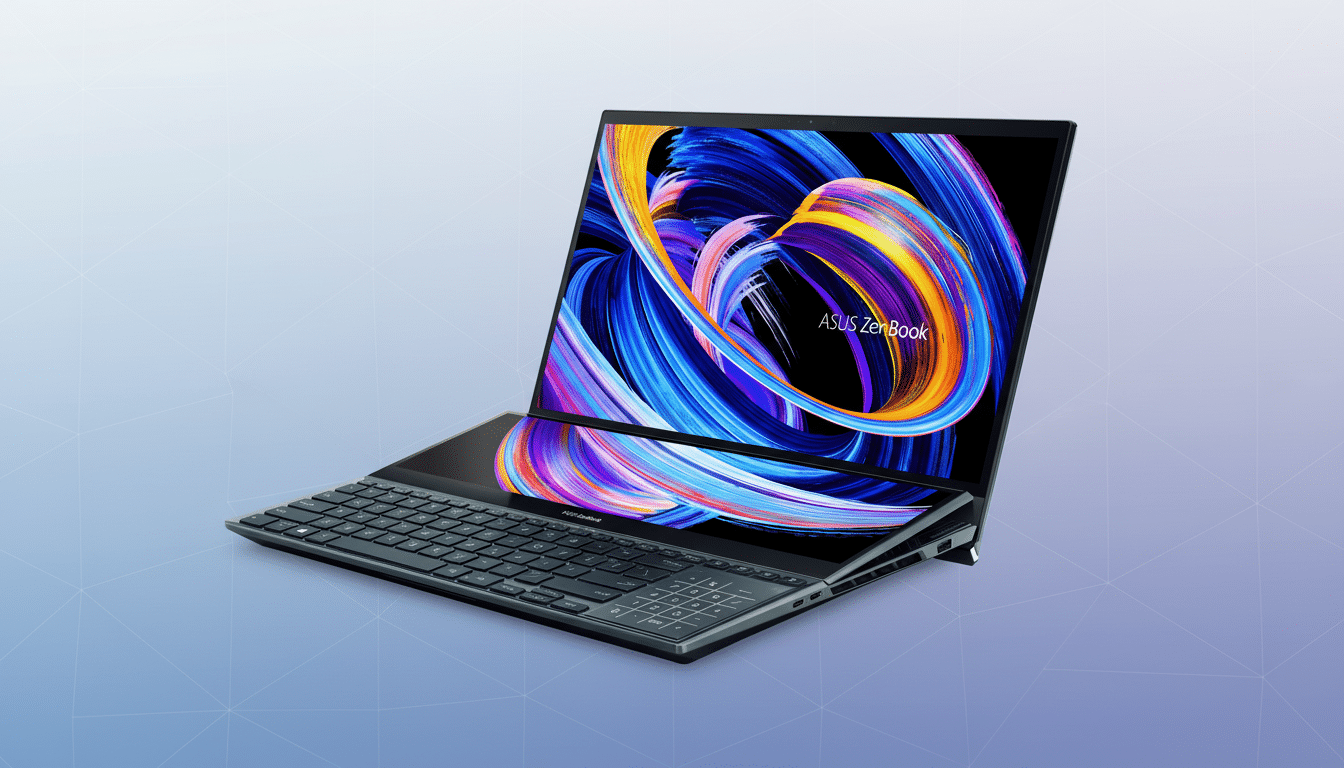
The effect then is direct in real work. Code on the upper display with logs or Git below; video timeline up top, bins and scopes down low; or spreadsheets above along with chat and reference material underneath. Research going back decades proves why it makes a difference: work from the University of Utah and other ergonomics groups attaches multi-display monitor setups to double-digit productivity gains, recording gains between 10–40 percent based on work task complexity. The Duo provides you that perk on the road without having to juggle external monitors.
Hardware Improvements That Finally Click
The last generation dabbled with greatness but fell short where it mattered most, in ergonomics. This revision addresses the sticking points. The kickstand is stiffer and easier to angle finely, and the hinge itself feels both tighter and smoother, so you click back and forth between laptop mode, stacked mode (with the keyboard folded under) or tented very heavily. Even just in a short session, the difference in comfort with the detachable Bluetooth keyboard’s trackpad and key travel is very apparent.
Asus rests on its Ceraluminum chassis to ensure the VivoBook S15 is sturdy and resists smudges. A chunky 7th-generation X1 Carbon with the same features would have weighed at least 2.49 pounds and been around an inch thick without its keyboard. It’s not ultralight, but for two 14-inch displays and significant internal battery, it’s a reasonable trade-off that still fits handily into the sleeve of my standard backpack.
More Power And On‑Device AI Headroom For Modern Workflows
Configurations range from Intel’s Core Ultra 7 355 (featuring an advertised 48 TOPS NPU) to the Core Ultra 9 386H with a hefty ~50 TOPS, along with up to 32GB of LPDDR5X and a full TB of NVMe. That mixture is tailored for the type of hybrid workloads modern PCs are facing: creative apps that lean on the iGPU, along with AI features getting ever more baked into editing suites, productivity tools and assistants. Intel has largely championed the move to local AI processing for reasons that include privacy and responsiveness, an area where the Duo’s silicon falls in line with Intel’s direction.
Practically, that extra NPU capacity should make tasks like background transcription, image upscaling and real-time noise removal possible without hammering the CPU or draining the battery too quickly. It further future-proofs the machine as additional functionality migrates on-device.
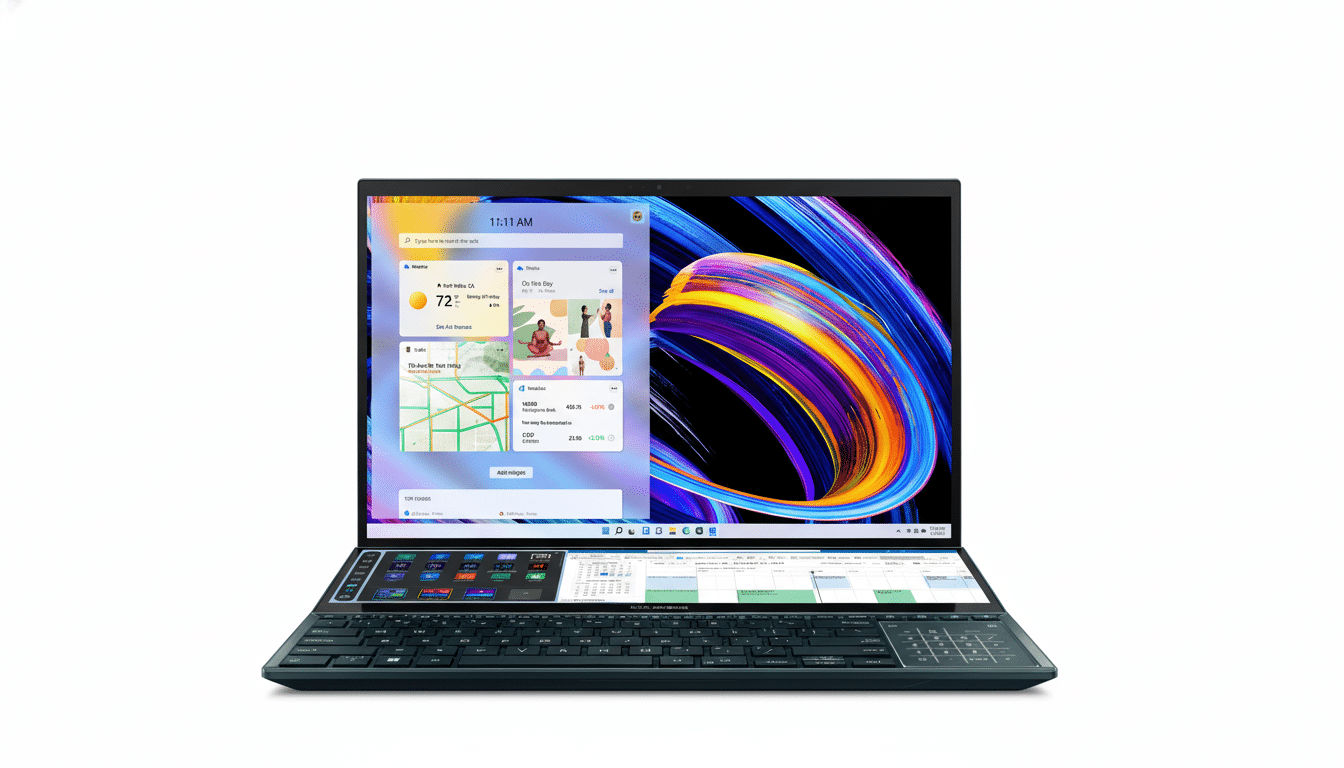
Battery Size Jumps, Thermals Stay In Check
The sleeper headline is the battery upgrade. That’s a 32% bump over the measured capacity of that larger battery, and combined with more efficient processors and adaptive refresh, it hopefully suffices to settle the dual-screen tax that weighed down earlier designs. Actual battery life will obviously hinge on how frequently you run both OLEDs at high brightness and 144Hz, but the bump in capacity alone is a huge leap toward true all-day mobility with both panels turned on.
Thermals stayed cool in initial use — the chassis warmed up as expected under loads of multiple apps, but with no hot spots and no disruptive fan surges that afflicted some older dual-screen systems. That stability counts when you are seeing through two displays inches away from your hands.
Connectivity And Sound Made For Hybrid Work
There are good ports for an ultrathin notebook: two Thunderbolt 4, HDMI 2.1, USB-A 3.2 Gen 2 and a headphone jack. Wireless is up to date with Wi‑Fi 7 and Bluetooth 5.4 — handy future‑proofed headroom against which most enterprise and home routers will lag as the Wi‑Fi Alliance’s certification schedule continues rolling out. A six-speaker array, consisting of two front-firing tweeters and four woofers, provides media and calls more presence than you would expect from the small frame, while a Windows Hello camera nestles in a diminutive top bar without obnoxious bezels.
From The Curious Concept To Daily Driver
The Duo still asks more of you than ultralights for travelers who default to them. But it also delivers the kind of screen real estate that typically requires a desk. That trade has me actively thinking about trading in my MacBook Air, particularly as the detachable keyboard’s feel gets better and Windows’ Snap layouts and Asus’ utilities (which arrange dual panels with less fuss) now work with fewer hitches.
Laptops with two screens have for the longest time been pretty easy to love and tough to actually use. This ZenBook Duo is the first I’d feel good about as an all-the-time machine (great to have two OLED panels for focused work, a chassis that feels tougher and more finished, way-new AI-ready silicon, and finally a battery that sort of matches up with the ambition). If you’ve been holding out good money for a dual-screen era that makes practical sense, this is when it starts to hit home.
