


Asus is axing fresh smartphone releases in this year’s product cycle “due to the prevailing market conditions,” representing a strategic overhaul for its Zenfone and ROG Phone families despite the firm’s continued intent of staying in the mobile business, reports suggest.
The move has prompted new questions about the long-term future of Asus’s handset business, with partners and analysts trying to read whether the hiatus is a pause — or the preamble to an exit.
- What Asus confirmed about its smartphone launch plans
- Why a pause in Asus smartphone launches would make sense
- What the pause means for current ROG and Zenfone phone owners
- Signals to watch that may reveal Asus’s longer-term plans
- The competitive backdrop shaping Asus’s smartphone strategy
- Bottom line on Asus’s pause and its smartphone business outlook
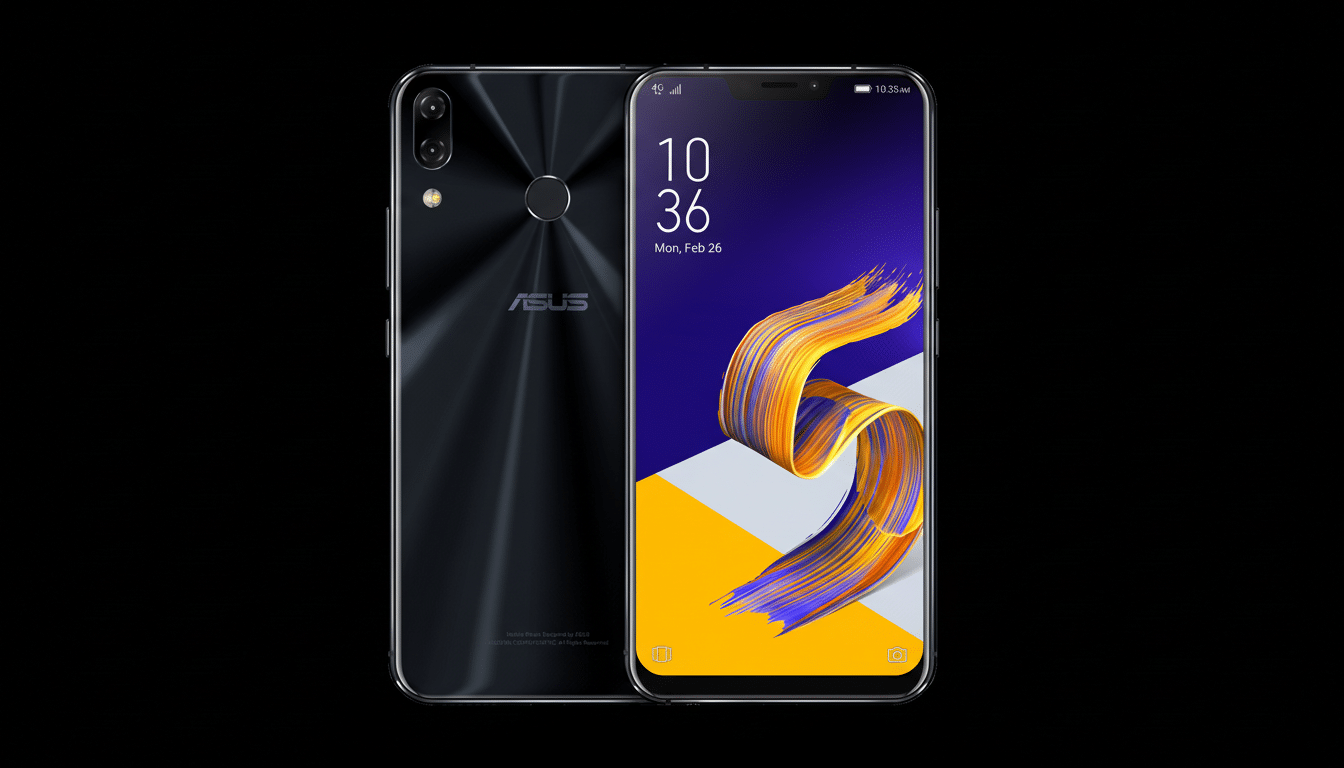
What Asus confirmed about its smartphone launch plans
Rumours from Taiwanese component distributors, via Digitimes, had local channels no longer being sent fresh units and told not to expect any new models beyond those currently in the pipe. Asus has already told carrier and retail partners that its smartphone business is still operational, and current products are continuing to receive maintenance, warranty support and software updates.
Most important, the company said it would not be introducing new models in that upcoming cycle. Such an admission decouples the operational continuity of support from the commercial cadence of launches, and it suggests a conscious consolidation around profitability, inventory discipline and portfolio focus.
Why a pause in Asus smartphone launches would make sense
Asus’s phone business has long punched above its weight creatively — minimalist flagships under Zenfone, performance-first ROG Phones — but exists in a market where scale is destiny. According to data from IDC and Counterpoint Research, the top five vendors control around three quarters (75–80%) of global shipments, leaving challengers to fight over niche share in a market with low margins. And several tracking firms have reported that gaming-specific phones account for a low single-digit percentage of the overall market, a difficult niche to expand.
There’s also pressure from bloated component costs, aggressive pricing by larger competitors and increasing demands for software support and repairability. Europe’s sustainability requirements, along with long-term security updates, have raised lifetime support costs repeatedly. For a nichey portfolio like Asus’s, whose halo devices broadcast engineering more than they promise volume, it can make sense to pause and save up one’s resources for another go.
There is a larger corporate context, too. Asus’s money — in the form of about a 90 percent profit margin, although that doesn’t mean revenue — is pretty much all based on PCs, motherboards and GPUs (and increasingly AI-tuned laptops). This shift back to core categories and paring back lower-margin initiatives is a trend playing out throughout the industry during periods of choppy demand and increasing competition.

What the pause means for current ROG and Zenfone phone owners
Asus has prioritized continuity where it matters most to current users: service and software. The latest releases, such as those of the Android 16 series for ROG Phone 9 and Zenfone 12 Ultra, further confirm that engineering resources are working. The company claims warranty policies and after‑sales service will continue under the current operating setup, which should include parts availability, authorised repair and security updates for eligible devices.
For fans, the greater loss is momentum. While Zenfone eked out an oddball distinction in pocketable flagships with good cameras, ROG Phone positioned itself as the gaming phone that raised the bar for high-refresh displays, beefy batteries and accessory ecosystems. Stopping risks losing out on mindshare to fast-iterating rivals — by and large in imaging, AI-assisted features and modem efficiency — unless Asus comes back with a lineup that is meaningfully differentiated.
Signals to watch that may reveal Asus’s longer-term plans
The next few quarters will determine whether this is a reset or a wind‑down. Key indicators include:
- Software velocity: Regular provision of security patches and major OS updates shows a longer-term support plan in place, and retained in‑house expertise.
- Channel position: Steady pricing and normal inventory clearances suggest discipline; aggressive discounting (and limited restocking) might suggest de‑emphasis.
- Portfolio strategy: Asus might need to become more selective, focusing on fewer models with higher margins, regional exclusives or partner devices. Its earlier region-limited releases demonstrate that the company is willing to customize distribution if necessary.
- Organizational moves: Hiring, supplier engagements and certifications filed with regulators often precede a return to market even if public launch plans are relatively mum.
The competitive backdrop shaping Asus’s smartphone strategy
For context, independent analysts report that Asus’s global smartphone share is well below 1 percent while the biggest brands have double-digit shares. That imbalance leads to marketing and supply-chain disadvantages, especially when the cost of silicon goes up as well as camera module prices. Competitors, meanwhile, are investing in on-device AI features, sophisticated camera pipelines and longer support windows — capabilities that require scale to monetize.
Nevertheless, there is an opportunity for niche players to do well by aiming at obvious holes. Flagship-compacts are still thin on the ground; enthusiast gaming hardpoints with manageable performance and accessory ecosystems play to a niche of the contented few. With a more focused return by Asus, it can now compete on identity and no longer has to be the jack of all trades.
Bottom line on Asus’s pause and its smartphone business outlook
Asus is pressing the pause button on smartphones for now, but existing users are covered. And the choice feels less like curling into a ball in panicked retreat than a shrewd recalibration to navigate a market that is increasingly being colonized by giants. Whether the company comes back with a simplified and clearer proposition — or fades out relatively quietly as it gives up on its phone pretensions — hinges at least in part on how convincingly it can transform that PC‑era engineering DNA into a mobile playbook.
