


Perhaps the most surprising laptop launches of this season, a 16-inch machine that weighs less than the MacBook Air.
Asus’ new Zenbook A16 weighs in at a scant 2.6 pounds for a laptop which, with its much larger screen, even gives Apple’s tech specs–reported weight of 2.7 pounds for the 13-inch Air a run for its money when it comes to shedding ounces.
- Design and display details of the ultra‑light Zenbook A16
- Performance and AI upside with Snapdragon X2 platform
- Battery life and thermals in a 16‑inch ultralight chassis
- Connectivity and ports for creators and frequent travelers
- Configurations and pricing outlook for the Zenbook A16
- Why a 16‑inch featherweight laptop truly matters now
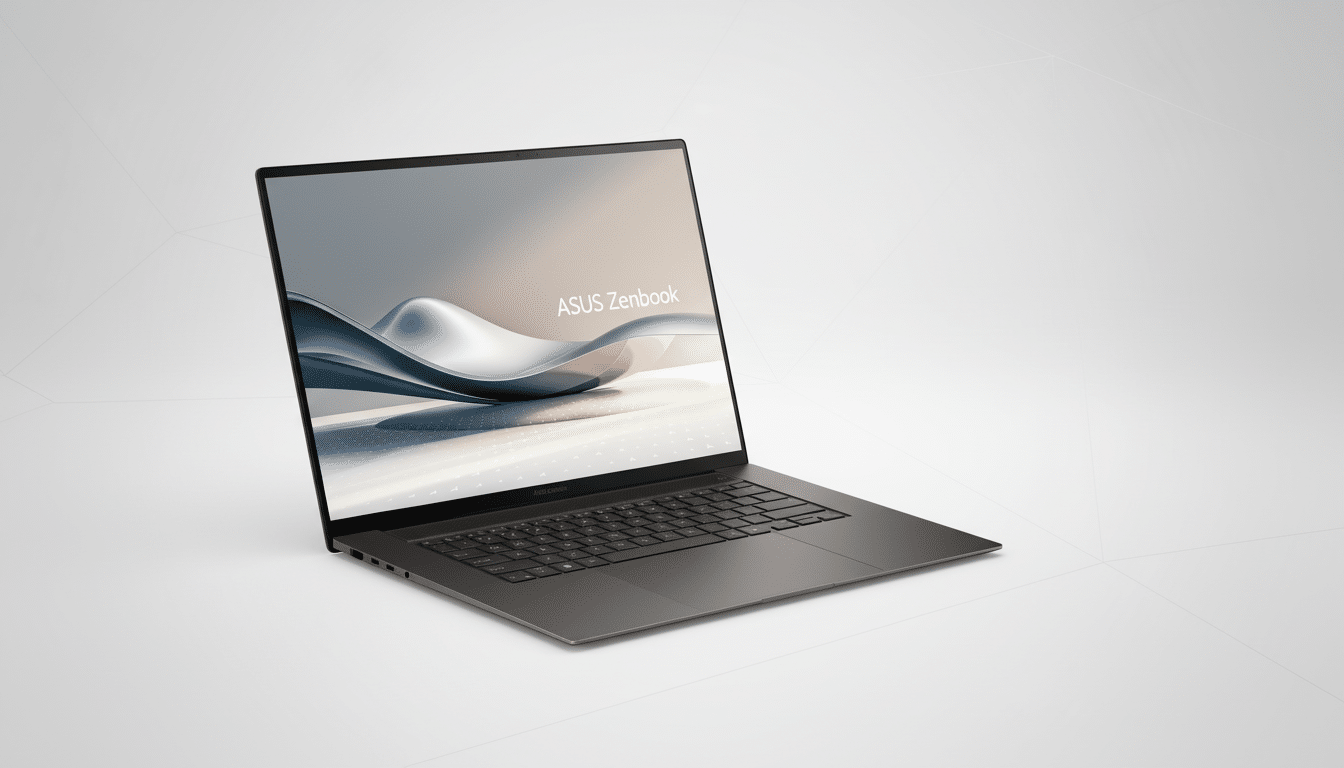
It takes what made the compact Zenbook A14 a killer device, then scales it up with a 16-inch 3K OLED panel that flows silkily at 120Hz, as well as a king-sized 70Wh battery and Qualcomm’s headline Snapdragon X2 Elite Extreme platform.
What you get is a creative-class laptop that reads like a travel-anything ultrabook.
Design and display details of the ultra‑light Zenbook A16
Asus makes use of its own Ceraluminum chassis, which seems more solid to the touch than one made from magnesium and never suffers from flex that plagues ultra-light models. The 16-inch OLED is edge-to-edge with 3K resolution and a claimed peak brightness of up to 1,100 nits for HDR highlights running at 120Hz. Colors pop with the deep contrast you’re expecting from an OLED, and motion throughput should satisfy any of those out there who give a fig for smooth scrolling or knob-dialing through a timeline.
Little things count: The hinge deploys with one-finger open, with a torsion-spring type action and minimal wobble; the keyboard stretches nicely with thoughtful key spacing; dyed-in-the-wool wrist-resters’ trackpad space feels expansive without feeling empty. That’s a larger canvas, yet without the weight penalty that 16-inch systems often carry.
Performance and AI upside with Snapdragon X2 platform
At the high end is Qualcomm’s Snapdragon X2 Elite Extreme that puts together an 18-core Oryon CPU with Adreno X2 GPU and an 80‑TOPS on-device NPU. Qualcomm’s platform briefs point to memory bandwidth as high as 228GB/s and CPU clocks up to 5GHz, numbers squarely aimed at ensuring big projects remain seamless while AI features like real-time transcription, image upscaling, and background effects don’t need round-trips to the cloud.
Asus says the A16’s GPU can play back 4K video 9% quicker than Apple’s M5 silicon, at least in its internal testing. Independent verification will help, but the trend is obvious: this 16-inch ultralight really is spec’d for real creative work, not just email and slides. The spec options are every bit as ambitious, with builds up to 48GB of LPDDR5X and 2TB of storage.
Battery life and thermals in a 16‑inch ultralight chassis
The 70Wh pack claims some bullish estimates: more than 21 hours of local video playback, and over 12 hours of web use on a charge. You can expect real-world numbers to be lower than vendor claims — though Qualcomm’s ARM-first design does well on efficiency in past Zenbook incarnations, and the A16 doubles down with two fans and a dual heat-pipe array engineered for whisper-quiet cooling under load.
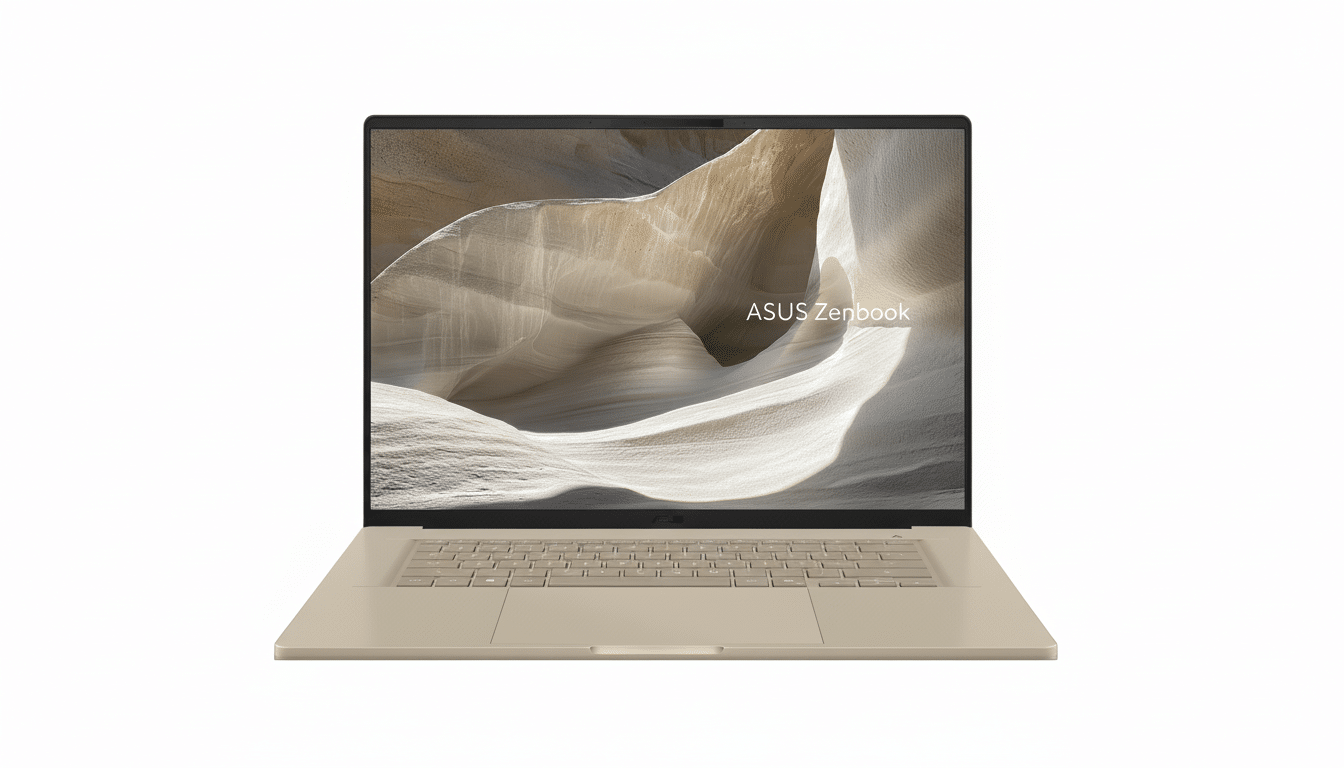
For reference, most 16-inch systems with discrete GPUs hover around a workday or less and routinely exceed 4 to 5 pounds. The A16’s combination of a big screen, featherweight body and “all-day-plus” stamina is aimed at a sweet spot previously filled by specialty models such as the LG Gram, but in a denser-feeling dose of luxury.
Connectivity and ports for creators and frequent travelers
The port selection is refreshingly useful:
- Two USB 4 Type‑C
- One USB‑A
- HDMI
- Full‑size SD card reader
- 3.5mm headphone jack
It’s also capable of driving up to three external displays, via USB‑C and HDMI — which is impressive for a system of this thickness.
Wireless is now based on Wi‑Fi 7, which the Wi‑Fi Alliance says brings additional technologies such as 320MHz channels and Multi-Link Operation for multi-gigabit speeds and lower latency. Translation: smoother large file syncs and less hiccups on crowded networks — handy if you are offloading batches of RAW images or live in a cloud-first editing workflow.
Configurations and pricing outlook for the Zenbook A16
Asus is planning two flavors: a flagship with Snapdragon X2 Elite Extreme and a slightly lesser configuration for the Snapdragon X, maxing out at 32GB of RAM and using 2K 60Hz OLED. The top-end model offers the 3K 120Hz OLED and higher memory options. Look for the RAM to be soldered, as is typical in this class, so buy for the lifecycle you need.
Pricing and local availability were not announced at announcement. Based on the parts and fabrication nodes at play, expect premium-ultrabook territory here out of both SKUs. The lower configuration is being used to try and have a little more cross-appeal among students and road warriors taking endurance above all else (including compute) seriously.
Why a 16‑inch featherweight laptop truly matters now
Weight is the number that shifts behavior. At 2.6 pounds, that isn’t possible with a 16-inch laptop — you don’t trade between having a generously comfortable canvas and pulling your backpack to the ground. For reference, Dell’s XPS 16 and Apple’s 16-inch Pro weigh in around the 4.5 to 5-pound range depending on how you configure them. The A16 has all of that, cutting those figures by around 40% to 45%, yet promising solid performance and battery life.
If the A14 showed that an ARM-based ultrabook could be an all-day driver, the A16 takes that theorem to the big screen crowd. On paper, it’s a rare mix of size, speed and portability — the kind that might redefine people’s expectations for the weight of a 16-inch laptop.
