


Asus has unveiled a wide array of 2026 laptops across ZenBook, ProArt and ExpertBook families, led by a compact ProArt GoPro Edition for mobile creators who make timelines and live in the field. Across the spectrum, the company tips more into high-refresh Lumina OLED displays, on-device AI acceleration and tougher builds to show a direction for premium Windows laptops beyond today.
Bigger ZenBook A16 Anchors the Thin‑and‑Light Push
The new ZenBook A16 ups Asus’s ultraportable game with a 16-inch 3K Lumina OLED panel running at 120Hz, Pantone‑validated color and the kind of inky contrast creators demand. Top‑end specs include a Qualcomm Snapdragon 8 Elite Extreme processor, up to 48GB of memory and 1TB storage running off a 70Wh battery, six‑speaker audio and Wi‑Fi 7 for multi‑link, low‑latency connections.
Despite the bigger screen, the A16 weighs only 1.2kg — and feels lightweight in hand thanks to that Ceraluminum construction from Asus for a bit more ruggedness.
Thinner bezels around the hinge step up the sense of immersion, particularly when you’re flipping it around for vertical workflows such as code review or long‑form editing.
ZenBook Duo Hones the Dual‑Screen Formula
The 2026 ZenBook Duo is all about increasing practicality: the build is solid, there’s less bezel, a more confident kickstand, a reworked hinge and a bigger battery.
You still have a pair of 14‑inch OLED touch screens that open to 2,880 x 1,800 and run at a refresh rate of up to 144Hz with HDR peak brightness as high as 1,000 nits when you’re watching supported content — only now it’s in a frame that feels less fragile and more on the go.
Processor options such as Intel Core Ultra 7 355 with a 48 TOPS NPU and Core Ultra 9 386H with a 50 TOPS NPU only hint at making on‑device tasks like voice isolation, object selection and background replacement even smoother without hammering your battery. Weighing in at 1.65kg and measuring 14.6mm thick without the detachable keyboard, the Duo strikes a pretty decent balance of portability with a full‑sized typing deck and wider trackpad for spreadsheet jockeys and editors who practically live in shortcuts.
ProArt PZ14 A Lightweight Workstation Slate
Intended as competition for high‑performance detachable 2‑in‑1 devices, the ProArt PZ14 is a creator‑grade slate that weighs just 0.79kg (without keyboard) and comes with a bundled keyboard cover.
That 14‑inch 16:10 OLED display dishes out 3K resolution at 144Hz, and an octa‑core Snapdragon X2 Elite hums along with up to 32GB of LPDDR5X RAM and a PCIe 4.0 SSD as big as 1TB.
Trading the built‑in kickstand for a cleaner silhouette, the PZ14 makes up the difference in toughness: MIL‑STD 810H certification and IP52 resistance to dust and splashes.
It’s a color‑accurate workstation, if you will, in portable form for photographers, illustrators and field producers who don’t want to compromise on response times or panel quality.
ProArt GoPro Edition Aims at Action Shooters
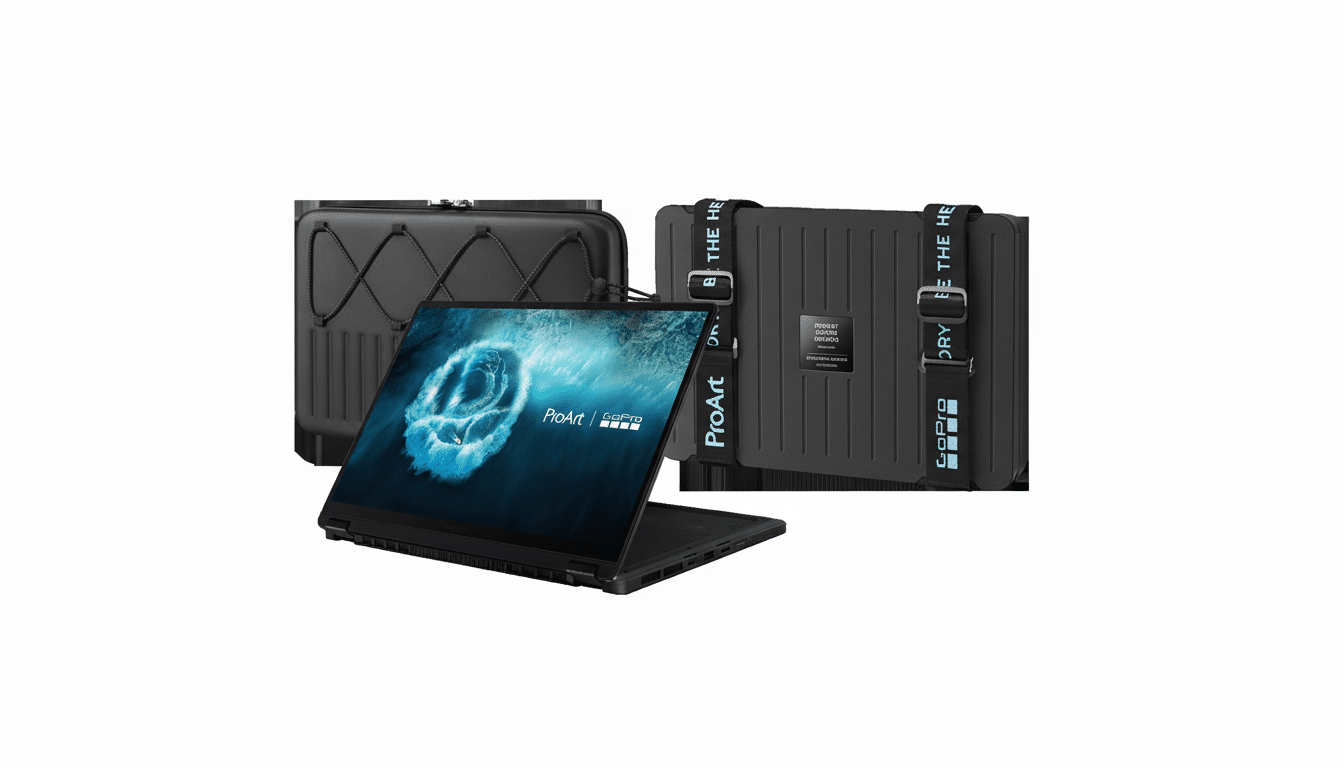
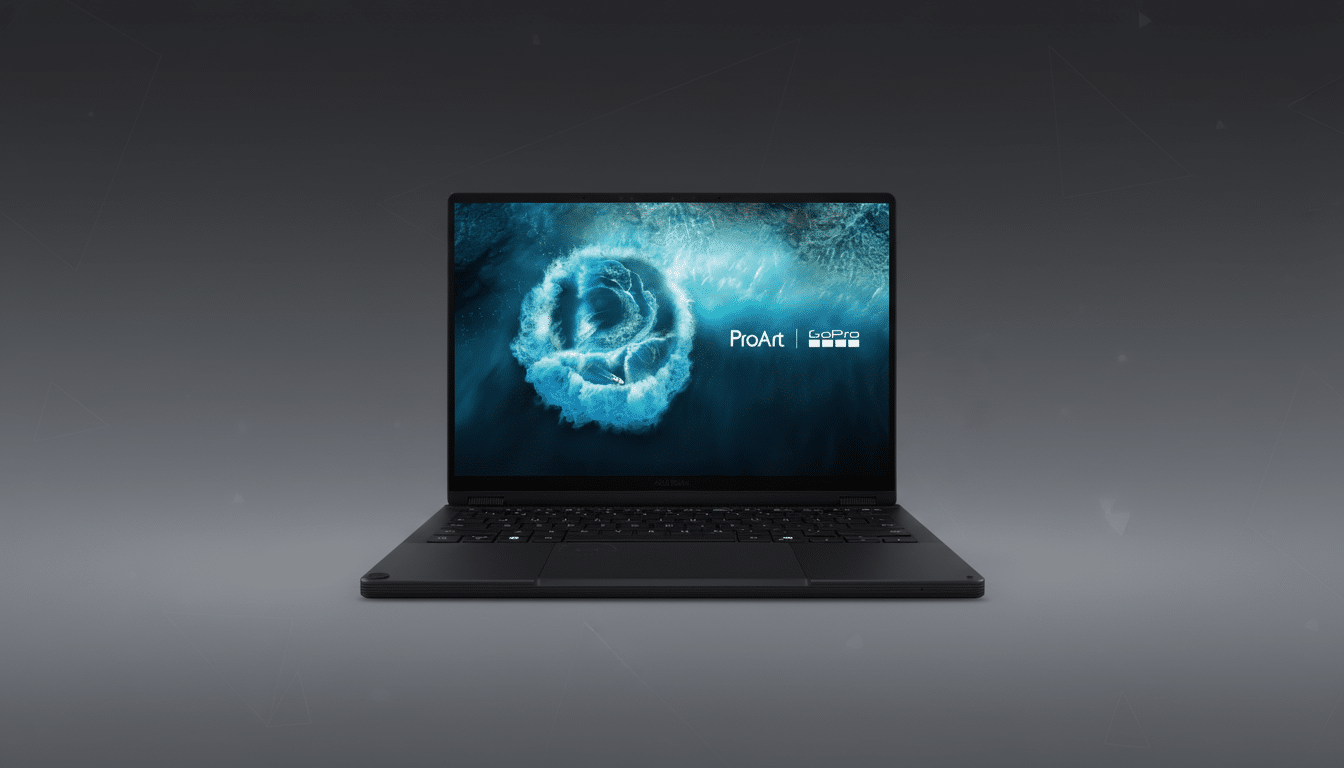
Most interesting among the new additions is the ProArt GoPro Edition (PX13), custom‑tailored for action videographers and social creators who often find themselves under tight deadlines.
Inside is an AMD Ryzen AI Max+ 395 processor (16 cores, 32 threads, up to 5.1GHz, and 80MB of cache), a battery with up to 73Wh capacity, as well as up to 128GB of RAM and 1TB of storage. The 13.3‑inch 3K OLED touch display in a 16:10 aspect ratio offers increased vertical height for timelines and effect stacks, while the 1.39kg chassis meets MIL‑STD 810H reliability.
Asus throws in workflow perks, including a one‑stop, AI‑assisted media hub called StoryCube to usher users through arranging and tagging footage more quickly, as well as bundled software — 12 months of GoPro Premium+, six months of CapCut and three months of Adobe Creative Cloud — to help lower the bar on pro‑level editing. While compared to some other 5K monitors, the extreme pixel density and precise color representation might not seem like much of a head start, for creators working with high‑bitrate action cam files it does make that combination of horsepower, panel fidelity, and software credits matter.
ExpertBook Ultra brings enterprise‑grade AI PCs to everyone
Completing the trio, the ExpertBook Ultra maximizes IT‑friendly performance in an impressively compact 10.9mm‑thin package. It’s powered by the latest Intel Core Ultra Series 3 processors (support up to 50W thermal design power, thanks in part to an improved cooling system — hardly a feature you find on an ultra‑thin machine) for road warriors who require up to 24 hours of battery life.
Security is a first‑hop feature: compliance with the NIST SP 800‑193 platform firmware resiliency specification provides protection in low‑level attack scenarios. Meanwhile, the 14‑inch 3K, 120Hz Tandem OLED display (a screen that combines a touchscreen with a stack of emissive layers for heightened brightness and longer life) delivers enterprise users the same visual punch limited to creative laptops without compromising battery life.
Why this launch matters for creators and power users
Asus’s 2026 lineup demonstrates how the premium end of the Windows laptop market is coalescing around OLED, Wi‑Fi 7 (probably), and dedicated NPUs to handle AI features on‑device. According to IDC and Canalys, analysts note a multi‑year PC refresh cycle centered on these capabilities, with creators and knowledge workers among the first to benefit as apps leverage on‑device acceleration for everything from editing to transcription to — you guessed it — real‑time effects.
The headline, for buyers, is specialization without siloing: ZenBook for portable power work; Duo for multitaskers; ProArt for people making content all day and night; ExpertBook for corporate Excel users on company‑managed fleets — while all sharing color‑accurate video and AI‑themed silicon. No price has been announced yet, but with durability certifications, actual software packages that are meaningful and real design fixes, this is a cohesive update that feels like it’s tuned around actual workflows instead of checkboxes.
