


NASA’s Space Launch System is trundling from the Vehicle Assembly Building to the pad on a crawler-transporter, a four-mile trip that takes most of a day at a top speed of roughly 1 mph. The spectacle marks a pivotal step toward the first crewed Artemis mission—and it revives a headline question in spaceflight: is SLS still the most powerful rocket?
The short answer depends on the yardstick. By sheer liftoff thrust, SpaceX’s Starship now leads. By human-rating and mission readiness, SLS holds a distinctive edge. Here are five facts to frame the debate as Artemis 2 rolls out.
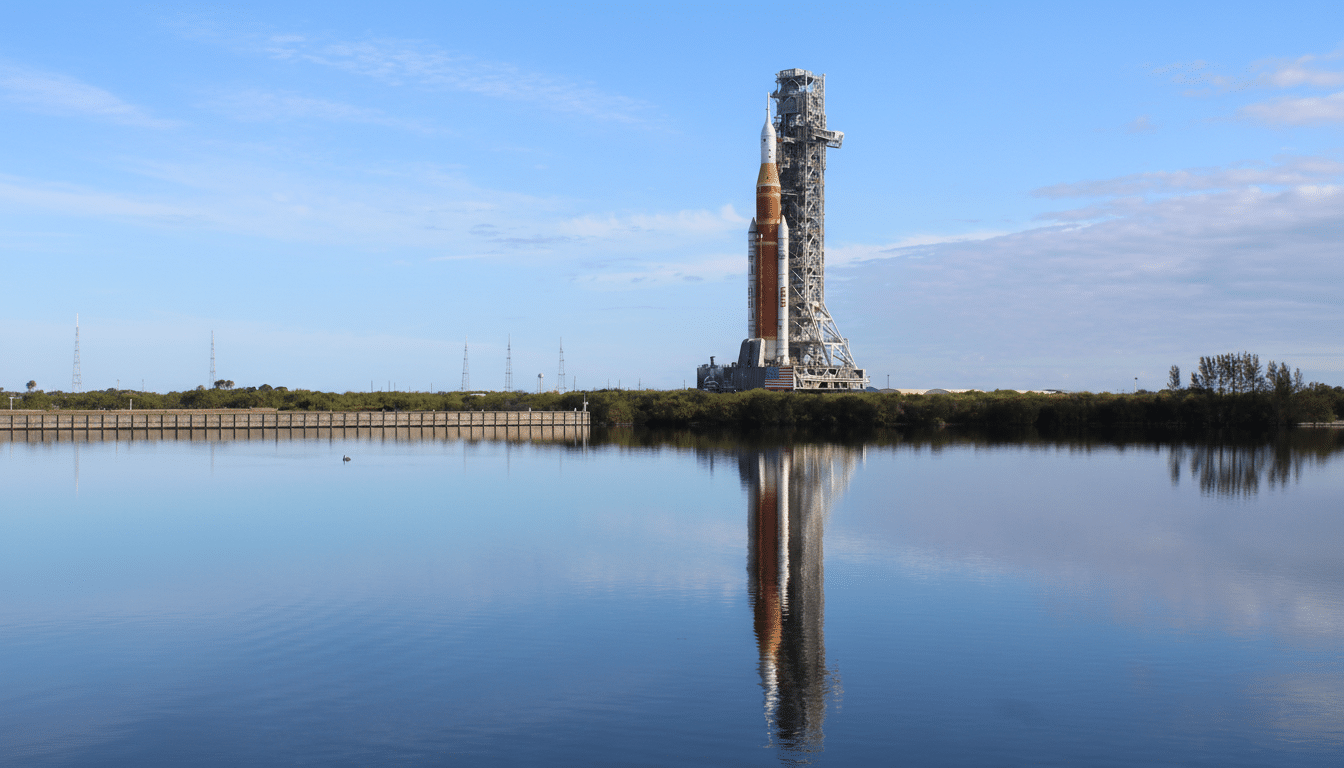
1 SLS no longer tops raw thrust among heavy rockets
SLS generates about 8.8 million pounds of thrust at liftoff, according to NASA specifications—a staggering figure that eclipses the Apollo-era Saturn V’s roughly 7.5 million. But Starship’s Super Heavy booster has pushed the envelope further, reaching an estimated 16 to 17 million pounds in recent integrated flight tests, per SpaceX and flight data reported to federal regulators.
On the scoreboard of raw power, Starship sits in first. That’s a meaningful shift since SLS claimed the crown during its debut. Still, thrust alone does not equal operational capability, and that’s where SLS currently distinguishes itself.
2 The most powerful human-rated rocket to fly
SLS is built and certified to fly people under NASA’s human-rating standards—an intensive set of design, testing, and safety requirements that Starship has not yet completed for crewed missions. After proving its flight profile with an uncrewed lunar loop, SLS is poised to carry astronauts aboard Orion on Artemis 2.
If it launches as planned, SLS would become the most powerful rocket ever to send humans to space by liftoff thrust, surpassing Saturn V on that specific metric. That milestone matters because crew safety, abort capabilities, and system margins—not just raw power—govern human spaceflight.
3 Size and performance in context for moon missions
Standing about 322 feet tall, SLS towers over the Space Shuttle stack and trails only a few historic and next-gen giants. Saturn V reached roughly 363 feet, while Starship rises to about 397 feet when stacked. Size, though, is only part of the story.
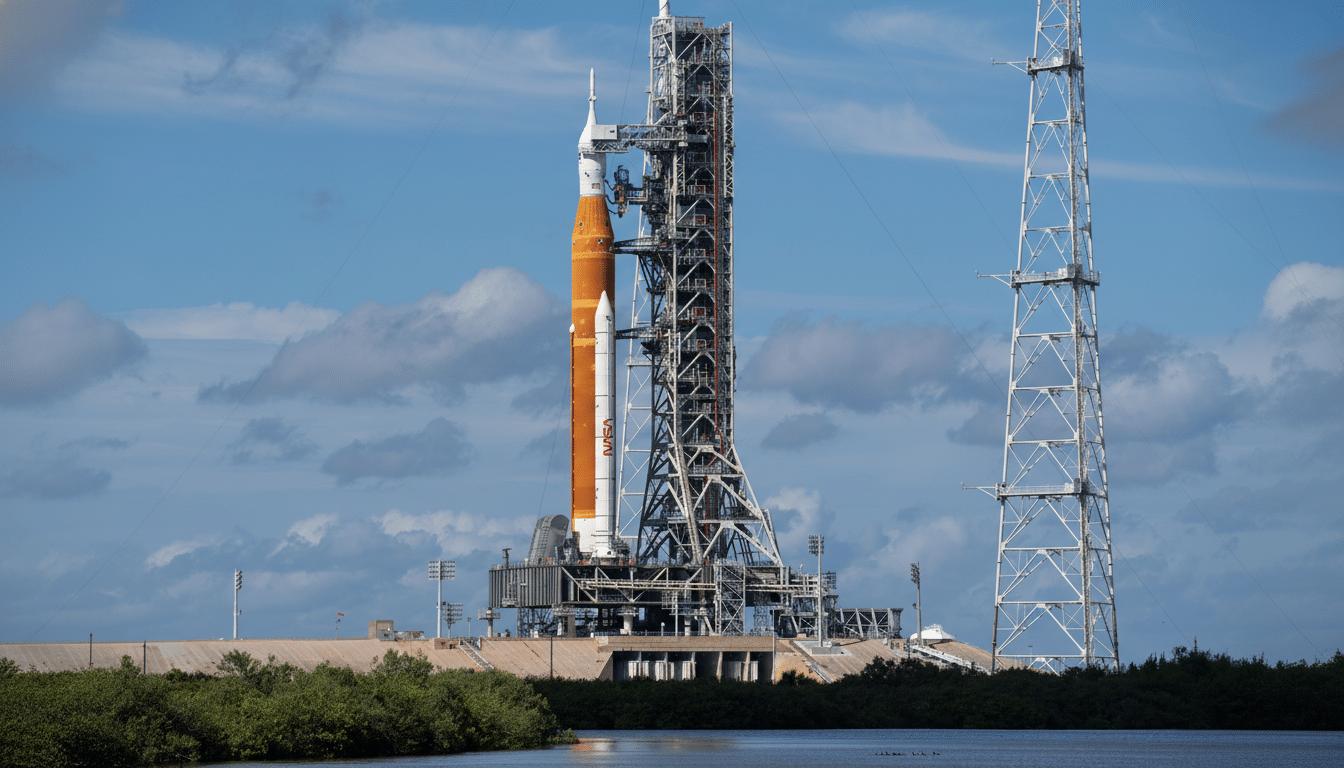
NASA data place SLS Block 1’s lift capacity near 95 metric tons to low Earth orbit and up to about 27 metric tons on a translunar injection. By comparison, Saturn V delivered roughly 48 metric tons to the moon-bound trajectory. SpaceX states Starship’s target payload is 100+ metric tons to LEO with reuse, substantially more if expended. SLS is optimized to launch Orion directly onto a lunar course, which shapes its performance trade-offs.
4 Shuttle heritage and engines that drive the rocket
SLS is a deep-space machine built from proven Shuttle DNA. The orange core stage descends from the Shuttle’s external tank, powered by four RS-25 engines that trace their lineage to the Shuttle program. Two five-segment solid rocket boosters, modernized from Shuttle hardware, supply roughly 75% of liftoff thrust.
The RS-25s burn liquid hydrogen and liquid oxygen, producing mostly water vapor. Booster materials have been updated to eliminate asbestos-based insulation. The trade-off for lunar reach is expendability: unlike the Shuttle era, SLS discards its engines and boosters after each mission, prioritizing performance over reuse.
5 Cost, cadence, and the road ahead for Artemis SLS
SLS is frequently cited as the priciest launch vehicle ever fielded. NASA’s Office of Inspector General estimated early Artemis launches at about $4.1 billion each, with a large share attributed to SLS and its ground systems. The Government Accountability Office has repeatedly highlighted affordability and production cadence as risks to the program’s long-term sustainability.
Manufacturing is distributed across thousands of suppliers nationwide, a model designed to preserve workforce and expertise. That approach has benefits—industrial depth and political durability—but it constrains flight rate. Meanwhile, SpaceX is iterating Starship toward rapid reuse and higher cadence. NASA’s lunar architecture leverages both paths: SLS to deliver Orion and crew to lunar orbit, and Starship, under a separate contract, to serve as the human landing system.
The bottom line: with Artemis 2 on the pad, SLS is not the raw thrust champion—but it remains the most powerful rocket ready to fly people. In the near term, that status may matter more than the horsepower headline.
