


Flashcards, timers, brain boosts. In today’s world, study apps are everywhere – promising sharper focus, faster memorization, and higher grades with a few taps. For college students, they seem like the perfect fix. No more cramming. No more wandering minds. Just productivity, gamified and optimized.
But here’s the catch: when we rely too heavily on apps to think for us, are we still learning – or just outsourcing the hard parts of thinking?
- The Rise of the Study App Generation
- When Convenience Outpaces Comprehension
- Dependency Isn’t Just a Tech Problem – It’s a Study Habit Problem
- When External Help Boosts Internal Growth
- Apps That Build, Not Drain, Brain Power
- Tips for Making Apps Work With Your Brain
- Real Learning Happens Beyond the Screen
- Final Thought
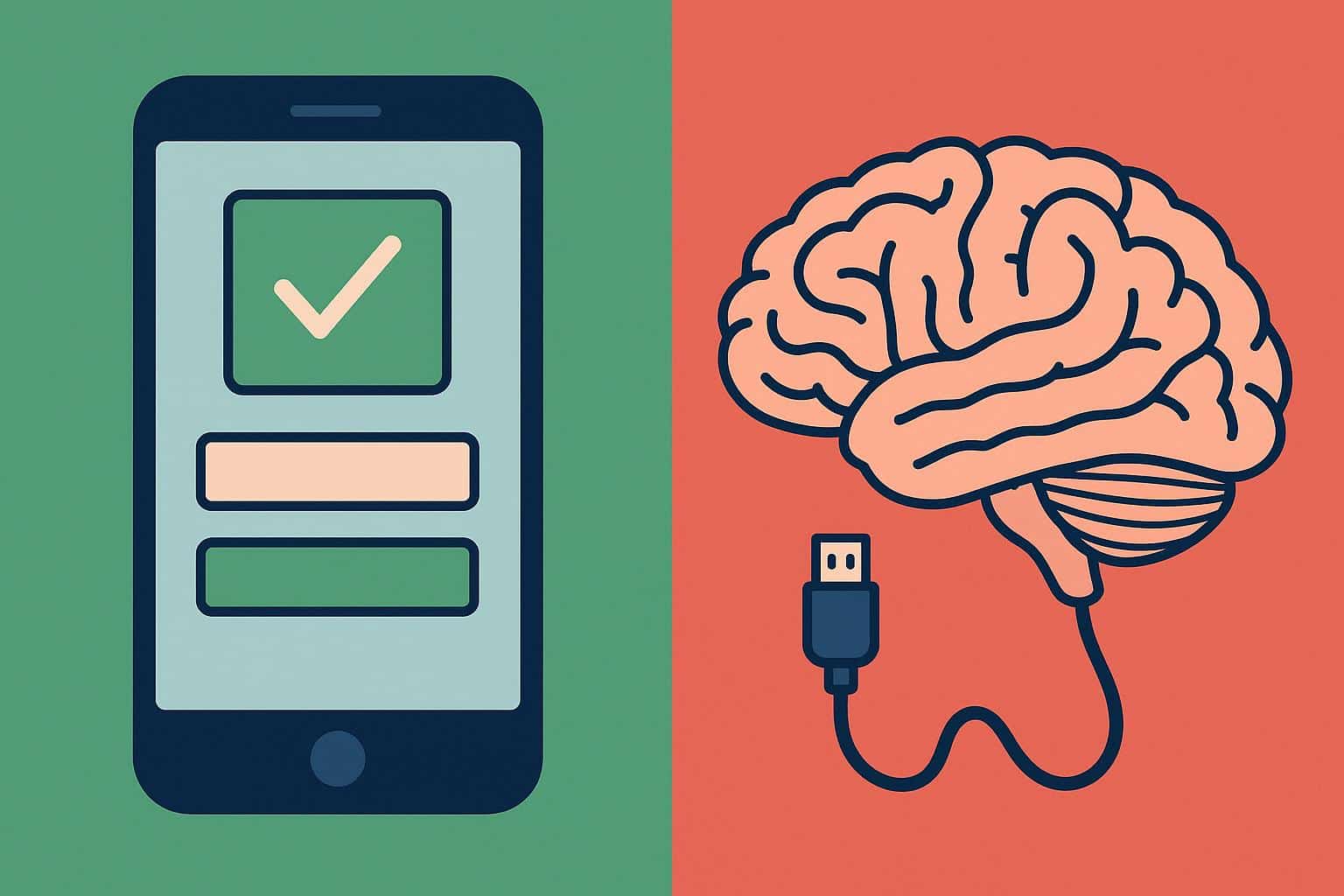
This debate isn’t just theoretical. It matters because how students study affects how they develop critical thinking, memory, and academic confidence. And as more learners turn to digital tools, it’s worth asking: are study apps training your brain to work smarter – or making it forget how to work at all?
For some students, especially those in demanding majors, this balance becomes even harder to maintain under pressure, and not all academic support comes in the form of apps. Nursing students, for example, often juggle intense clinical schedules with complex academic writing requirements. In such cases, seeking help with writing nursing papers can serve as a form of academic support rather than a cognitive shortcut. When used thoughtfully, this kind of assistance helps reduce overload while allowing students to stay focused on understanding core concepts and developing professional competence.
The Rise of the Study App Generation
Apps like Anki, Notion, Quizlet, Forest, and Pomodoro-focused platforms dominate the digital learning landscape. They promise structure, consistency, and sometimes even dopamine hits via colorful progress bars.
They can help you:
- Break tasks into manageable parts
- Repeat information using spaced recall
- Block distractions during focused work
- Organize notes visually for better comprehension
And the truth is – they work. But only when paired with deliberate learning strategies. Passive scrolling or “completing” a flashcard deck doesn’t equal deep understanding.
The concern arises when students use these tools instead of engaging meaningfully with the material. Tapping through study prompts may feel productive, but it often lacks the struggle and complexity that real learning requires.
When Convenience Outpaces Comprehension
The brain grows through challenge. Cognitive scientists often say that “desirable difficulty” – the sweet spot of effortful recall and problem-solving – leads to stronger long-term memory.
Many apps remove that friction. They simplify. They guide. And while that can be helpful during review sessions, it becomes a crutch if students never wrestle with the material first.
Think about it like this: using a GPS doesn’t help you learn your city’s layout. It helps you get there. Same with apps. If you never try to summarize a concept in your own words – without looking – you’re not building neural connections. You’re following a digital map on autopilot.
Dependency Isn’t Just a Tech Problem – It’s a Study Habit Problem
Relying too much on any tool – even good ones – can limit growth. Some students report they feel “lost” when studying without their apps. That’s a red flag.
The goal of education isn’t to need more tools. It’s to need fewer over time. To build enough mental muscle that you can outline a paper from memory, critique a source without a template, or recall an equation under pressure.
That doesn’t mean ditching your apps. It means using them in cycles:
- Learn first with friction (notes, reading, problem-solving).
- Then reinforce with tools (flashcards, timers, self-quizzing).
- Finally, test yourself without support.
This cycle trains your brain, not just your habits.
When External Help Boosts Internal Growth
There’s also a case to be made for external academic support – but only when it’s used wisely.
Let’s say you’re overwhelmed. Three assignments, two midterms, and your brain is foggy from burnout. Seeking writing guidance or asking a service for assistance isn’t cheating – it’s triage. The right support at the right time can prevent dependency.
Services that offer structured feedback or samples – like a clear thesis map or citation model – give students direction, not shortcuts. They can reinforce format and clarity, especially for students struggling with writing confidence.
One such service, promoted under the term best paper writing service, is often cited in student reviews for helping learners clarify their thinking – not bypass it. It’s not about replacing effort. It’s about focusing effort.
Apps That Build, Not Drain, Brain Power
So which apps actually promote healthy brain development? Look for tools that support active learning over passive consumption.
Here’s what that might look like:
- Anki: Uses spaced repetition – a proven technique for long-term memory.
- Notion: Encourages summarizing, organizing, and connecting concepts.
- Obsidian: Promotes personal knowledge building using linked notes.
- GoodNotes / OneNote: Ideal for handwriting, sketching, and spatial memory.
- Toggl or Pomofocus: Helps you manage time and track focus – but still requires self-awareness.
Avoid apps that simply give answers or automate everything. They’re helpful for review – but not for deep learning.
Tips for Making Apps Work With Your Brain
To strike a balance, try these student-tested strategies:
- Don’t open the app until you’ve tried recalling the info on your own.
- Combine handwritten and digital notes to engage multiple memory pathways.
- Use the app’s data (time tracked, cards mastered) to adjust your real‑world study plan – not just admire your streak.
- Pause the app and try explaining the material out loud without prompts.
- Pair app-based review with concept mapping, group discussions, or self-quizzing.
This keeps you in charge – not the app.
Real Learning Happens Beyond the Screen
The truth is, the brain isn’t optimized for swiping. It’s optimized for connection, challenge, and reflection. Study apps should serve those goals – not replace them.
Real retention comes from wrestling with ideas, asking questions, making mistakes, and finding your own mental shortcuts. Apps can support that process. But they’re just tools. You are the learner.
So if you ever find yourself reaching for a study app before even reading the assignment prompt – stop. Step back. Let your brain struggle first. That discomfort? It’s a sign you’re building something real.
Final Thought
Study apps can be incredible learning aids – when used intentionally. They can speed up recall, improve organization, and reduce stress during exam season. But they’re not magic.
If overused or misused, they can flatten your thinking and make you dependent on templates, checklists, and digital nudges.
Stay curious. Stay challenged. Stay in charge.
