


Apple’s foldable ambitions are reportedly expanding beyond a single device. According to a new report from Bloomberg’s Mark Gurman, the company is scoping a second foldable iPhone built around a clamshell form factor—essentially a modern flip phone—positioned as a follow-up to a book-style foldable that’s been prototyped internally.
While plans can change, the move would mirror a two-track strategy already used by rivals: a productivity-first “book” design and a compact, lifestyle-focused clamshell aimed at portability and mainstream appeal.
- What to Watch Next as Apple Explores Foldable iPhones
- Why a Clamshell iPhone Could Make Sense for Apple
- Design and Hardware Expectations for Foldable iPhones
- How a Clamshell iPhone Could Fit Into Apple’s Lineup
- Market Context and Risks for Apple’s Foldable Strategy
- What the New Report Says About Apple’s Foldable Plans
What to Watch Next as Apple Explores Foldable iPhones
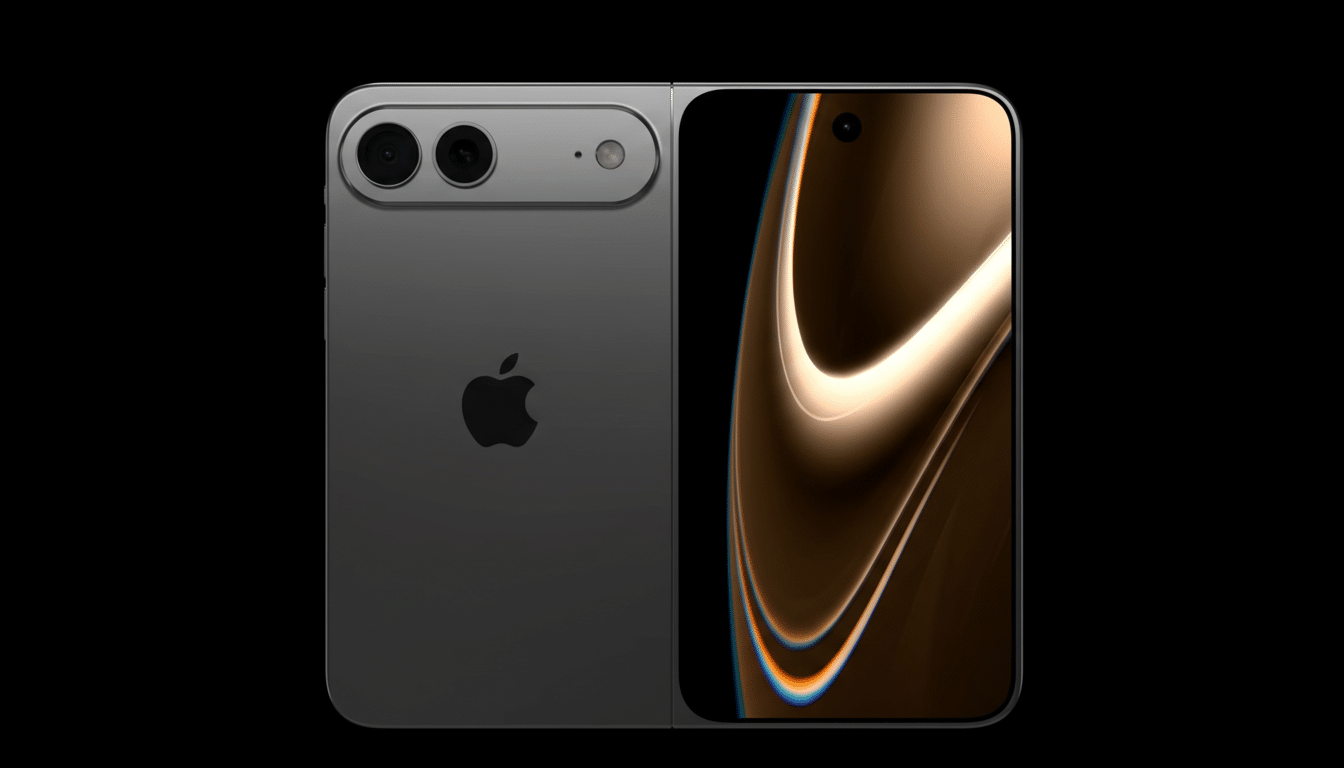
Gurman’s reporting indicates Apple is developing a clamshell foldable as a sequel to its initial book-like device. The flip-style model is said to be smaller overall and remains early in development, which means it could still be canceled or significantly altered before release. That caution aligns with Apple’s usual approach: iterate quietly, greenlight only when the hardware, software, and supply chain line up.
For the first foldable, Apple has reportedly targeted a 5.5-inch outer display. That would be more compact than the cover screens on recent Samsung Fold devices, which have grown into the mid-6-inch range to improve usability. Separate chatter suggests Apple is also experimenting with a larger, tablet-adjacent foldable concept, indicating a broader exploration of foldable screen sizes and use cases. On the Android side, the recent Galaxy TriFold at $2,899 shows how far premium foldables can stretch in ambition—and price.
Why a Clamshell iPhone Could Make Sense for Apple
Clamshells are the style many consumers actually carry. They’re pocketable when closed, open to a familiar portrait phone, and often undercut book-style models on price. Counterpoint Research has noted that flip-style devices have comprised roughly half of global foldable shipments in recent periods, underscoring their mass-market pull. For Apple, a flip iPhone could capture style-driven buyers who value portability and fashion as much as multitasking.
There’s also brand logic. A clamshell iPhone would give Apple a differentiated design that still feels unmistakably “iPhone” when open. It could serve as the emotional, playful counterpart to a productivity-first book-style model, much like Samsung’s Galaxy Z Flip and Z Fold duo.
Design and Hardware Expectations for Foldable iPhones
Expect Apple to prioritize three things: a shallow crease, hinge longevity, and seamless software. Industry leaders rely on teardrop-style hinges and ultra-thin glass to reduce crease visibility while supporting 200,000+ folds in durability testing. If Apple follows suit—potentially sourcing panels from suppliers like Samsung Display or LG Display, as industry watchers have long speculated—the company will push for rigidity without thickness, and water ingress protection that meets current flagship norms.
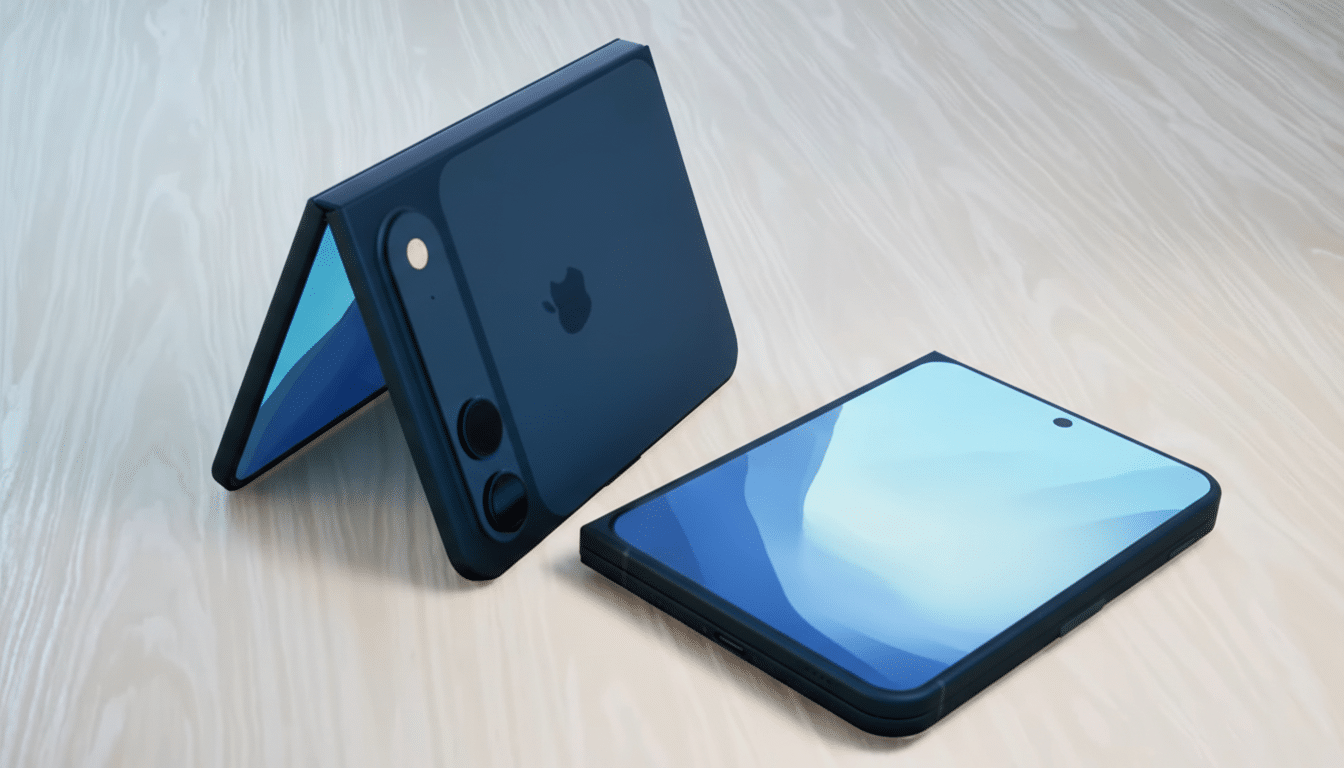
Display choices will be telling. A smaller 5.5-inch cover on the book-style prototype suggests Apple is optimizing for one-handed use outside and a tablet-like canvas inside. For the clamshell, the external panel size matters for quick interactions and camera previews; recent flips have leaned into larger outer screens to enable rich widgets and full apps. Apple could use that canvas for at-a-glance notifications, camera controls, and “Flex Mode”-style experiences that split UI across angles.
How a Clamshell iPhone Could Fit Into Apple’s Lineup
A two-device foldable family would let Apple bracket the market: a premium book-style model for productivity and media, and a more compact clamshell that emphasizes portability and style. Gurman previously outlined internal discussions around staggering product launches—flagship late in the year and more affordable devices earlier—though timing remains fluid and unconfirmed.
Pricing will be pivotal. Book-style foldables command the top end of the market, while clamshells have acted as a lower entry point. If Apple follows that pattern, a flip iPhone could become the “accessible” foldable without compromising premium positioning—especially if camera performance, build quality, and battery life meet iPhone benchmarks.
Market Context and Risks for Apple’s Foldable Strategy
Foldables remain a fast-evolving category. DSCC has projected sustained double-digit growth for shipments, but adoption hinges on durability, weight, and price moving in the right direction. On software, Apple would need deep iOS adaptations to support posture-aware UIs, continuity between displays, and developer tools that make reflow and split-screen layouts effortless.
As always, prototypes don’t guarantee products. Apple is known to develop multiple form factors in parallel and cancel late if the experience isn’t unequivocally ready. The clamshell’s “early” status should temper expectations until firmer supply chain signals—panel orders, hinge component ramp, or telltale iOS features—surface.
What the New Report Says About Apple’s Foldable Plans
Keep an eye on reports from Bloomberg and supply chain analysts, developer clues in iOS betas hinting at flex-aware layouts, and manufacturing intel around ultra-thin glass and hinge modules. If those pieces firm up, Apple’s foldable roadmap—book-style first, clamshell second—will come into sharper focus, setting up a one-two punch designed to meet both power users and fashion-forward buyers where they are.
