


Apple has selected Google’s Gemini to underpin key artificial intelligence features across its platforms, including a major upgrade path for Siri. The multi-year arrangement, confirmed in a joint statement from the companies, signals a pragmatic shift by Apple toward a hybrid model that pairs its on-device AI with Google’s large-scale cloud models. The agreement is non-exclusive, and prior reporting suggests Apple’s access to Gemini could cost around $1 billion.
What the Apple-Google AI deal covers across platforms
Apple will use Google’s Gemini models and cloud infrastructure to support its own foundation models and AI experiences. That means Apple Intelligence—the system-level AI Apple began rolling out in 2024—can draw on Gemini for complex reasoning and long-context tasks that exceed the capabilities of on-device processing. Apple maintains it will keep its privacy architecture intact, employing a mix of on-device inference and tightly controlled off-device compute.
- What the Apple-Google AI deal covers across platforms
- Why Apple chose Google’s Gemini and not OpenAI or others
- Privacy and user trust at the core of Apple’s AI plan
- Implications for Siri and Apple devices as Gemini arrives
- Antitrust and the Apple-Google tightrope for AI partners
- What it means for developers building on Apple platforms
- What to watch next as Apple and Google scale AI
The partnership complements, rather than replaces, Apple’s vertically integrated approach. Expect Apple’s silicon, including the Neural Engine in recent chips, to continue handling many everyday tasks locally, while Gemini handles heavier lifts like sophisticated planning, multimodal understanding, and richer conversational flows when needed.
Why Apple chose Google’s Gemini and not OpenAI or others
Apple explored alternatives, including OpenAI and Anthropic, before landing on Google. People familiar with those evaluations point to three factors: breadth of Gemini’s capabilities across text, image, and code; the maturity of Google’s safety systems; and the scalability of Google’s AI infrastructure. Alphabet has poured massive capital into AI data centers and custom accelerators—an advantage when Apple needs consistent, low-latency performance across hundreds of millions of devices.
Crucially, Apple is not locking itself in. The non-exclusive nature keeps optionality open for future model suppliers and gives Apple leverage to keep improving price, performance, and safety terms as the model ecosystem evolves.
Privacy and user trust at the core of Apple’s AI plan
Apple’s AI strategy has been privacy-first from the start. With Gemini in the mix, Apple says it will continue to default to on-device processing whenever possible and route sensitive requests to controlled cloud environments when necessary. That design aligns with Apple’s existing Private Cloud Compute approach—minimizing data retention, strictly limiting access, and using audited pathways for any off-device calls.
For users, the promise is simple: richer AI experiences without widening the data exhaust. Expect Apple to publish additional technical documentation describing how Gemini calls are sandboxed and how data is discarded or anonymized after processing.
Implications for Siri and Apple devices as Gemini arrives
Gemini’s integration should help Siri close long-criticized gaps in reasoning, memory, and context. In practical terms, that could mean more reliable follow-up questions, better understanding of ambiguous requests, and the ability to coordinate multi-step actions across apps. Features that debuted with Apple Intelligence—like notification summaries, image understanding, and long-form rewriting—are likely to get sharper, faster, and more consistent across languages.
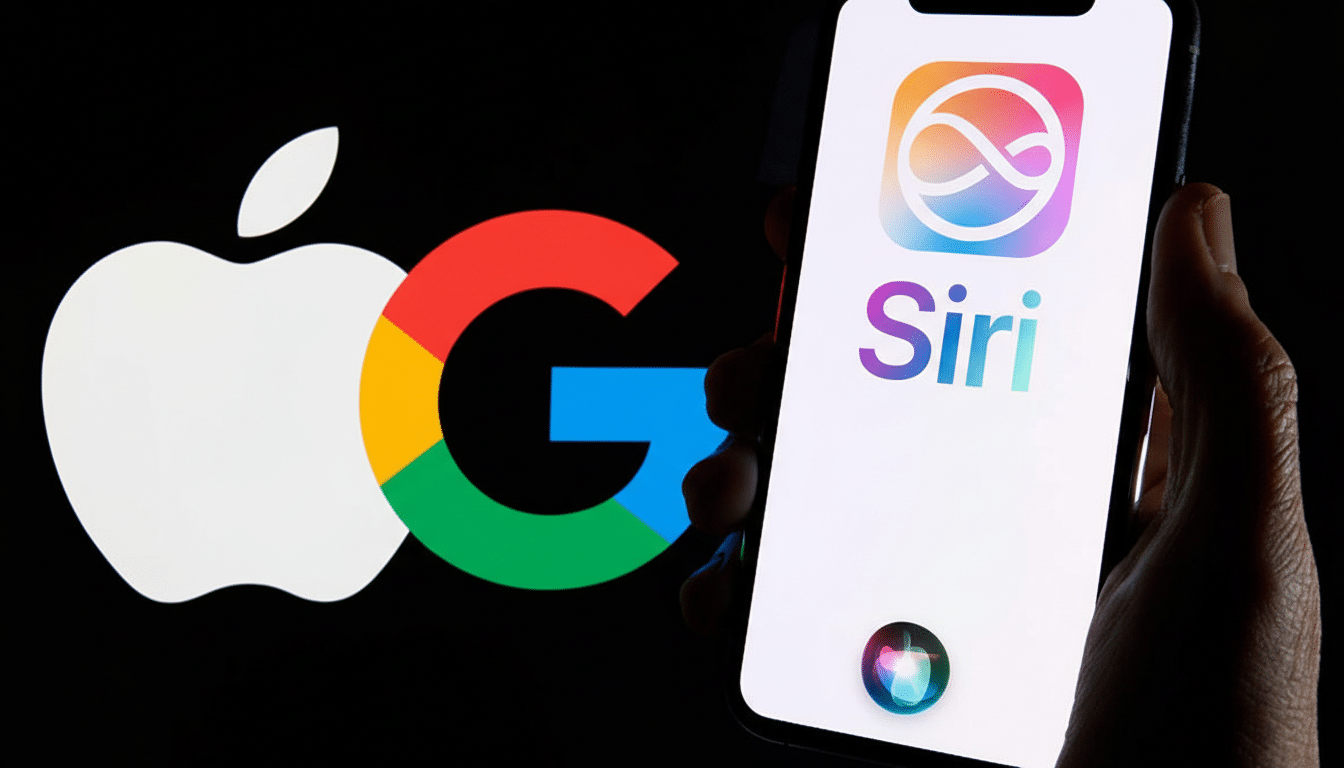
The larger win is coherence. Instead of a patchwork of narrow AI features, Apple can lean on a common model substrate to harmonize experiences across iPhone, iPad, and Mac. That foundation is what will allow Siri to move from basic commands to true personal assistance.
Antitrust and the Apple-Google tightrope for AI partners
The timing invites scrutiny. Google is navigating multiple antitrust cases, including a landmark ruling that it illegally maintained a search monopoly by paying distributors for default placement. Court records show Google paid Apple about $38 billion between 2021 and 2022 to keep Google Search as the default on Apple devices. Final remedies issued by Judge Amit Mehta restrict long-term exclusive default agreements going forward.
This AI partnership is structurally different from search defaults and is explicitly non-exclusive. Even so, regulators in the U.S. and Europe will likely examine whether deepening technical ties between the two giants could dampen competition in foundational AI services or raise new conflicts of interest around distribution and data access.
What it means for developers building on Apple platforms
For builders in Apple’s ecosystem, the near-term upside is better system intelligence available through familiar frameworks like App Intents and SiriKit. App shortcuts, natural-language actions, and summarization hooks should become more dependable as the underlying models improve. Apple is expected to detail guidance for when requests are handled on-device versus routed to Gemini-backed services, an important factor for app privacy labels and enterprise compliance.
What to watch next as Apple and Google scale AI
Key questions remain. How will Apple price developer access to enhanced AI calls? Which regions will get Gemini-backed features first? How will Apple measure and disclose safety, latency, and energy impact across on-device and cloud workflows? Industry watchers will also be tracking whether Apple expands to a multi-model roster, using different providers for specialized tasks like code, vision, or ultra-long context.
For now, the takeaway is clear: Apple is pairing its privacy architecture and custom silicon with Google’s large-scale models to accelerate the next phase of Siri and system intelligence. It’s a rare alignment of two rivals that could reset expectations for how consumer AI should perform—fast, useful, and largely invisible.
