


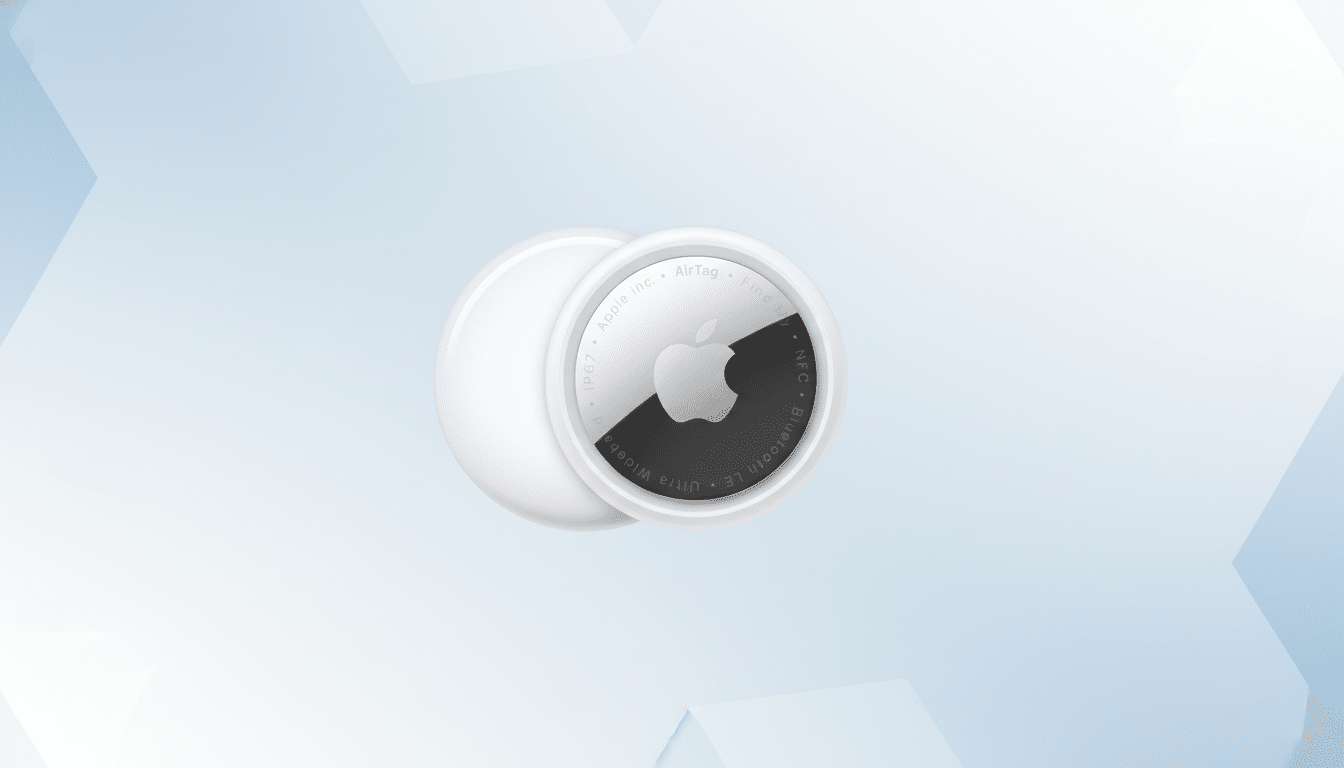
Apple is developing a compact AI pin wearable roughly the size of a slightly thicker AirTag, according to a detailed report from The Information. Early prototypes described by people familiar with the project point to a minimalist disc that pairs ambient sensing with conversational AI, signaling Apple’s most ambitious attempt yet to move intelligence off the phone and onto the body.
Report details Apple’s AI pin hardware and timeline
The device is said to be a thin, flat, circular wearable with an aluminum-and-glass shell, a single physical button on the edge, and a rear charging interface reminiscent of Apple Watch. Notably, the pin reportedly integrates two front-facing cameras—a standard and a wide-angle lens—alongside a speaker and three microphones, enabling hands-free capture and environmental awareness for AI-driven assistance.
- Report details Apple’s AI pin hardware and timeline
- Why a wearable pin makes sense for Apple right now
- Design details and potential AI pin use cases
- The hard problems Apple must solve for an AI pin
- Competitive landscape and industry signals for wearables
- What to watch next as Apple explores an AI pin device
Apple is targeting a launch window around 2027, the report notes, but development remains in the early stages and the project could be delayed or canceled if it fails to meet internal performance and usability bars. That caution isn’t surprising; the history of AI pins is littered with false starts.
Why a wearable pin makes sense for Apple right now
The pin concept plays directly into Apple’s strategy to move AI from app-bound interactions to context-aware services. At WWDC, Apple outlined Apple Intelligence—on‑device models for tasks like summarization, image generation, and proactive suggestions—backed by Private Cloud Compute when heavier processing is needed. A wearable pin adds the missing ingredient: continuous, real-world context, captured via cameras, mics, and proximity sensors, to make prompts optional and assistance anticipatory.
Apple’s hardware stack is unusually well suited to this category. Its custom silicon includes low‑power neural engines optimized for on-device inference, and its UWB chips (U1 and U2) already power precise location features across iPhone, Apple Watch, and AirTag. Combining these with a compact camera system could give the pin a way to “understand” scenes, identify objects, and retrieve information instantly without reaching for a screen.
Design details and potential AI pin use cases
Dual cameras suggest stereoscopic context rather than just quick snapshots: the wide lens can frame the environment, while the standard lens captures detail. Paired with three microphones, the pin could transcribe conversations, summarize meetings, or translate speech in real time. The speaker enables quick audio feedback, while a button likely toggles capture, mutes microphones, or triggers an assistant without a wake phrase.
Imagine glancing down to ask, “What am I looking at?” and getting a discreet audio answer; or tapping the pin to log ingredients while cooking, identify a part while repairing a bike, or fetch directions without lifting a phone. For accessibility, the device could offer scene descriptions and object alerts on demand. Precision finding via UWB could also make the pin double as a location beacon for family or safety use.

The hard problems Apple must solve for an AI pin
AI pins face three brutal constraints: battery life, thermal limits, and social acceptability. Persistent audio capture and computer vision drain power; mounting a capable camera stack and neural processing in a coin-sized chassis risks heat; and visible cameras on a lapel raise privacy concerns in public spaces.
Recent history is sobering. The Humane AI Pin, the highest-profile attempt at a screenless AI wearable, reportedly sold under 10,000 units before the company shut down despite raising hundreds of millions of dollars. Reviews cited latency, limited utility, and battery issues. Any Apple pin must deliver fast, reliable answers, clear live feedback, and tight integration with iPhone and iCloud, while offering unmistakable capture indicators, robust on‑device processing, and clear privacy controls.
Competitive landscape and industry signals for wearables
Reports indicate OpenAI is developing its own wearable, underscoring a broader push to anchor AI in devices rather than apps. Meta’s camera-equipped Ray‑Ban glasses show there is consumer appetite for ambient capture when the hardware is fashionable and frictionless. Market trackers like IDC and Counterpoint Research continue to place Apple at or near the top of global wearables by shipments, giving it distribution, ecosystem, and retail advantages if it enters a new category.
Apple also has a track record of delaying or canceling products that don’t meet its standards, which is as relevant to pins as it was to past experiments. If the company proceeds, expect it to lean on Apple Intelligence for on‑device tasks, Private Cloud Compute for heavier requests, and familiar frameworks like Siri, Shortcuts, and Vision Pro’s computer vision research to bootstrap real utility from day one.
What to watch next as Apple explores an AI pin device
Keep an eye on software clues. Expanded on‑device vision features in iOS or watchOS, new privacy affordances for wearable cameras, or developer APIs for context-aware prompts would hint that Apple is paving the runway. On the hardware side, improvements in low‑power NPUs, UWB capabilities, or miniature camera modules in the supply chain would be telltale signs.
If Apple can crack battery, heat, and social signaling—and convincingly show why a pin is more than a novelty—it could redefine how we interact with AI in the wild. The company has the silicon, the ecosystem, and the software roadmap. Now it has to prove that an AirTag‑sized disc can be the next great Apple device, not the next AI wearable cautionary tale.
