


Anthropic is rolling out Claude apps, a new set of integrations that lets its AI assistant operate directly inside popular workplace tools including Slack, Canva, Box, and Asana. Available to paid Claude users, the capability moves the chatbot beyond copy‑and‑paste workflows and into action: drafting Slack replies with conversation context, turning brainstorms into slide decks, and converting chats into trackable projects.
It’s a strategic tilt toward enterprise productivity. While rivals first courted consumer use cases, Anthropic is wiring Claude into the systems where teams already spend their day. The bet is simple—if the assistant can see the work, it can do the work.
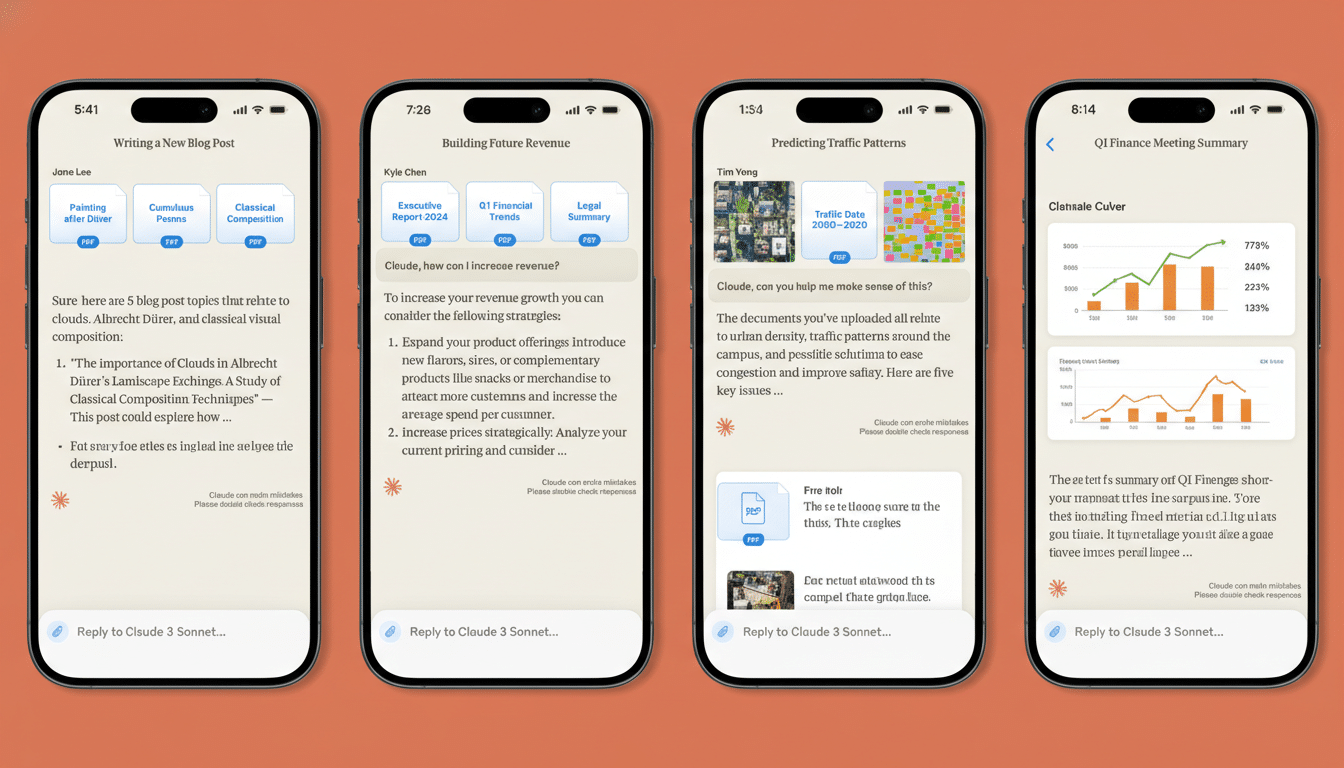
What Claude Apps Do Across Slack, Canva, and Box
- Slack: Claude can summarize long threads, pull relevant past messages for context, draft responses in a chosen tone, and present everything for human review before sending. In practice, that means less time stitching together backstory and more time getting decisions made.
- Canva: Give Claude an outline or transcript and it can scaffold a presentation in real time, propose layouts, and adapt designs to brand guidelines already set in Canva. Marketing teams can go from kickoff notes to a first‑cut deck in minutes rather than hours.
- Asana: Conversations with Claude can materialize as projects with tasks, owners, and dates. Instead of meeting notes dying in chat, action items arrive where work is tracked, visible to the whole team.
- Box: Claude can locate, summarize, and compare the latest files with permission‑aware access. Think product requirements versus the newest spec, or summarizing a 40‑page contract into key risks and obligations for legal and sales.
A common scenario ties them together: a product manager asks Claude to digest a customer escalation in Slack, fetch the relevant SOW from Box, generate a remediation plan as an Asana project, and spin up a stakeholder deck in Canva. The assistant orchestrates the handoffs; people stay in flow.
How The Integrations Work For Teams In Practice
Under the hood, Claude apps use standard OAuth connections with granular scopes, so the assistant only sees what it’s authorized to see. Users connect each app once, then invoke Claude to read context or take actions, always with an approval step before anything is posted, created, or shared.
For organizations on managed plans, IT can centrally enable connectors, define who can use which apps, and enforce data policies. That matters in regulated industries where least‑privilege access and auditable actions are non‑negotiable.
The experience is designed to reduce tab switching and copy‑paste overhead. Research from analysts like Gartner has long tied context switching to productivity drag; embedding the assistant where work already happens is how vendors are attacking that tax.
Security, Privacy, and Guardrails for Claude Apps
Anthropic positions Claude apps with an enterprise posture: explicit permissions, admin controls, and human‑in‑the‑loop confirmations on outbound actions. The company has said enterprise data is not used to train models by default, a policy many security teams now list as table stakes for AI procurement.
The integrations also piggyback on each platform’s own guardrails. Slack and Asana bots operate with well‑scoped API permissions, and Box enforces file‑level access and retention. Combined with Claude’s emphasis on constitutional AI—techniques designed to reduce harmful or off‑policy outputs—these layers aim to curb hallucinated actions and data leakage.
Still, the operational best practice is clear: require previews before sending messages or creating tasks, log all AI‑initiated changes, and define rollback paths. Teams that pair automation with transparent oversight tend to build trust faster.
Why The Enterprise Focus Matters For Anthropic
Anthropic’s approach contrasts with early consumer‑leaning integrations seen elsewhere. OpenAI popularized third‑party app access with plugins, and tech giants are embedding assistants across their suites—Microsoft in Teams, PowerPoint, and Planner; Google across Workspace. Anthropic is carving out a lane by going deep on tools knowledge workers already deploy at scale.
Analysts expect rapid adoption of this category. Gartner forecasts that more than 80% of enterprises will use generative AI APIs or applications by 2026, up from a small base just a few years ago. As organizations standardize on AI copilots, vendor‑neutral assistants that can safely operate across multiple SaaS systems become especially attractive.
There’s also a practical reason to start with Slack, Canva, Box, and Asana: they represent the core loop of modern knowledge work—communication, creation, content, coordination. If an assistant excels across those four Cs, it earns daily relevance.
What To Watch Next As Claude Apps Expand
Expect the catalog to expand into email, CRM, and business intelligence, where the ROI of AI‑assisted actions is high and data governance is mature. Watch for tighter admin tooling—organization‑wide policies, domain‑level approvals, and more detailed audit trails—as buyers move pilots into production.
The key metric won’t be message counts or deck exports; it will be measurable time saved on high‑friction workflows and fewer handoff failures between apps. If Claude apps can consistently turn messy inputs into reliable outputs across these systems, Anthropic won’t just be catching up—it will be setting the pace for AI at work.
