


Anthropic is extending its enterprise push by adding agentic plug-ins to Cowork, the company’s new workplace assistant built on Claude. The update brings the automation capabilities previously reserved for Claude Code into a broader, non-technical workflow tool aimed at teams across the organization.
The company positions plug-ins as a way to encode how work should get done, which tools and data to use, and what slash commands to expose—so teams can drive consistent, repeatable outcomes rather than ad hoc prompts. Plug-ins are available to paying Claude customers while Cowork remains in research preview.
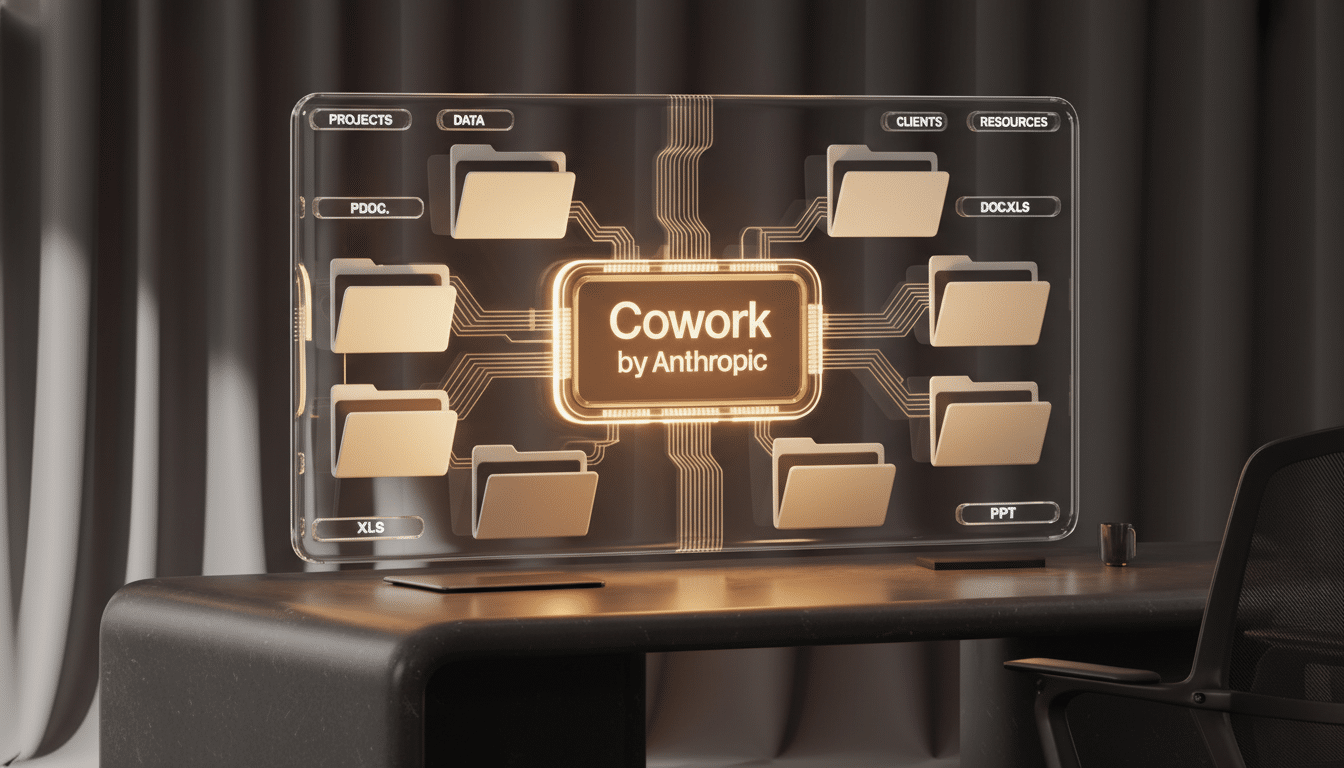
What Agentic Plug-Ins Bring To Anthropic Cowork
Agentic plug-ins let Claude plan multi-step tasks, call tools, and adapt based on feedback, rather than just answer a single prompt. In practice, that can mean scanning a folder of contracts and flagging risks for legal, synthesizing customer feedback for product, or generating campaign assets in a brand-safe format for marketing—without manual handholding at every step.
Anthropic says organizations can specify workflows, required data sources, and error-handling rules inside a plug-in. Teams can also define slash commands like /summarize or /risk-review, turning expert process knowledge into reusable actions. Today, plug-ins are saved locally on a user’s machine; Anthropic indicates organization-wide sharing is coming, which will matter for governance and scale.
Designed For Enterprise Workflows At Scale
Early traction aligns with data analysis and sales operations—two functions that live on repeatable processes and benefit from fast synthesis. A sales plug-in might auto-generate opportunity briefings by pulling CRM notes, support tickets, and call transcripts, while a data plug-in could reconcile metrics, annotate anomalies, and draft an executive summary for a weekly business review.
These patterns reflect a broader industry shift from “co-pilot” style suggestions to task ownership. GitHub’s research found developers complete coding tasks 55% faster with AI assistance; enterprises now expect similar time-to-value outside engineering by encoding steps, approvals, and tool usage directly into agentic flows.
How It Compares To Other Enterprise Agent Platforms
The move puts Cowork in the same strategic lane as agent frameworks from other leaders. OpenAI’s custom GPTs and Actions enable tool-calling within ChatGPT, while Microsoft’s Copilot Studio offers connectors and process orchestration across Microsoft 365 and business systems. Anthropic’s spin emphasizes guardrailed autonomy and process fidelity, exposed through simple UI elements and slash commands that non-technical teams can adopt quickly.

Because plug-ins originated in Claude Code, Cowork inherits a developer-grade scaffolding—planning, tool-use, and structured outputs—without requiring users to write code. That combination of agentic behavior and approachable UX is the wedge Anthropic is betting on to win departmental adoption beyond engineering.
Security And Governance For Enterprise Use Cases
Local storage of plug-ins offers immediate data control but limits sharing and oversight. The promised org-wide distribution layer will need role-based access, review workflows, and audit trails to satisfy enterprise compliance teams, especially when automating legal review, HR workflows, or customer communications that may touch sensitive data.
Enterprises will also expect clear policy enforcement—what data an agent can access, when it can trigger external tools, and how it handles failures. In regulated sectors, controls aligned with frameworks like SOC 2 and ISO 27001, alongside robust red-teaming and safety evaluations, will be essential for production use.
Why It Matters Now For Enterprise AI Adoption
Analysts see a rapid shift toward productionized AI. Gartner projects that by 2026, more than 80% of enterprises will have used generative AI APIs or deployed genAI applications in production, up from under 5% in 2023. IDC estimates spending on generative AI will reach roughly $143 billion by 2027, underscoring the race to operationalize AI across everyday work.
By bringing agentic plug-ins into Cowork, Anthropic extends Claude’s impact from coding benches to the front lines of sales, support, legal, and operations. If the upcoming sharing and governance features land as promised, Cowork could help organizations standardize AI-driven processes—turning tribal knowledge into durable, auditable workflows and nudging AI from helpful assistant to dependable operator.
