


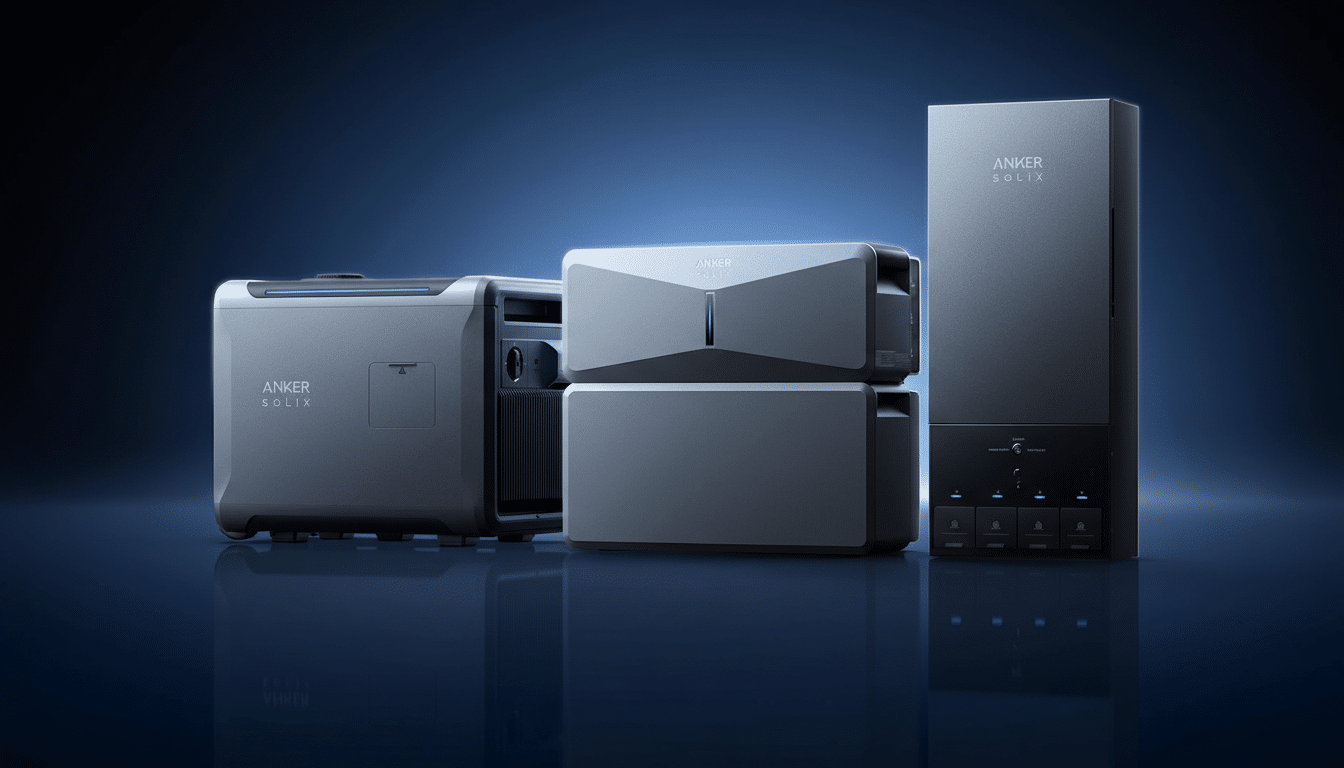
Anker Solix has announced the E10, a smart hybrid whole-home backup that combines a modular battery, direct solar input, and optional generator integration into a single system. It’s billed as the first residential platform to seamlessly orchestrate all three power sources, and after seeing how the pieces work together, it feels like the missing link between portable power gear and permanent home resilience.
A Hybrid Approach Built For Real Outages
Outages are no longer rare blips. The U.S. Energy Information Administration reports that households have endured multi-hour interruptions on average in recent years, with extreme weather driving the worst events. That reality exposes a gap: batteries are quiet and efficient but finite; generators run long but waste fuel when used alone. The E10 tackles that by letting solar, battery, and generator contribute in concert rather than as either-or choices.
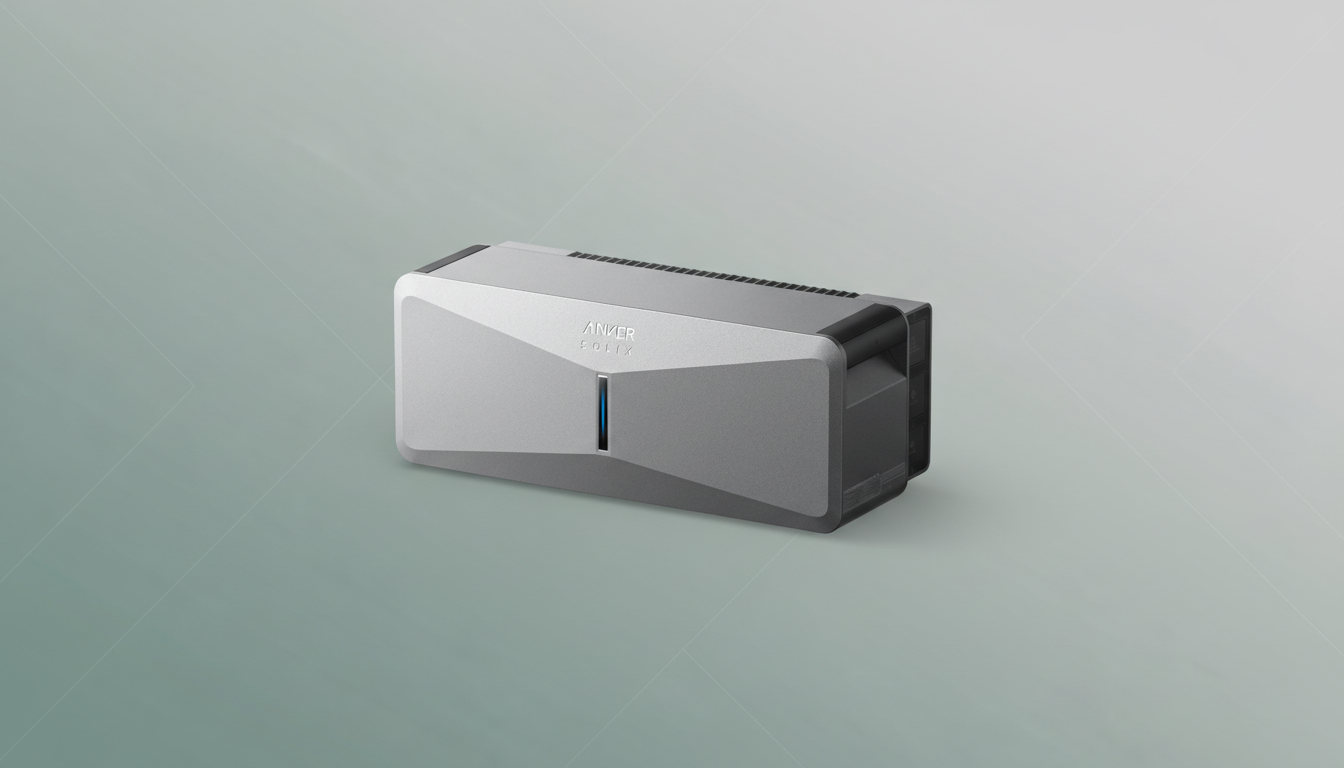
The centerpiece is the Power Dock, which coordinates sources and provides automatic switchover to backup in about 20 milliseconds. That’s fast enough to keep most appliances from dropping and minimizes the need for a separate UPS on sensitive electronics. When both solar and battery are tapped, a Smart Generator ties in via DC rather than AC. DC coupling avoids extra conversion losses, which Anker Solix says can stretch runtime up to five times compared with traditional AC-fed generators during extended blackouts.
Hardware is designed for the elements: an all-metal NEMA 4 enclosure stands up to rain and wind-driven dust, with an operating range from minus 4°F to 131°F. For homes where the service panel sits outdoors, that rating matters as much as capacity.
Specs That Scale With Your Home’s Power Needs
The base E10 pack stores 6 kWh and stacks modularly. One system can be expanded, and up to three full systems can be combined to reach as much as 90 kWh—enough to keep critical loads going for days when paired with conservative management and solar recharging. For context, the average U.S. household uses roughly 29 kWh per day, according to the EIA, although actual backup needs vary widely by HVAC type, well pumps, and cooking choices.
Each unit accepts up to 9 kW of solar input and supports rigid rooftop arrays, portable panels, or third-party AC solar systems. That means homeowners who already have PV can integrate without ripping out existing gear, while those starting from scratch can size panels to match future storage upgrades.
Two installation paths make the system approachable. The Power Dock configuration delivers automatic transfer and full orchestration. A more budget-friendly Smart Inlet Box provides manual switchover and straightforward integration with existing solar. The stackable, plug-and-play hardware aims at confident DIYers, though pro installation is available nationwide for those who prefer turnkey service.
How It Stacks Up Against Rivals and Alternatives
Competitors like Tesla Powerwall, Enphase IQ Battery, and EcoFlow’s whole-home solutions offer robust storage and fast switchover, but most rely on AC-coupled generators or omit generator integration entirely. The E10’s DC generator path is the distinctive twist—it reduces conversion steps, lowers fuel burn during prolonged outages, and keeps charging efficient when the sun is weak.
Capacity flexibility is another advantage. Starting at 6 kWh minimizes upfront cost while leaving room to scale as needs evolve—say, after adding an EV charger or electrifying heat. For households on time-of-use rates, the system can also shave peak pricing by discharging in the evening and topping up at midday from rooftop solar, a strategy the National Renewable Energy Laboratory has shown can materially cut bills when paired with TOU tariffs.
As with any whole-home battery, buyers should confirm local code compliance and certifications with their installer and authority having jurisdiction. Standards such as UL 9540 for energy storage systems and proper rapid-shutdown integration for rooftop PV are non-negotiables for safety and permitting.
Pricing, Warranty, and Early Take on the E10 System
Pricing starts at $4,299 for an E10 with one inverter and one 6 kWh battery. The Smart Inlet Box configuration is $4,599, while the Power Dock bundle is $5,799. A full setup with E10, Smart Generator, and Power Dock lists at $7,399. That puts the base kit near $717 per kWh before incentives, competitive with established players and especially compelling given the integrated solar and generator pathways.
Anker Solix backs the E10 with a five-year warranty, extended to eight years for preorders. Homeowners should also check eligibility for the 30% federal clean energy tax credit under the Inflation Reduction Act, which now applies to standalone residential batteries of 3 kWh or larger in many cases—often a decisive factor in payback.
My takeaway: this is a thoughtful, system-level rethink of home backup. By unifying battery, solar, and a DC-coupled generator under one controller with millisecond transfer, the E10 addresses the messy reality of long outages without forcing compromises. If you have been waiting for a solution that is expandable, weather-hardened, and engineered for both daily savings and emergency resilience, this is the first whole-home system in a while that truly deserves a close look.
