


Anker’s 140W multi-port charger for laptops is now 30 percent off, or nearly $30 less than what it normally goes for — which undercuts many single-port bricks while offering a lot more in the way of capability.
It’s a Prime-exclusive price, and it’s notable because 140W USB-C Power Delivery support ranks this charger among the fastest ones out there for laptop fast charging, phones and tablets aside.
What Makes This 140W Charger Stand Out From Rivals
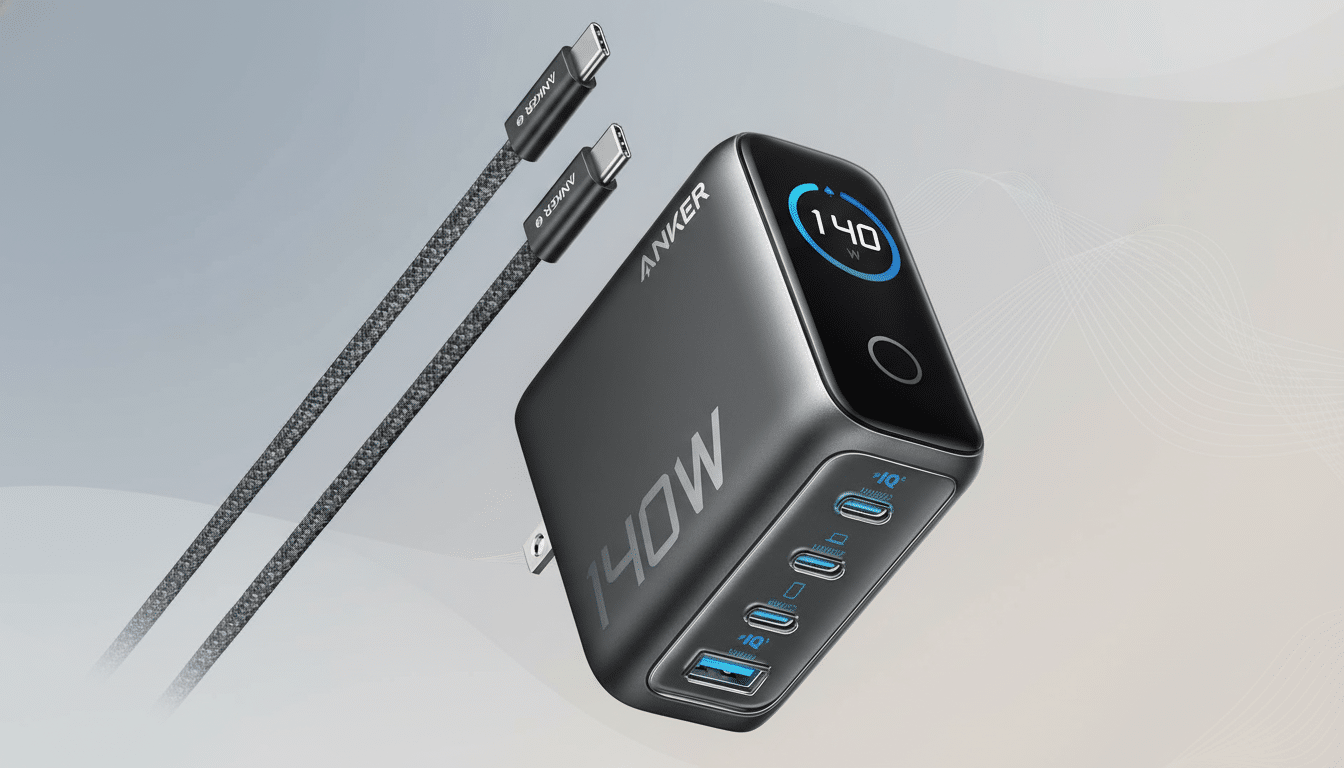
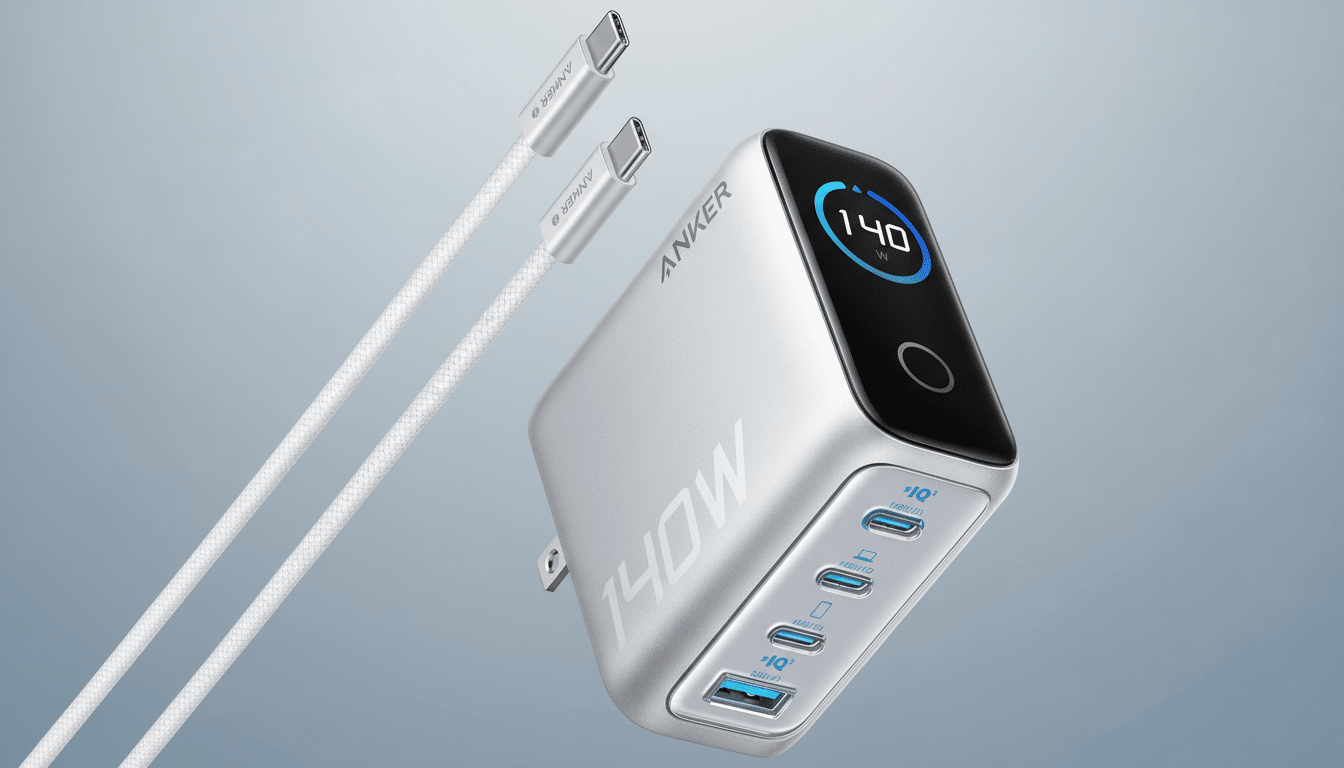
With three USB-C ports and a USB-A port, this brawny block goes a long way to providing plenty of options for charging.
- The on-device screen provides real-time status info for each port.
- Two of the USB-C ports are up to 140W when used independently, while the third USB-C port supports up to 40W and the USB-A port is rated at 33W.
- As with all multi-port chargers, total output is shared, so you’ll only get maximum power when a single high-power USB-C port is in use.
Under the bonnet, gallium nitride (GaN) power parts mean higher efficiency and less heat than the silicon designs of old. And that efficiency is important: well-engineered GaN chargers usually keep efficiency of ~90% at moderate loads, meaning less waste and a faster (and cooler) charger in your bag.
It remains relatively portable, despite its muscle bulge, measuring a compact 2.72 × 2.72 × 1.42 inches and weighing in at 9.7 ounces. You’re essentially looking at consolidating three or four individual chargers into one unit you can slide into a jacket pocket. That integrated display is also more than just a party trick — it helps confirm at a glance that you’re getting the wattage you expect on whatever port you’re using.
Real-World Speed and Compatibility for USB-C Devices
The USB Implementers Forum’s Power Delivery 3.1 spec added Extended Power Range up to 140W, the enabler that delivers fast laptop charging over USB-C today. In real-world terms, that means a 16-inch MacBook Pro will be able to achieve its full charge rate over USB-C with MagSafe, many Windows ultrabooks pull 65–100W, and gaming laptops which accept USB-C input are going to sip anywhere from about 100–140W when topping up.
On the mobile side, high-end phones with 45W PD fast charging support — like a Galaxy S24 Ultra — are hitting their maximum speeds neatly, while something like a Pixel 8 Pro is ticking closer to the upper reaches of high-20Ws instead.
They tend to be around 30–35W for tablets (including iPad Pro models), and handhelds like the Steam Deck and ROG Ally can max out at 45W. Simply put, one brick can handle your laptop, simultaneously powering a phone and earbuds side by side without breaking a sweat.
If you frequently charge up multiple devices at once, the power-sharing logic is important. An example, real-world scenario: You’re able to plug in a laptop to the first USB-C port at 100W, a phone into the second USB-C port at 20–30W, and wirelessly charge some earbuds on the USB-A port. That combo maintains the laptop fast-charging, yet still gives kick-in-the-pants power quickly to your pocket gear. Only on the rare occasion when you require the full 140W power do we ask to connect via a single USB-C port and an e‑marked USB-C cable up to 5A, achieving PD 3.1’s highest level.
How It Compares on Price Against Similar Chargers
This deal beats many rivals at the $69.99 price point. Apple’s own 140W USB-C power adapter, meanwhile, normally goes for around $99 and only includes a single port. The larger, faster-charging GaN chargers from reputable brands will typically cost between $80 and $120 for 120–150W multi-port models. That it comes with four ports, PD 3.1 support, and a status display at this price (and from not some generic no-name brand but one that’s known for good USB-C compliance as well as robust power management) is unusual.
Value isn’t just the price tag; consolidation counts. The idea is, you’d replace a 100W laptop brick next to a 30W tablet charger and a 20W phone adapter with just one unit and you’d save weight, outlet space, and cable clutter. If you’re a frequent traveler or a hybrid worker, you’ll feel the difference on day one.
Safety and Travel Readiness for High-Output Chargers
With high-output chargers it is a matter of life and death to have protection and thermal control. This model features multiple layers of protection for overcurrent, overvoltage, and temperature; meanwhile GaN is reputed to be more efficient than silicon so it should run cooler at sustained loads. Universal 100–240V input means it’s ready for international travel with the addition of a simple plug adapter, and the informative display minimizes guesswork when you are forced to use an unknown outlet.
One tip I can offer: if you want to get the full 140W, use a rated 5A USB-C cable with an e-marker chip. Higher-current cables must signal their capability under the USB-IF’s PD 3.1 specification, and most older 3A cables will cap you at 100W.
Bottom Line: A Smart, Compact Upgrade at This Price
It’s not often that a flagship-caliber, PD 3.1-compatible charger drops into impulse-buy range like this one has with its 30% discount. With four ports, a helpful status display, compact GaN design, and enough headroom to fast-charge a laptop while also refueling your phone and accessories, it’s a smart upgrade — and an honest one‑brick solution — for anyone living the USB-C life.
