


Type a sentence into a text-to-video tool today, and you’ll get a clip back in seconds — an animated character, a scene, a few seconds of motion that didn’t exist a moment ago. It feels like magic, right up until you try to use it twice.
Ask for the same character in a second scene, and something changes. The face is slightly off. The outfit shifts color. The voice doesn’t quite match the one from before.
- What Is an “AI Animation Agent”?
- From Prompt-Based Generation to AI-Assisted Creative Workflow
- How an Agent Differs From a Generator
- The Shift From Clip Generation to Production Management
- Why Text-to-Video Generators Are Not Enough for Story Creation
- Inside Anijam AI: How the Agent Works
- Five Entry Points — Text, Script, Image, Audio, Character
- Character Consistency Engine
- Lip Sync and Multilingual Voice Library
- Timeline Editor for Frame-Level Control
- Built on Top of Leading Video Models (Kling, Runway, Seedance, Luma, Veo)
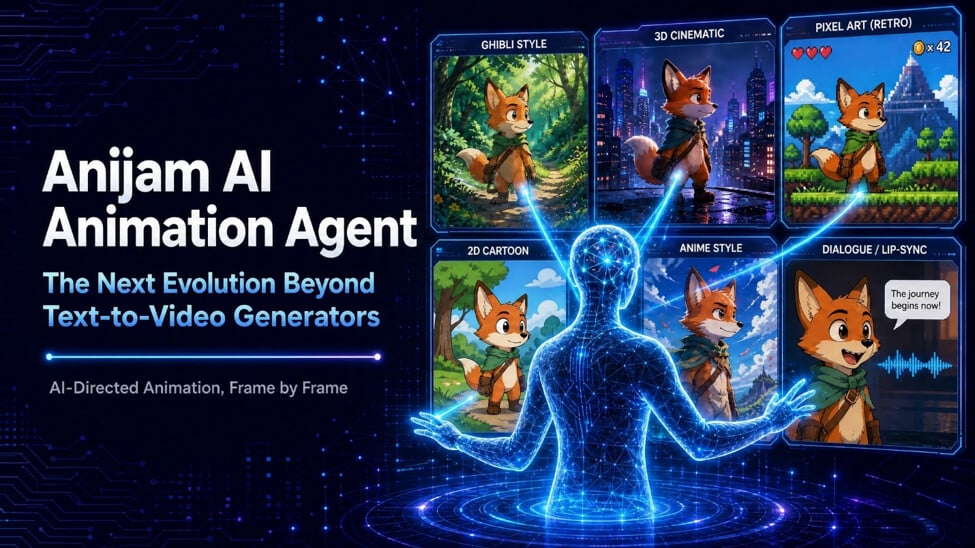
- Visual Styles for Every Kind of Story
- Getting Started with Anijam AI
- Who Anijam AI Is Built For
- Content Creators & Short-Form Video (TikTok, Reels, Shorts)
- Educators and Explainer Content
- Marketers and Brand Storytelling
- Indie Filmmakers and Serialized Character Content
- Anijam AI vs. Traditional Text-to-Video Generators
- Single Clip vs. Full Episode/Story Production
- Manual Re-Prompting vs. Agent-Managed Workflow
- Character Drift vs. Character Consistency
- Conclusion
Generating one good clip is easy now. Keeping a recognizable character consistent across ten scenes, giving that character lip-synced dialogue, and holding the whole thing together as a finished animated story is a different problem entirely.
This piece looks at why that gap exists, what a new category of tools — AI animation agents — is doing differently, and how that shift changes what it actually takes to turn a story idea into a finished animated video.
What Is an “AI Animation Agent”?
An AI animation agent is a system that manages an entire creative production, not just a single rendering step. Instead of turning one prompt into one clip, it handles the animation pipeline the way a small production team would — writing the script, composing and sequencing scenes, keeping characters consistent from one shot to the next, generating voice and lip-synced dialogue, and fine-tuning everything on a timeline before export.
From Prompt-Based Generation to AI-Assisted Creative Workflow
Classic text-to-video generation is a single-step exchange: you write a prompt, the model renders a clip, and you either keep it or start over. An agent-based workflow adds structure around that step. The system first interprets the idea, proposes a story outline and scene breakdown, and only then generates the visuals — closer to how a creative workflow actually unfolds.
How an Agent Differs From a Generator
A generator is a rendering engine: it converts one input into one output. An agent is a coordinator that sits on top of one or more generation models and manages the steps around them — script structuring, character design, scene composition, voice synthesis, lip sync, and timeline editing — from a single instruction or chat input.
The Shift From Clip Generation to Production Management
The practical effect of this shift is a change in what the creator actually spends time on. With a generator, most of the effort goes into prompt engineering — rewording, retrying, and manually stitching results together. With an agent, the creator reviews and directs decisions the system has already proposed, closer to overseeing a production than operating a rendering tool.
Why Text-to-Video Generators Are Not Enough for Story Creation
Text-to-video models made huge gains in visual quality over the past two years, but most of them were built and benchmarked around a single unit of output: one short clip. That focus creates specific problems the moment a creator tries to tell a story instead of showing a single moment.
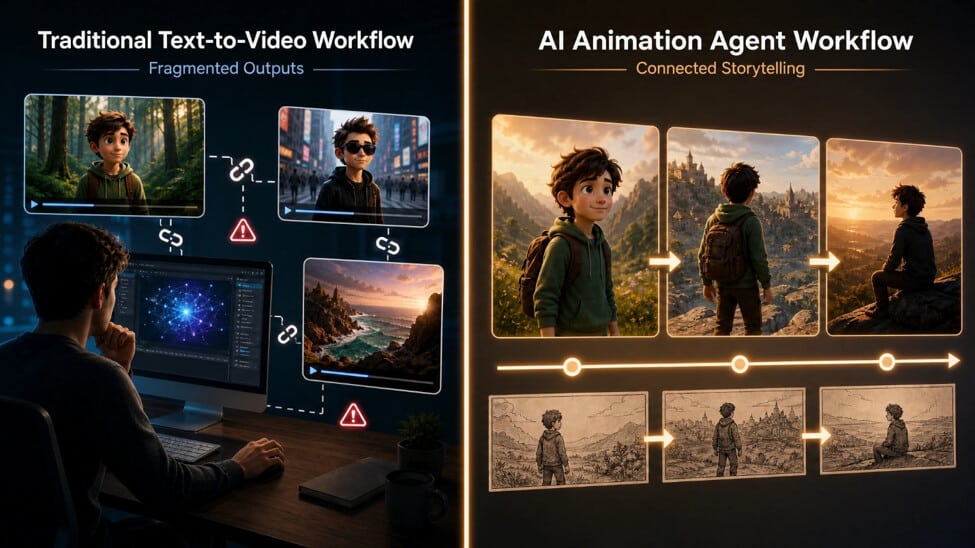
- Built for Single Clips, Not Sequences: Most models are trained and evaluated on standalone outputs a few seconds long, with no built-in concept of “the next scene” or how it should connect to the last one.
- No Native Story Structure: Turning several clips into a coherent narrative — with consistent pacing, setting, and plot — is left entirely to the creator, who has to plan the sequence, generate each piece separately, and edit them together by hand.
- Manual Re-Prompting for Every Shot: Extending a story usually means rewriting and rerunning a new prompt for each new shot, then piecing the results together in a separate editor, with no memory of what came before.
Inside Anijam AI: How the Agent Works
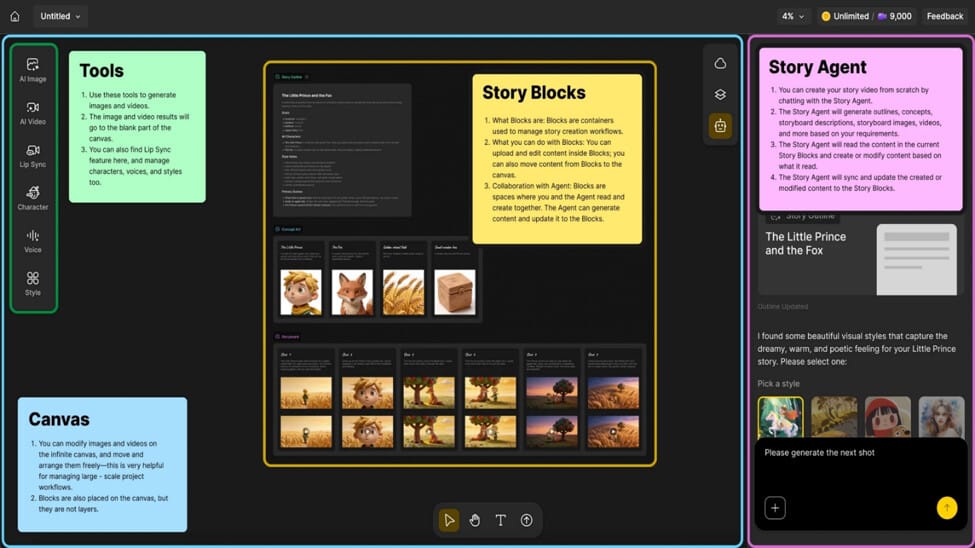
Anijam AI is built as an AI animation agent that manages this pipeline from a single prompt, script, image, or audio clip. Users describe a story idea through chat, and the AI assistant writes the script, designs the characters, generates the scenes, adds voice and lip sync, and assembles the final animated video.
For creators who’d rather skip the blank page entirely, Anijam AI also offers a library of trending and funny animation templates — ready-made formats — that can be customized with a character in just a few clicks
Five Entry Points — Text, Script, Image, Audio, Character
Anijam AI supports several ways to start a project, depending on what a creator already has on hand:
- Text to Animation: type a short concept and the agent builds out the story and scenes.
- Script to Animation: upload a full script (supports .txt, .docx, .pdf, and .md formats), and it’s automatically broken into scenes and dialogue.
- Image to Animation: upload a reference image to guide the visual style or bring a still image to life.
- Audio to Animation: animate from an existing voice recording or piece of music.
- Character Animation: create and animate a custom AI character from scratch.
Character Consistency Engine
Once a character is designed, Anijam AI reuses that same character across every subsequent scene so proportions, coloring, and facial features stay stable. This directly targets the character-drift problem, and is one of the features reviewers most consistently point to when comparing Anijam AI against general-purpose video generators.
Lip Sync and Multilingual Voice Library
Anijam AI includes an animation-optimized lip-sync engine that synchronizes mouth movement to audio. Creators can choose a voice from a built-in multilingual voice library or upload their own audio, so dialogue-driven scenes don’t require a separate lip-sync tool or manual keyframing.
Timeline Editor for Frame-Level Control
After scenes are generated, a built-in timeline editor lets creators assemble the sequence, adjust timing between shots, and refine pacing before exporting — giving a level of manual control that purely prompt-based tools typically don’t offer.
Built on Top of Leading Video Models (Kling, Runway, Seedance, Luma, Veo)
Rather than relying on a single proprietary renderer, Anijam AI’s agent draws on leading video generation models — including Kling, Runway, Seedance, Luma, and Google Veo — and directs them within its own production workflow. This lets the platform apply the strongest available model to a given scene or style, instead of locking creators into one engine.
Visual Styles for Every Kind of Story
Anijam AI offers four core animation styles, each tuned for a different kind of content:
| Style | Look and Feel | Works Well For |
|---|---|---|
| Ghibli | Soft, hand-painted aesthetic | Emotional storytelling, character-driven shorts |
| Minecraft | Block-style 3D world | Gaming and fan community content |
| 3D Cinematic | Film-quality render style | Trailers, dramatic scenes, brand films |
| Cartoon | Classic 2D flat animation | Explainers, kids’ content, social shorts |
| Pixel Art | 8-bit/16-bit retro game aesthetic | Game content, nostalgic shorts, indie/fan projects |
Getting Started with Anijam AI
Turning an idea into a finished animated video takes just a handful of steps. The agent handles the story structure, character design, and lip sync internally, from the first prompt to the final export.
Step 1: Start With Your Idea: Describe a story concept in a sentence or two, or upload a photo, audio clip, or full script as your starting point.
Step 2: Let the Agent Build the Outline: Anijam AI’s agent reads the input and generates a story outline, scene breakdown, and character suggestions automatically.
Step 3: Choose a Visual Style: Pick from the Ghibli, 3D Cinematic, Cartoon, or Pixel and other Art styles to set the look of the animation.
Step 4: Customize Characters and Add Dialogue: Adjust character appearance and motion, then add dialogue through an AI-generated voice or uploaded audio for lip sync.
Step 5: Export or Continue the Story: Refine the sequence in the timeline editor, export the finished video, or continue the same characters into a new episode. (Optional: for ongoing series, click “Add Episode” to add and manage new episodes under the same project, keeping the same cast and world consistent across the whole series.)
Who Anijam AI Is Built For
Anijam AI is used across a fairly wide range of creators — from individual hobbyists to small teams producing recurring content — who want character-driven animation without a traditional production pipeline.
Content Creators & Short-Form Video (TikTok, Reels, Shorts)
Creators use Anijam AI to turn ideas and scripts into character-driven short videos for TikTok, Instagram Reels, and YouTube Shorts, without needing prior animation experience.
Educators and Explainer Content
Teachers and course creators use it to turn lessons and scripts into animated explainer videos, making abstract or text-heavy material easier to follow.
Marketers and Brand Storytelling
Marketing teams use character-driven and mascot-led animation for ads, product narratives, and promotional content, without commissioning a full animation production.
Indie Filmmakers and Serialized Character Content
Because character consistency carries across episodes, Anijam AI is well suited to serialized formats — animated shorts, anime-style episodes, and recurring character skits — that would otherwise require a production team to keep visually consistent over time.
Anijam AI vs. Traditional Text-to-Video Generators
The two categories of tools are solving different problems, and the table below summarizes where they diverge.
| Aspect | Traditional Text-to-Video Generators | Anijam AI Animation Agent |
|---|---|---|
| Output unit | One short clip per generation | A sequence of scenes that form a story or episode |
| Workflow | Manual re-prompting for every new shot | Agent plans the outline, scenes, and characters from one input |
| Character handling | Prone to “character drift” between clips | Built-in character consistency engine |
| Dialogue | Usually requires a separate lip-sync tool | Lip sync built into the same workflow |
| Skill required | Prompt engineering, trial and error | Describe the idea in plain language |
Single Clip vs. Full Episode/Story Production
A text-to-video generator’s natural output is one clip. Anijam AI’s natural output is a sequence of scenes that already form a story, because the agent plans the structure before any visuals are generated.
Manual Re-Prompting vs. Agent-Managed Workflow
Extending a story with a generic generator means writing and re-running a new prompt for every shot, then editing the results together manually. Anijam AI’s agent handles that sequencing internally, from the same initial input.
Character Drift vs. Character Consistency
Where general-purpose generators tend to reinterpret a character slightly with every new clip, Anijam AI’s character consistency engine is specifically designed to keep a character’s design stable across an entire multi-scene production.
Conclusion
Text-to-video generators solved the problem of turning words into moving images. What they haven’t solved is turning an idea into a finished, coherent story — that still takes character consistency, scene planning, dialogue, and editing, stitched together by hand.
Anijam AI’s animation agent is built specifically to close that gap, managing the full pipeline from script to character design to lip sync to final export, so creators can focus on the story instead of the production mechanics behind it.
For creators, educators, and brands alike, that shift means less time wrestling with prompts and production logistics, and more time focused on what actually matters: telling a story worth watching.

