


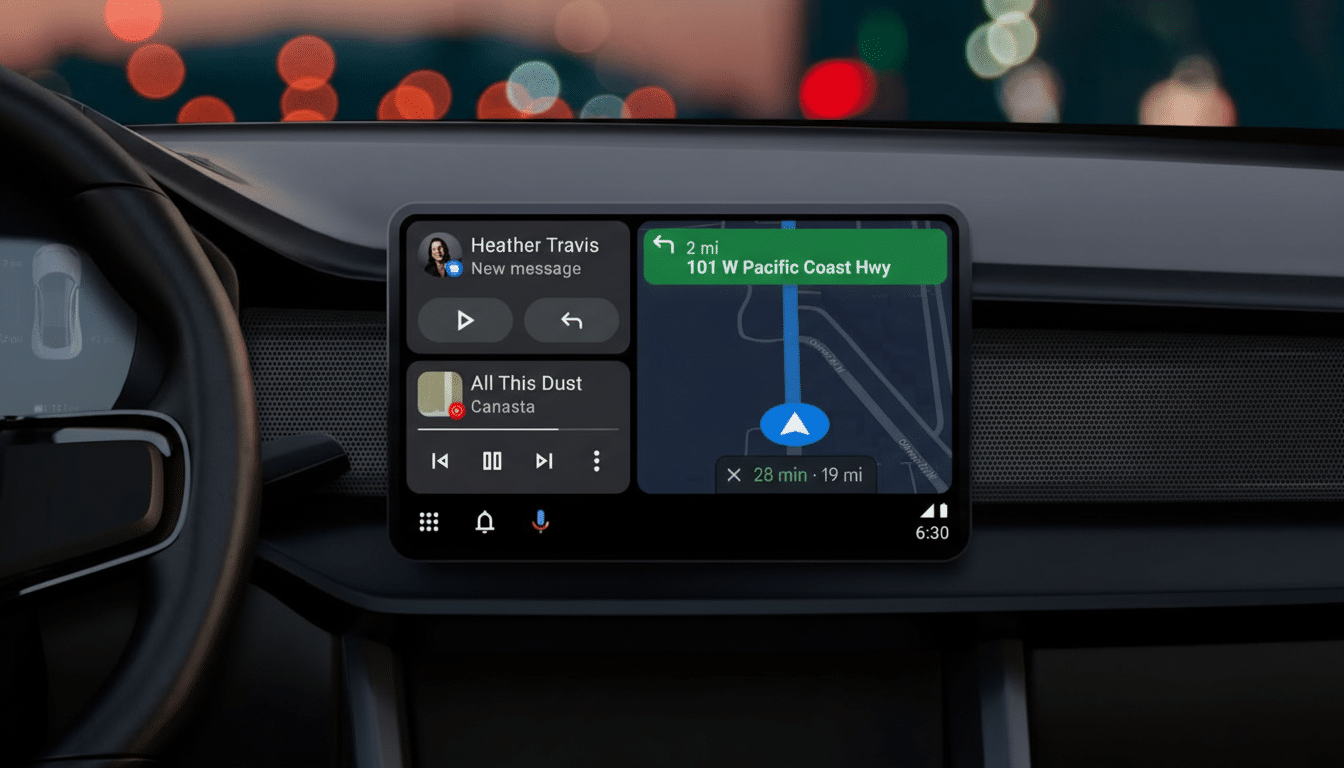
Google appears to be pulling back its refreshed Android Auto music player for some beta users after reports that the update interfered with steering wheel media controls. The newer interface — featuring a wavy progress bar and a tweaked layout for YouTube Music — is vanishing in favor of the older, flatter design, even on devices still running recent beta builds.
Early impressions from testers on Reddit praised the modernized look and larger touch targets, but multiple posts noted that basic steering wheel functions like track skip and mute stopped working in certain cars. With in-car reliability non-negotiable, most users agree a rollback is the right call until a fix ships.
What Changed In The Android Auto Media Player
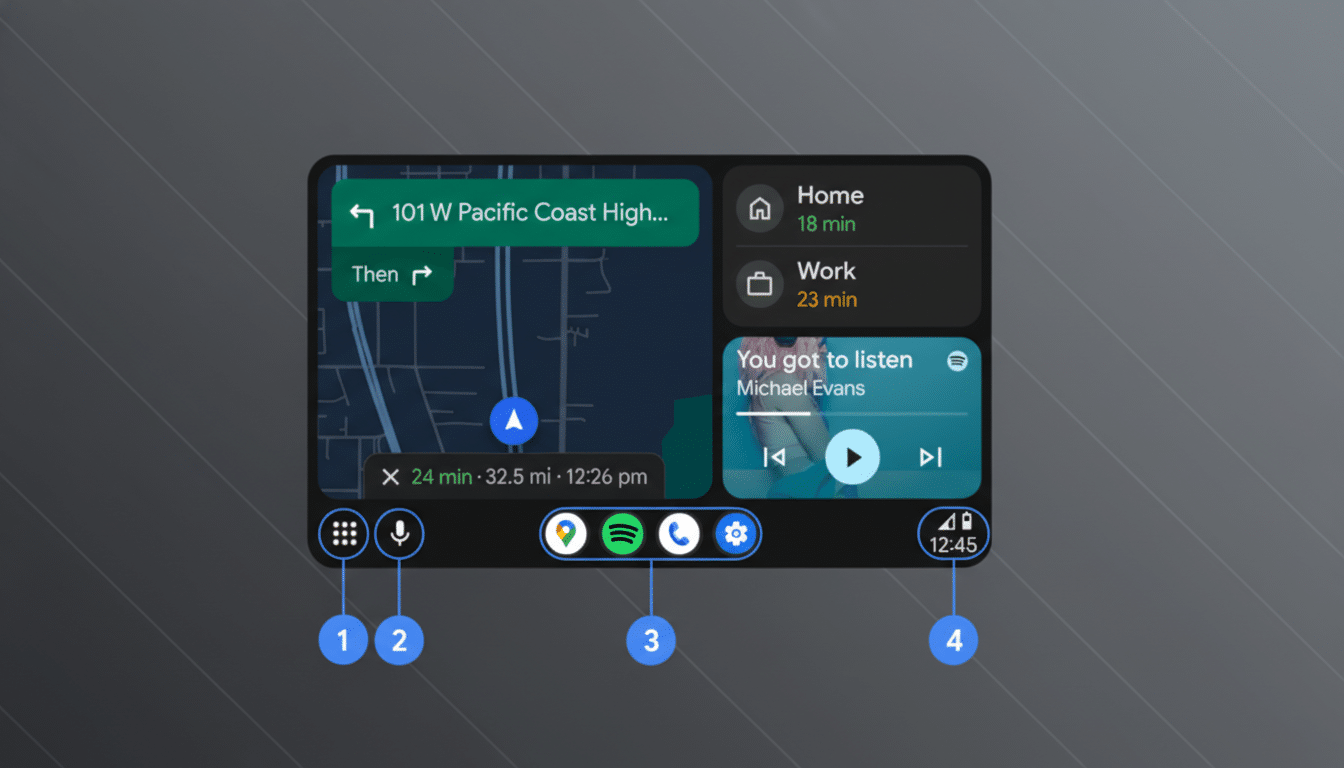
The updated player introduced a dynamic, wavy scrubber to visualize progress and subtly reorganized transport controls. In YouTube Music, shuffle, repeat, and queue access appeared easier to reach, and spacing improved glanceability — small tweaks that matter when you only have a moment to look away from the road.
Like many Android Auto features, the redesign seemed to be controlled by server-side flags rather than a single app update. That allows Google to enable or disable elements rapidly across the fleet without requiring drivers to download a new version — and just as quickly pull them back when issues surface.
Why A Rollback Makes Sense For Cars And Safety
Automotive software plays by stricter rules than a typical phone app. U.S. safety guidance for visual-manual interfaces from the National Highway Traffic Safety Administration recommends limiting eye-off-road time to short glances (about two seconds per glance and approximately 12 seconds to complete a task). If steering wheel controls fail, drivers are more likely to reach for the screen, increasing distraction risk.
Distracted driving remains a serious problem on U.S. roads; NHTSA data attributes thousands of fatalities to distraction each year, including 3,308 deaths in 2022. The AAA Foundation for Traffic Safety has likewise shown that added cognitive load and task complexity in infotainment systems can degrade driver performance. Against that backdrop, reverting a cosmetic update that disrupts physical controls is a sound safety-first decision.
What Likely Broke Under The Hood Of Android Auto
Steering wheel buttons route through the vehicle’s network to the head unit, which translates those signals for Android Auto and apps via standardized media APIs. Android’s MediaSession framework expects clear mappings for play, pause, next, previous, and other functions. If the new UI altered focus behavior, control priorities, or how transport actions are exposed, some head units could misinterpret commands or drop them altogether.
Fragmentation complicates matters. Different automakers and model years handle key events slightly differently, and head-unit firmware varies widely. A server-side rollback restores functionality immediately while engineers validate fixes across a matrix of cars, media apps, and configurations. Expect remediation to arrive through a combination of Android Auto updates, app-side patches for major players like YouTube Music, and behind-the-scenes flag changes.
What Users Can Do Now To Restore Reliable Controls
If your player reverted, keep Android Auto, Google Play services, and your music apps up to date, and consider opting out of beta builds if you rely on steering wheel controls daily. When issues persist, use the in-app feedback tool to file logs and include your vehicle make, model, model year, head-unit version, and steps to reproduce. Voice commands remain a safer stopgap than tapping through menus while driving.
The Bigger Picture For Infotainment Reliability
Infotainment and smartphone integration continue to be top pain points in owner surveys, with research firms frequently ranking connectivity and media control glitches among the most common complaints. The quick pullback here underscores a broader truth: even “skin-deep” UI refreshes can ripple through the control stack, affecting critical inputs. The revamped player will likely return once compatibility and event-handling quirks are ironed out — and when it does, it should land as a visual upgrade that doesn’t sacrifice the muscle memory drivers count on.
Until then, the older Android Auto media UI may look less flashy, but restoring reliable steering wheel controls is the right trade-off for the road.
