


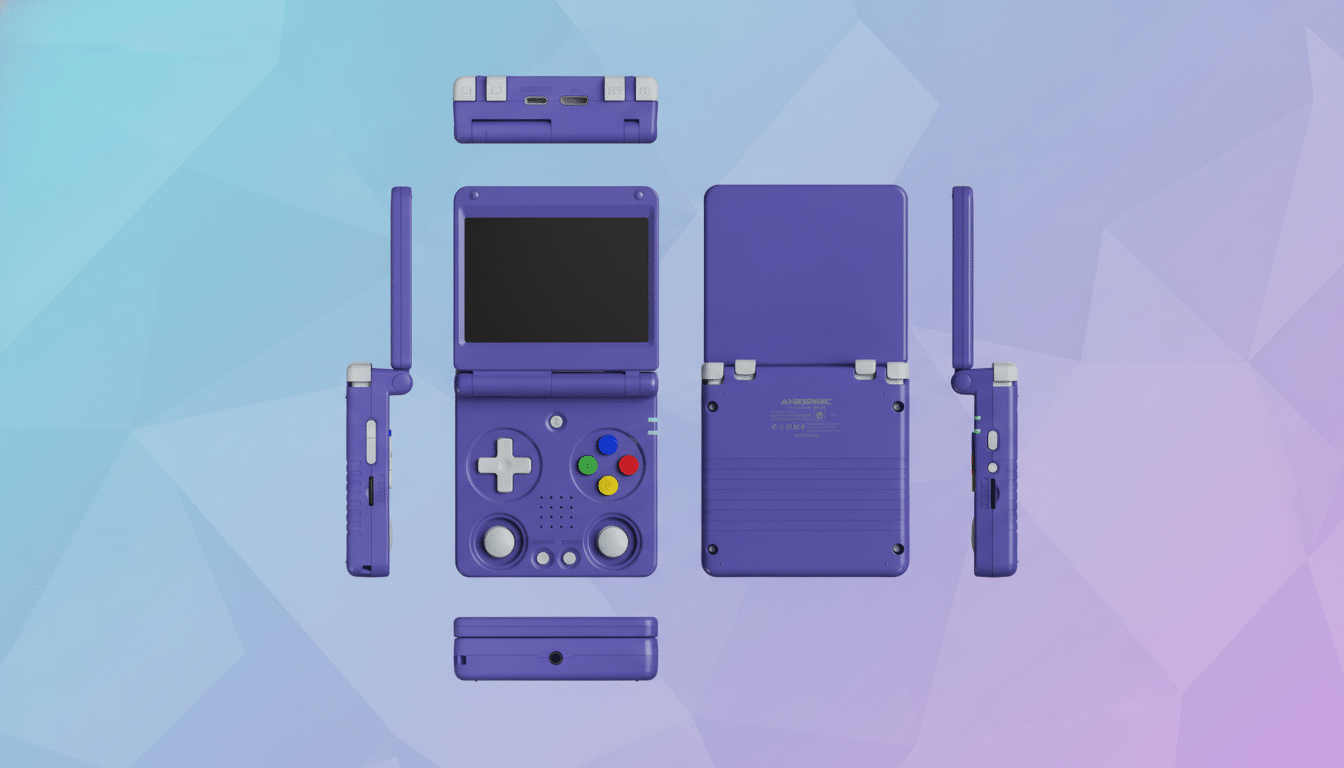
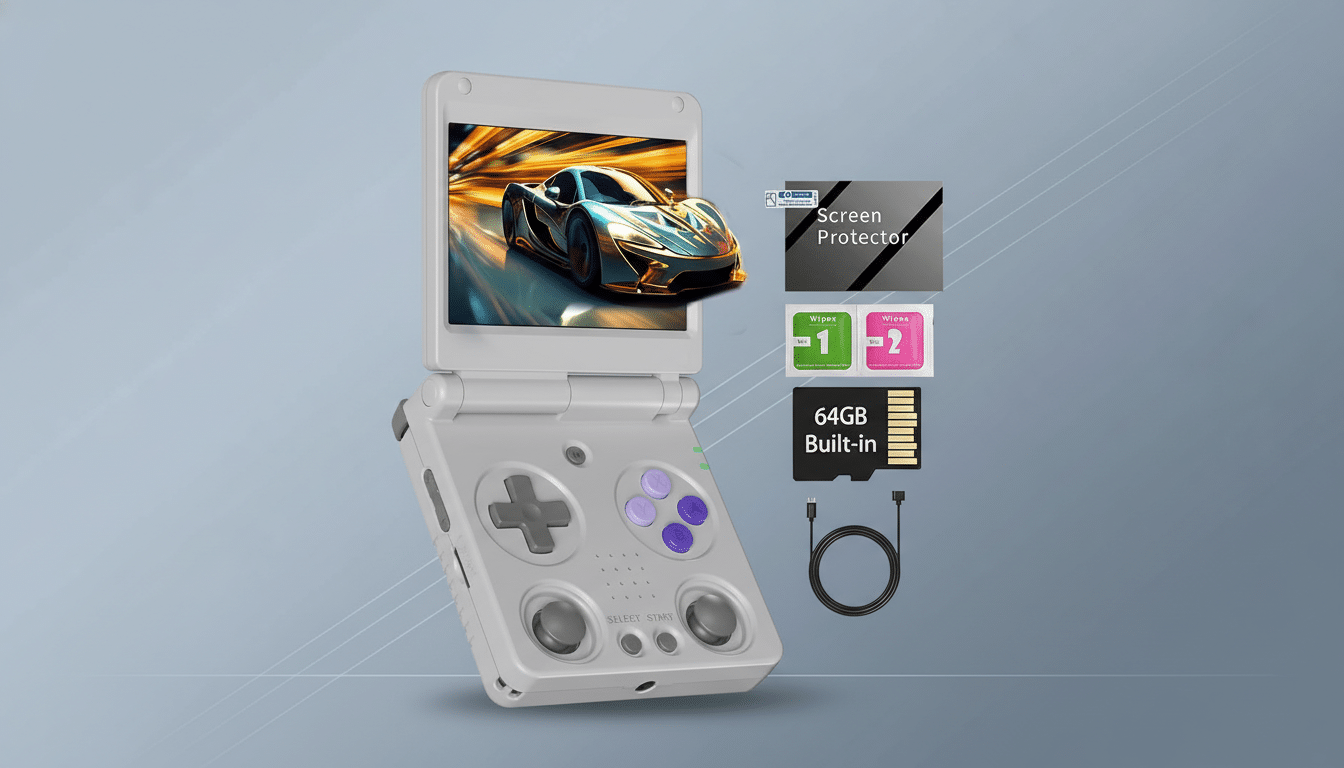
Anbernic’s clamshell RG34XXSP, a handheld styled after the Game Boy Advance SP, is now shipping with 1GB of LPDDR4 memory instead of the 2GB originally advertised. The quiet change effectively trims the unit’s RAM by 50%, and company support has confirmed the updated specification after community reports surfaced.
What changed and why it matters for buyers and users
Early listings for the Linux-based RG34XXSP highlighted 2GB of RAM, a comfortable cushion for frontends and emulators. Recent product pages now list 1GB, and members of the Retro Handhelds community spotted the revision before obtaining a confirmation from Anbernic’s customer service. While the exterior and core proposition remain the same, memory capacity touches everything from frontend responsiveness to how aggressively systems can cache textures, artwork, and shaders.
The move tracks with a broader DRAM squeeze. Market researchers at TrendForce have reported sustained DRAM contract price increases driven by surging demand for high-bandwidth memory used in AI accelerators and data centers, which has redirected production capacity. Analysts at Counterpoint Research have warned that component inflation can flow downstream into phones, PCs, and niche devices alike, pushing brands to either raise prices or trim specifications to hold the line.
How a 1GB memory ceiling affects emulation performance
For the RG34XXSP’s target library—8-bit, 16-bit, and most 32-bit consoles—1GB of RAM is typically sufficient. Lightweight Linux frontends often idle under a few hundred megabytes, and emulators for systems like NES, SNES, Mega Drive, PC Engine, and Game Boy Advance have modest memory footprints. PlayStation 1 also runs comfortably on similar hardware with limited RAM, as long as users avoid heavy shader stacks and oversized texture packs.
Where the cut may be felt is at the margins. Scraping large box-art sets, running higher resolution overlays, or pushing cores like PPSSPP with higher rendering scales can consume memory quickly. Community firmware projects—such as streamlined Linux builds popular on devices in this class—often tune databases, caches, and themes to fit within tight limits, but the headroom that 2GB offered for multitasking and visual polish will be tighter at 1GB.
Context helps here: many retro handhelds ship with 256MB to 1GB of RAM and still deliver strong performance in classic libraries. Devices like the Miyoo Mini and the TrimUI Smart Pro show that capacity alone is not a proxy for playability; CPU architecture, GPU capabilities, and software optimization typically dominate. Still, moving from 2GB to 1GB removes a safety buffer that power users appreciated for frontends, themes, and larger media sets.
Silent revisions and the impact on buyer trust and transparency
The sharper point is transparency. Unannounced spec changes frustrate enthusiasts who compare reviews, early listings, and community guides before purchasing. The retro handheld space has seen similar “silent” revisions in displays, batteries, and storage across multiple brands, often to manage costs or component availability. Consumer advocates generally urge manufacturers to disclose material component changes clearly on product pages and in packaging so buyers know exactly what they are getting.
In the face of supply volatility, brands have choices: adjust pricing, delay shipments, or alter configurations. Given rising DRAM costs—reinforced by reports of manufacturers prioritizing higher-margin memory like HBM—downshifting RAM is a predictable, if unpopular, way to keep retail prices stable. The trade-off is reputational, especially among a detail-oriented audience that values openness as much as specs.
What prospective RG34XXSP owners should do before buying
If you are considering the RG34XXSP, verify the listed RAM capacity on the storefront at checkout and save a screenshot of the specification. Ask the seller to confirm your unit’s configuration before shipment, as batches can vary during component transitions. After purchase, community firmware and themes tailored for 1GB devices can help reclaim memory and maintain smooth navigation, especially when working with large ROM libraries and artwork.
The bottom line is straightforward: the RG34XXSP remains a capable clamshell for classic systems, but the reduced RAM tightens the envelope for heavy frontend customization and certain higher-demand emulation scenarios. Clear communication from the manufacturer would go a long way toward aligning expectations, particularly while the memory market remains turbulent.
