


The Anbernic RG DS is an Android clamshell that was made with a very specific target in mind—real Nintendo DS gameplay—and manages to hit it, for the most part.
For $94.99, it’s cheaper than most handhelds and still gives you that dual-screen feeling (along with the snap of a clamshell and the two-panel immersion DS loyalists fondly remember). If your ambition is to re-experience the DS era without pulling the old handheld out of storage, this is by far the most persuasive recreation yet.
- Design That Nails the Nostalgia of the Original DS
- What Are the Controls to Fumble Back Upon 2D Classics
- One-Job Performance Focused on Accurate DS Emulation
- Battery Life and Charging Reality for Daily DS Play
- Why This DS Emulation Matters for Preserving Design
- Competitors and Value Compared Across Handheld Options
- Verdict: The RG DS Nails Dual-Screen Nostalgia Goals
Design That Nails the Nostalgia of the Original DS
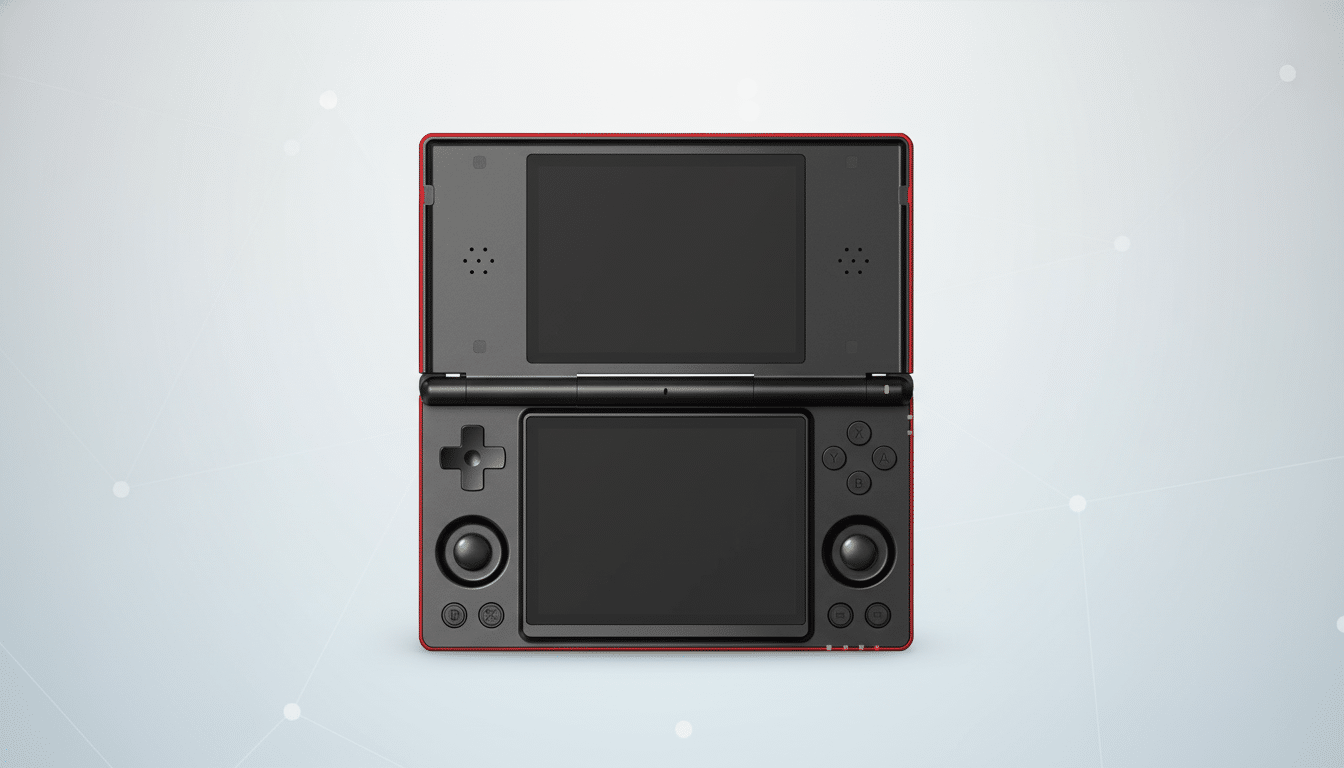
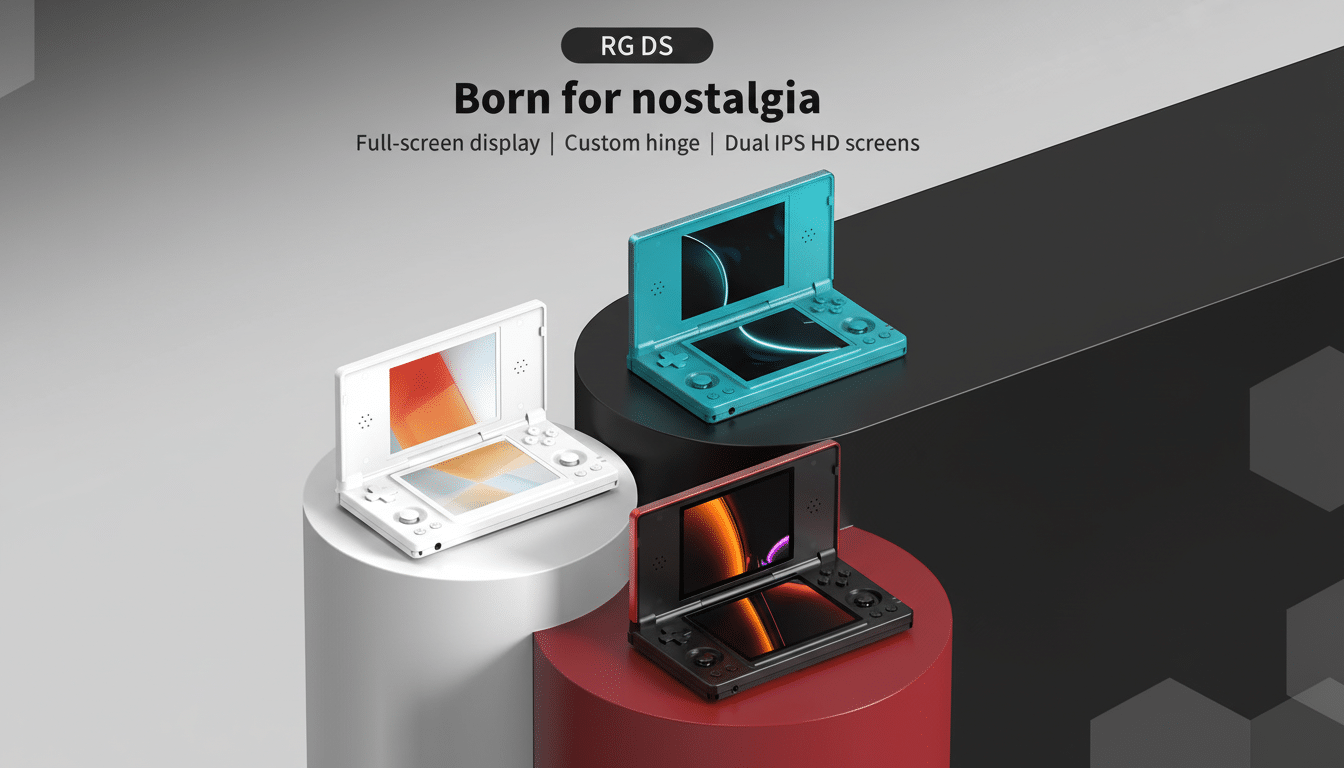
At a distance, you’d think the RG DS is a DSi. The footprint remains the same, it’s still a clamshell and having screens stacked leads to instant vertical viewing features that you miss with most Android handhelds. The hinge is tighter than that of the original Nintendo hardware, but it pays dividends with rock-solid positioning at any angle.
Inside are two 4-inch IPS panels at 640 x 480. Scaling is not an integer fit for DS software, but nothing that an intelligent default shader does not cure when it comes to cleaning up scaling artifacts, so most players will be none the wiser. They’re brighter and punchier than old DS screens, the drawback being capacitive touch. The stylus that comes with it works, but is more laggy than on resistive DS panels and there isn’t a slot to store it in the shell.
Front-firing speakers bookend the top display in a design that’s identical to its predecessor, and they sound okay if not great. There’s a bottom-facing headphone jack for easy plugged-in listening. The overall build quality is solid for the price, and it’s more pocketable than a non-folding design.
What Are the Controls to Fumble Back Upon 2D Classics
The D-pad is clicky and responsive, the face buttons have a clean, short throw—precisely what you want when playing DS platformers and RPGs. Four rear in-line triggers are easy to access, but their microswitch click is louder than I’d like. Below the main controls live two small, inset analog nubs; they’re low-friction and awkwardly placed, but for DS software they are largely irrelevant.
One-Job Performance Focused on Accurate DS Emulation
With the Rockchip RK3568 (with 3GB of RAM) powering it, there isn’t much under the hood by modern standards. That’s intentional. The RG DS is set up for DraStic, the DS emulator that has been around forever and runs well on low-power silicon—it’s included here pre-configured. In practice all the DS titles I tested ran like a dream—many could even be upscaled 2x without any issues encountered. Crucially, the two screens remain in step and the default arrangement feels natural, which is half of the DS’s spell.
Those limits surface quickly when one strays from the task. The only other accuracy-focused emulator, MelonDS, does not run most games at full speed. Lightweight 3DS games can run in some cases through Azahar, but letterboxing, control compromises, and performance sacrifices take the edge off. The long and short of it is, this is a DS-first, DS-only machine and it shines that way.
There’s no Google Play Services, but there are apps in a third-party app store that comes preinstalled and the core essentials all work fine out of the box. Next to DraStic, there’s RetroArch, and other emulators that handle anything up to PS1 games, but using a dual-screen clamshell for single-screen consoles just feels wrong. A useful bonus: You can switch off the top screen to conserve battery life or consult guides while playing on the bottom.
Battery Life and Charging Reality for Daily DS Play
With both screens on, a 4,000mAh battery gets you around four to five hours of DS play. That’s on a par with many other retro handhelds pushing out brighter panels, but it doesn’t quite get up to all-day sessions. Standby drain is low—about 2% overnight in our testing—but not the weeks-long sleep you’d get from a “pure” e-reader style device.
Charging is relatively slow for a modern handheld, requiring about two and a half hours to fill from empty. There’s no built-in charge level limit option, which some enthusiasts enable to help preserve the long-term health of their battery. It’s not a dealbreaker at this price, but worth noting if you tend to marathon RPGs.
Why This DS Emulation Matters for Preserving Design
According to Nintendo’s financial reports, “even today the overall sales of Nintendo DS stand out at total sales of over 154 million units worldwide,” which makes it one of the best-selling game systems ever. That big library—touch-forward puzzlers, creative RPGs and genre experiments—was designed for two stacked screens and a stylus. Side-by-side emulation on the usual handhelds is breaking that design. The RG DS revives it, and the asynchrony is apparent right away, whether you’re flipping through Elite Beat Agents or charting a dungeon.
Competitors and Value Compared Across Handheld Options
Priced at $94.99, the RG DS undercuts hybrid handhelds that aim to do it all. AYN’s alternative to 3DS-style is more robust hardware, superior screens, and a fuller range of compatibility at about triple the price. Horizontal single-screen, as MagicX is doing with its vertical one, would be more price competition in the spirit of things and even then you’d give up stylus ergonomics and digital authenticity that show off what DS design is capable of. In a purely DS sense, then, it’s Anbernic’s clamshell that wins the day.
Verdict: The RG DS Nails Dual-Screen Nostalgia Goals
The RG DS is also a machine with a laser focus and thesis: do the DS right. It excels with a compelling two-screen experience, robust face controls and ease of use that makes old games worth seeing and playing again. Its flaws—underpowered silicon for MelonDS, a stylus lag that trips up rhythm games and slow charging times—are real, too, but mostly ancillary to what it was built to do.
If you’re jonesing for a pocketable, inexpensive means of revisiting the DS catalog and won’t miss the original hardware, this is the one to get. For everything else, there are more capable choices—just not at this price, and not accompanied by this much DS authenticity.
