


Amazon’s Bee is not another lifelogging gadget chasing novelty. In early hands-on use, it feels like a deliberate attempt to make AI useful in the unscripted moments of daily life, with recording controls that prioritize consent, summaries that prioritize recall, and an app that actually feels finished. The bigger question is whether consumers are ready to put an AI listener on their wrist or lapel—and what happens to etiquette when they do.
Design and controls of Bee’s hardware and interface
Bee’s hardware keeps interaction simple. A single press starts or stops recording, while a double press can bookmark key moments, process the current conversation, or both—configurable in the app. Press and hold can either drop a voice note or open a lightweight assistant for quick queries. A green status light flips on during capture, a visible cue that mirrors the best practices privacy advocates have urged for years.
- Design and controls of Bee’s hardware and interface
- Summaries over raw transcripts for clearer recall
- A memory layer for your day that surfaces context
- Privacy cues and social norms for responsible recording
- How Bee fits in the current AI wearables moment
- Early verdict on Bee’s promise, software, and hardware
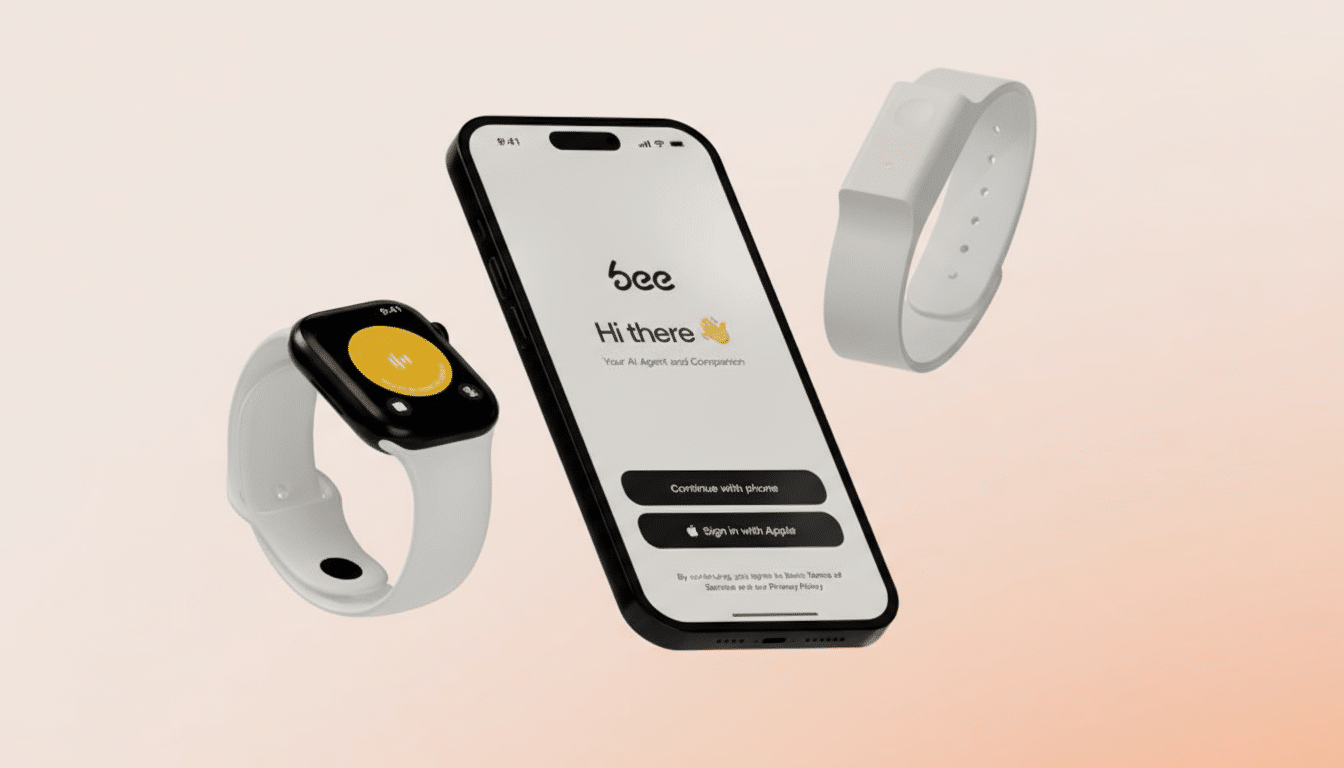
The sports band on our unit felt underbuilt and popped loose twice in low-motion situations, which undercuts confidence for all-day wear. The clip-on pin, by contrast, locks in with more rigidity and makes sense for conferences or commutes where positioning the mic matters.
Summaries over raw transcripts for clearer recall
What distinguishes Bee from familiar meeting tools like Otter, Fireflies, Fathom, or enterprise recorders is the structure of the output. Instead of dumping a wall of text, Bee segments conversations into thematic chapters—think introductions, product details, trend talk, follow-ups—each color-tinted for quick scanning. Tap any section to expand the verbatim transcript.
Speaker labeling is basic. You confirm your own voice by tapping segments, but there’s no robust multi-speaker tagging yet. Another notable design choice: audio is discarded after transcription. That leans into privacy and storage efficiency but makes Bee a poor substitute for journalistic or legal use where playback and verification are essential.
A memory layer for your day that surfaces context
Bee’s goal is less “minutes of the meeting” and more “context for your life.” The app’s Memories view lets you revisit days at a glance, and a Grow tab surfaces patterns over time. A Facts section functions like a personal profile for the assistant—confirm preferences, add details, and Bee uses them to ground future suggestions.
Integrations are pragmatic. Tie a recorded conversation to tasks within Google’s ecosystem, and Bee can nudge you afterward—send that follow-up, check a product, or connect with someone on LinkedIn. Voice notes become a low-friction alternative to typing into a notes app and are faster than pulling out a phone mid-thought.

Privacy cues and social norms for responsible recording
Bee deliberately avoids always-on capture, a design that heads off the backlash faced by wearables like the Friend AI pendant. You’re expected to ask before recording unless you’re in an environment where recording is already implied, and the hardware signals clearly when it’s active. That aligns with guidance from groups like the Reporters Committee for Freedom of the Press, which notes that 11 U.S. states require all-party consent to record conversations.
There’s still a cultural learning curve. People are used to security cameras; they’re less comfortable being quoted by a lapel mic during casual chat. The Federal Trade Commission’s past scrutiny of voice data retention—including actions related to smart assistants—underscores how quickly trust erodes if recordings feel sneaky or permanent. Bee’s choice to dump raw audio may reassure some users, even if it limits professional use cases.
How Bee fits in the current AI wearables moment
AI wearables are searching for the right job to do. Some devices chase ambient general intelligence and end up unfocused. Bee goes narrower, doubling down on capture, recall, and gentle automation riding on Google services you likely already use. It feels closer to the daily utility of smart glasses that add context on demand than to experimental pins that promise to replace your phone.
Competitively, Bee’s segmentation-first approach is thoughtful, but professionals who need pristine audio archives will stick with dedicated recorders or services that retain files. On the other hand, for students, networkers, and busy parents who want crisp summaries, quick bookmarks, and memory jogs without lugging a laptop, Bee’s trade-offs make sense.
Early verdict on Bee’s promise, software, and hardware
In these early tests, Bee’s software is the standout—clean design, fast processing, and context that’s easy to scan later. Hardware polish needs work, especially the band, and speaker labeling is due for an upgrade. But the core idea is coherent: an AI that respectfully captures moments you choose and gives them back in a way your brain can use.
The open question is not just whether Bee resonates, but whether everyday conversation recording becomes socially acceptable. If the green light and explicit consent norms hold, Bee could carve out a practical niche. If not, expect more people to self-censor in public—and for AI wearables to keep searching for their best use case.
